THE LATIN MASS SOCIETY IN WREXHAM
  • Home
  • News Blog
  • About the Traditional Mass
    • Responsa Ad Dubia on certain provisions of the Apostolic Letter Traditionis Custodes issued “Motu Proprio”
    • Traditionis Custodes
    • The letter of Pope Francis accompanying Traditionis Custodes
    • CDF 2020 Decree on Saints and Prefaces
    • Universae Ecclesiae
    • Pope Benedict XVI's Letter to the Bishops
    • Summorum Pontificum
    • Holy Days of Obligation >
      • Exchange of Letters
      • LMS Press Release on Holy Days
      • Restoration of Holydays [2017]
    • Apostolic Letter, Sacrificium Laudis
    • Tips on attending the Extraordinary Form
    • Expressions of the Extraordinary Form
    • A quick guide to Mass classification
    • Latin Pronunciation
  • Wrexham Diocese
    • The Cathedral Church
    • About St Richard Gwyn
    • About St Winefride
    • Diocesan Feasts in the 1962 calendar
    • Gweddi dros Gymru
    • Gweddi ar Ddewi Sant
  • LMS Shop
  • Links

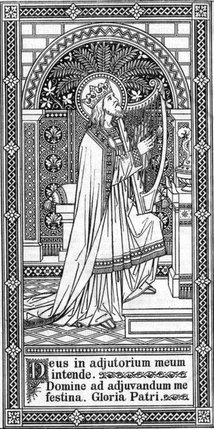
The Latin Language in the Liturgy

29/9/2015

0 Comments

 
Picture
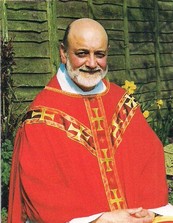
Fr. Calvin Goodwin, F.S.S.P.

When we speak of the Traditional Latin Mass, the Latin Mass, the old Latin Mass, or when we see it listed in parish bulletins as "The Extraordinary Form (Latin)," the commonality is ... Latin. And of course we know the objections that Latin raises: nobody understands it, it puts a wall between the priest and the People of God, it's totally out of date, etc. However, since you cannot have the traditional Latin Mass without Latin, perhaps an examination of the whole question of Latin and its significance in the Mass might be helpful.

The first problem that we will examine is the conviction that the primitive practice of the Church in the liturgy was the use of the vernacular, that Latin became the language of the Mass in the West only after the Church had come out of the catacombs in the fourth century. There are manifold paths to the explosion of this anti-Catholic myth born of the Protestant insistence on a vernacular liturgy, but let me start with just one.

We all know that Pompeii (and Herculaneum) were covered with volcanic ash and lava in the devastating eruption of Mount Vesuvius in A.D. 79. During excavations of the last forty years or so, a house was uncovered which was clearly a Christian household. Its identification as Christian was founded on liturgical inscriptions on the walls. And those inscriptions are in Latin-all of them. Why is that important?

Well, first of all we need to understand that in A.D. 79 Neapolis (Naples), Pompeii, Puteoli (Pozzuoli), and Herculaneum-all affected by the eruption-made up one of the most cosmopolitan areas in the entire Roman Empire, a center for the exchange of goods and people from all over the empire. The language most commonly spoken there would therefore have been, not Latin, but the common (or Koine) Greek which was the lingua franca of the Empire, the language of the common man of the first century. Therefore, had the liturgy been celebrated in the language of the common man, it would have been celebrated in that common Greek, and the liturgical inscriptions on the wall of a house in an area where that common Greek was the language of choice would have been in that common Greek as well.

But they are not. They are in Latin. And Latin would not have been the vernacular or the language of the people in that place and in that era. If Mass, as is surely the case, had been celebrated in that house, it was celebrated in Latin and not in the vernacular, in the first century, when the Apostles were, most of them, either still alive, or a very vivid memory amongst those who had known them, heard their teaching, and participated in the Masses which they had celebrated in this point of entry for virtually all who sailed into Italy from all over the known world.

Obviously, therefore, the use of the vernacular in Holy Mass was not a first century "value." Something led to the celebration of Mass in a language foreign to those who were present. What could it have been?

Is it possible (I am not making an assertion here, just asking a question), is it possible that the Holy Ghost, the source and guarantor of Catholic liturgical worship, had led these first-century Christians to worship in a language foreign to most of them in order to demonstrate a continuity within that worship which would continue unbroken until the second half of the twentieth century?

I know that many could become uncomfortable when faced with such a question. It would imply a direct and "hands-on" presence of the Holy Ghost in the life of the Church which flies in the face of the American Deist mentality (and which Pope Leo XIII of blessed memory thought dangerous enough to identify and condemn as the heresy of Americanism). And yet that active presence of the Holy Ghost in the Catholic liturgy is precisely what is active during the miracle of the Consecration in every single Catholic Mass. So why should we find it  difficult to accept in a wider historical sense? "Lord, I am a sinner, help Thou my unbelief'! (Mark 9:23)

We must identify and extirpate from our minds the sweetmeats of modern "values" and exchange them for the "pure milk" of Catholic truth. It may make for more discomfort for us here below surrounded as we are, not only by the majority, but by the implication that majority rule implies that the majority is right. If we believe this, we cannot be Catholic, for the Catholic Faith is founded by a God Who is rejected by the majority

0 Comments

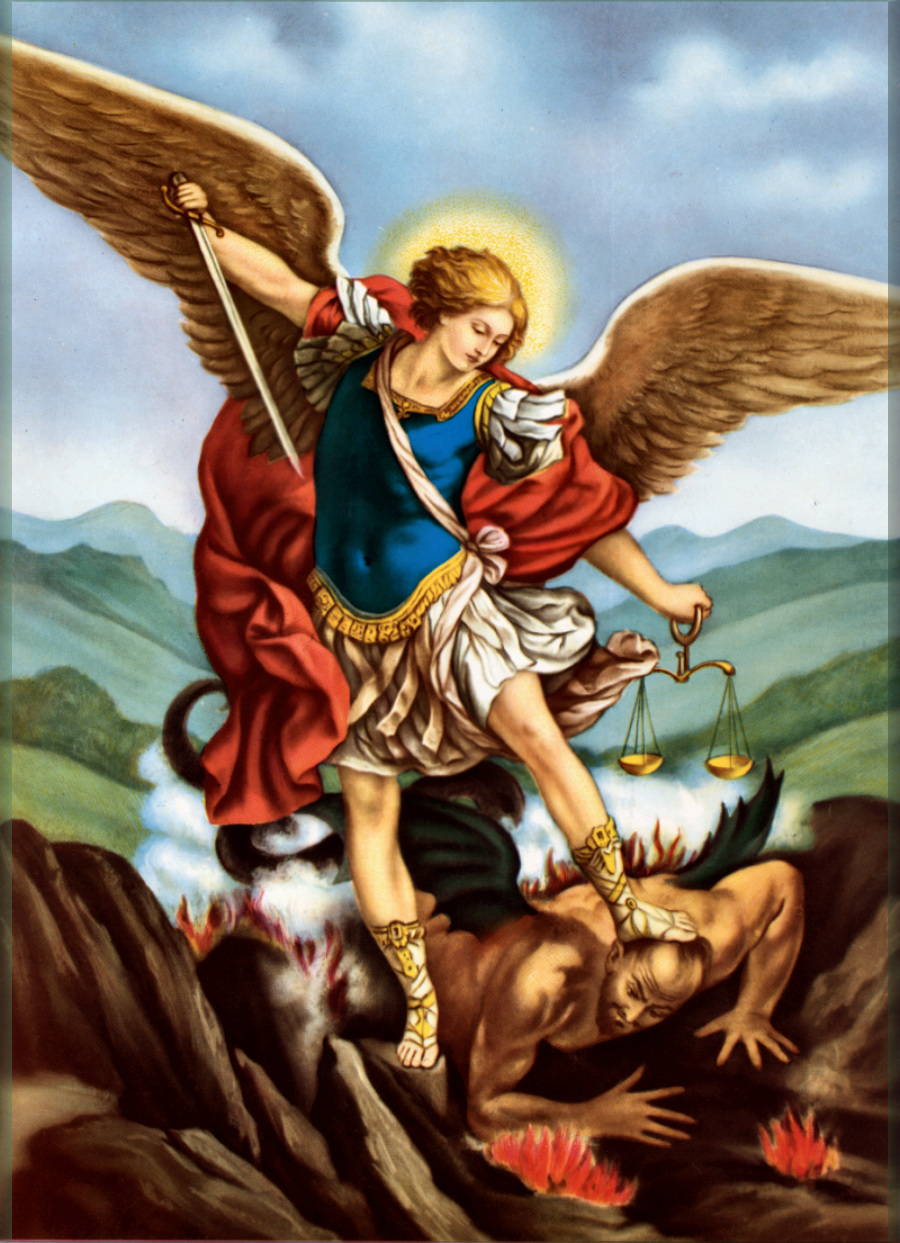
In Dedicatione S. Michaelis Archangelis

28/9/2015

0 Comments

 
Picture
Saint Michael the Archangel,
Defend us in battle.
Be our protection against the wickedness
and snares of the devil;
May God rebuke him, we humbly pray;
And do thou, O Prince of the heavenly host,
By the power of God, thrust into hell
Satan and all evil spirits
who wander through the world
for the ruin of souls.
Amen.


composed by Pope Leo XIII, 1888.
0 Comments

XVIII Sunday After Pentecost

26/9/2015

0 Comments

 
Mass for the XVIII Sunday After Pentecost takes places
on Sunday 27th September at
1130am at
St Winefride's, Well Street, Holywell

All Welcome

Picture
The Mass on the Eighteenth Sunday after Pentecost was originally one of the dedication of a church which explains the allusions in the Introit and Gradual to the happiness Catholics should have when we enter the house of the Lord for Holy Mass, realising that our churches are God’s Dwelling Place as was the heavenly city, Jerusalem.

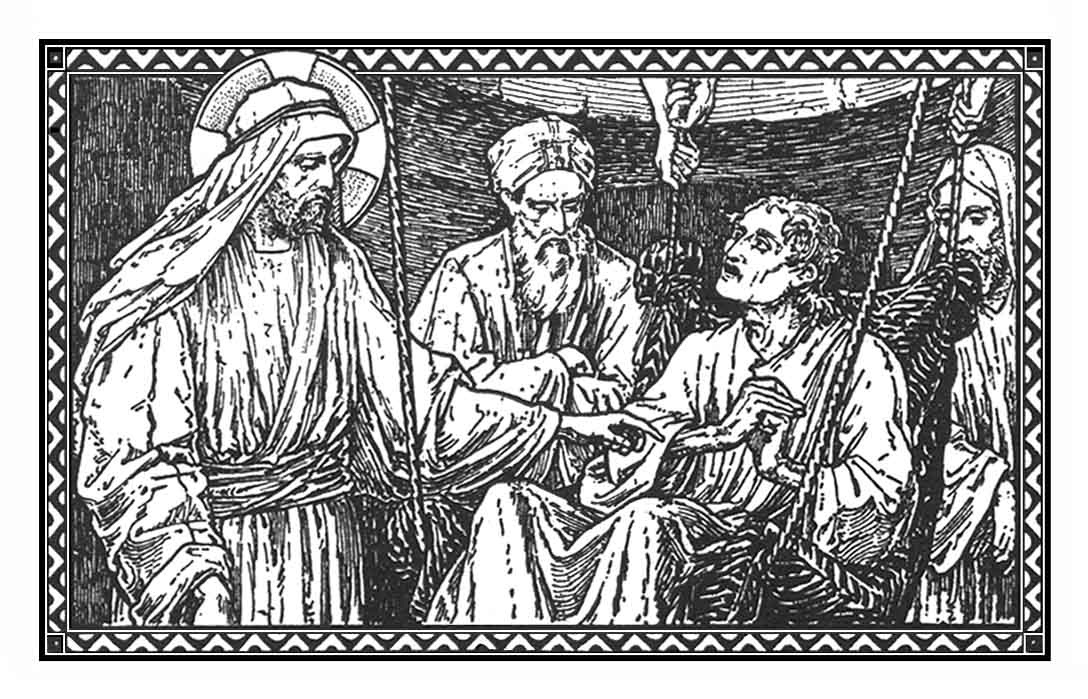
We look back at the previous year and thank God for all the riches He has given us (Epistle). As the Lord Jesus healed the man with palsy (Gospel), and forgave his sins, we are reminded that in Baptism we were cripples spiritually who were cured by God’s medicine. The Holy Eucharist gives us strength after Baptism.

Prefigured by Moses in Old Testament times, as he built an altar upon which sacrifices of animals were offered, the Sacrifice of the Cross is our method of atoning for sins (Offertory). The Secret continues the message that through the Communion in this venerable Sacrifice, we may follow worthy lives.

The Communion encourages us to receive the Holy Bread of the altar of sacrifice while the Postcommunion thanks God for His Holy Gift of Communion.

Although not commemorated in the Mass using the 1962 Missal, the 27th September is also the Feast of Ss Cosmas and Damian Mm., thought to be brothers, who were martyred in about 305 under the persecution of Diocletian. Doctors in Cilicia, they served the poor and were known far and wide for their holiness and generosity.

Their relics were sent to the ancient temple of Romulus by Pope Felix IV, who had converted the temple into a church dedicated to the honour of the Saints. Their names are mentioned in the Canon of the Mass, and the priest makes a slight bow to the Crucifix at their mention.


0 Comments

From the Vatican Information Service

26/9/2015

0 Comments

 
Picture
Noted on today's bulletin:

"appointed Cardinal Carlo Caffarra, metropolitan archbishop of Bologna, and Cardinal Raymond Leo Burke, patron of the Sovereign Military Order of Malta, as members of the Congregation for the Causes of Saints."
0 Comments

Save the Family ! Sign the Petition !

25/9/2015

0 Comments

 
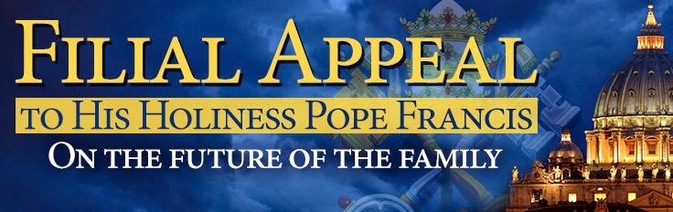
"Let Pope Francis know you would like him to reaffirm categorically the Catholic teaching that divorced and civilly remarried Catholics cannot receive Holy Communion and that homosexual unions are contrary to Divine and natural law"
Picture
The Fourteenth Ordinary General Assembly of the Synod of Bishops will take place from the 4th October to the 25th October with the theme "the vocation and mission of the family in the Church and in the contemporary world

We have heard much about what happened at the Synod last Autumn and we really have to commit energy through prayer and representation to convert those whose idea of the family unit is something that can be modified and therefore contrary to the teachings of the Catholic Church. Teachings that the Church has upheld for generations and please God, will continue to uphold without one iota of modification to suit the will of man.

One such avenue of appeal is a petition to the Pope. Set up by a group of concerned lay Catholic leaders and pro-family organisations a 'Filial Appeal' is being made to the Pope Francis.

They request us to join them in asking the Holy Father to reaffirm categorically the Catholic teaching that divorced and civilly remarried Catholics cannot receive Holy Communion and that homosexual unions are contrary to Divine and natural law.

Sign the petition by clicking here or the banner above.
0 Comments

Capuchin Father Francis Maple to celebrate September Holywell Mass

25/9/2015

0 Comments

 
PictureFr. Francis Maple OFM Cap.
I am really pleased that Capuchin Father Francis Maple will celebrate our Mass on the 27th September 2015:

St Winefride's RC Church,
Well Street,
Holywell,
Flintshire,
CH8 7PL
at 1130am

Father Francis Doyle will be away on a hard earned break.

0 Comments

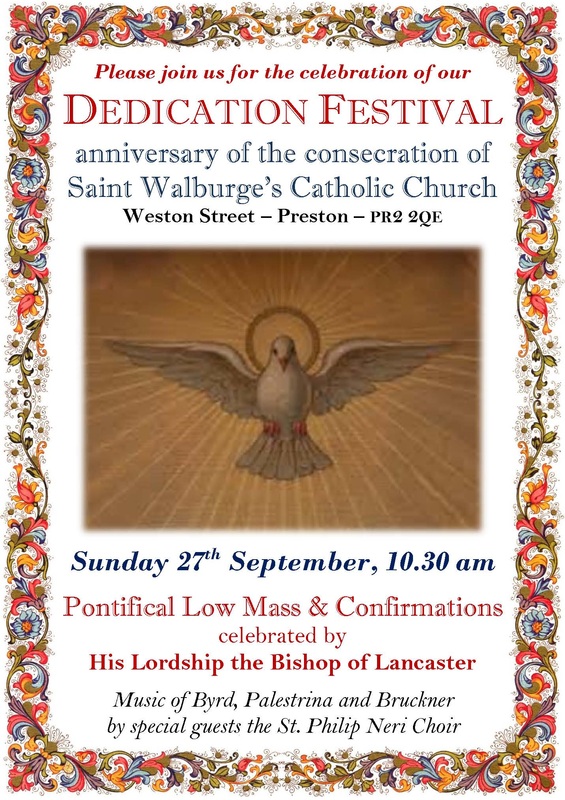
Bishop Campbell of Lancaster at Preston

25/9/2015

0 Comments

 
Picture
0 Comments

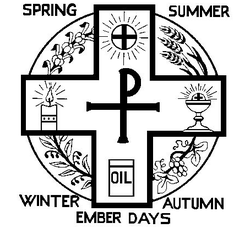
Ember Days in September

23/9/2015

0 Comments

 
Picture
Ember Days are times of penance - for fasting and abstention for some good intention.

They were discontinued in the new calendar which is a great shame.

Since 1972, the Cycle of Prayer, set by the Bishops Conference, has sort to fill the void.

My personal experience is that this cycle is not the subject of much promotion at parish level, often only a footnote in a newsletter to remind the faithful they ought to be praying!

Not so with Ember or Rogation days as they are fixed in the calendar, with bespoke liturgy in both the Mass and the Breviary.


I have blogged before about Ember days here and here. However, an even better commentary has been reposted over at Rorate Caeli and I would encourage you to read it.


0 Comments

Bishop Campbell of Lancaster at Gricigliano

20/9/2015

0 Comments

 
Picture
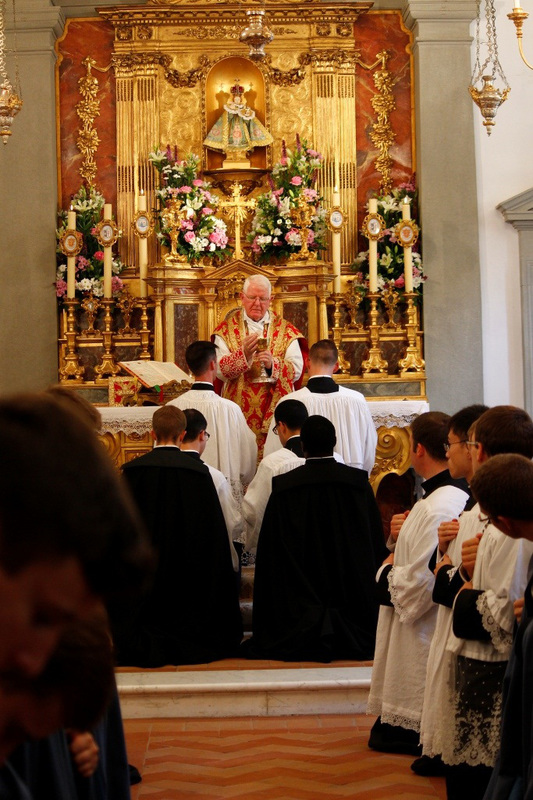
Bishop Campbell at the home of the Institute [Photo courtesy of the Diocese of Lancaster]
The Rt Rev. Bishop Michael Campbell O.S.A. of Lancaster has undertaken a recent visit to the Seminary of the Institute of Christ the King Sovereign Priest at Gricigliano in the beautiful Tuscan hills near Florence.

The Bishop invited the Institute into his diocese last year when they took responsibility for St Walburge's in Preston.


Some more wonderful photographs appear at Bishop Campbell's blog, in which His Lordship launches a year to encourage priestly vocations, something that in Wrexham we would do well to emulate!

At St Walburge's next Sunday (27 September, 10.30am), Bishop Campbell will carry out confirmations and celebrate Pontifical Low Mass with music by the St. Philip Neri Choir. I wish this well in prayer.

Incidentally, the September intake of first year seminarians at Gricigliano totals 18 this year, how they fit them all into the modest sized accommodation must be a challenge, but what a challenge to have, Thanks be to God!
0 Comments

Inquisition drama documentary makes progress

19/9/2015

0 Comments

 
Picture
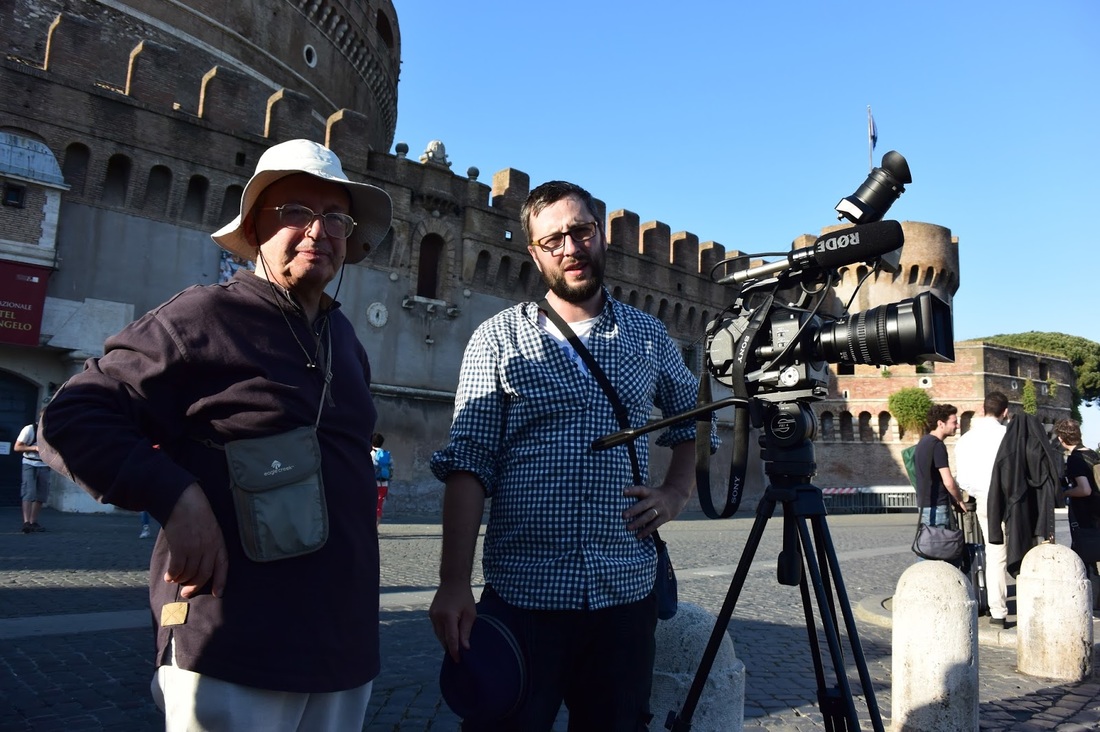
Stefano with the film crew making the Inquisition dramadoc
Stefano Mazzeo is busy with his latest production EWTN, the latest being about the Inquisition.He has updated his blog here, you may wish to visit and have read.

Note the singular 'Inquisition' - There was actually more than one inquisition.

The first was the Medieval Inquisition established in 1184 in France as a response to the Catharist heresy.

Then the Roman Inquisition, begun in 1542.

Separate again was the Spanish Inquisition commenced in 1478, a state institution used to identify conversos—Jews and Moors (Muslims) who pretended to convert to Christianity for purposes of gaining advantage in social circles but actually these 'converts' continued to practice there own faith.

Much confusion and controversy abounds, Stefano's wants to clear the myths and help straighten the record. I look forward to the finish programme coming to air.


0 Comments

Seventeenth Sunday after Pentecost

19/9/2015

0 Comments

 
Picture
The Church Year is moving into autumn and the Introit asks God’s mercy for those who walk undefiled in His Ways. The Collect goes farther as God’s children ask Him for grace to withstand the temptations of the devil.

We are reminded in the Gradual that nations as well as people are blessed by the Lord, wise words for our own time. Dear St. Paul, a prisoner, entreats the Christians to maintain charity and keep a bond of peace with each other, having presumably one Lord, one Catholic Faith, one common goal: Heaven.

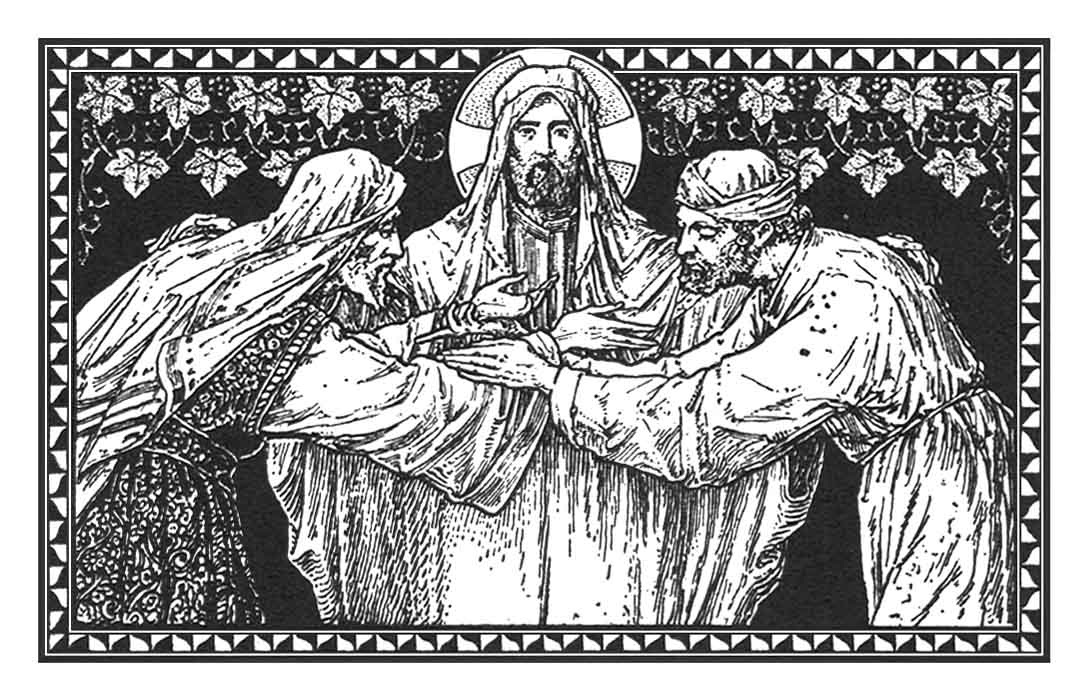
Based upon Our Lord’s own Words in the Gospel, we are commanded to love the Lord thy God with thy whole heart, and with thy whole soul and with thy whole mind...and...thy neighbour as thyself. The second portion of the two Commandments is the most difficult to maintain. We ask God to hear our prayers in the Offertory and for forgiveness of past sins in the Secret, an allusion to the Sacrament of Penance. It may not be self-evident, but the second of the Commandments, love of neighbour, prepares us to love God for as St. John Chrysostom comments, “Everyone who does evil hates the Light and never attains to the Light.”

Although not commemorated in the 1962 Missal, the 20th September is the feast of St. Eustace and Companions Mm. The Saint is one of The Fourteen Holy Helpers invoked for help with fire, both temporal and spiritual.

0 Comments

Programme of events at St Walburge's, Preston

18/9/2015

0 Comments

 
Picture
Canon Altiere of St Walburge's at Preston, has had a small brochure created which is full of events over the next 12 months or so.

St Walburge's is a beautiful grade 1 listed church, notable for having the tallest spire of any parish church in England. It is now entrusted to the Institute Christ the King Sovereign King.

You can download a copy of the brochure here and I hope that you are perhaps in a position to support one or more of the events.

0 Comments

No Exhortation post Synod?

16/9/2015

0 Comments

 
Picture
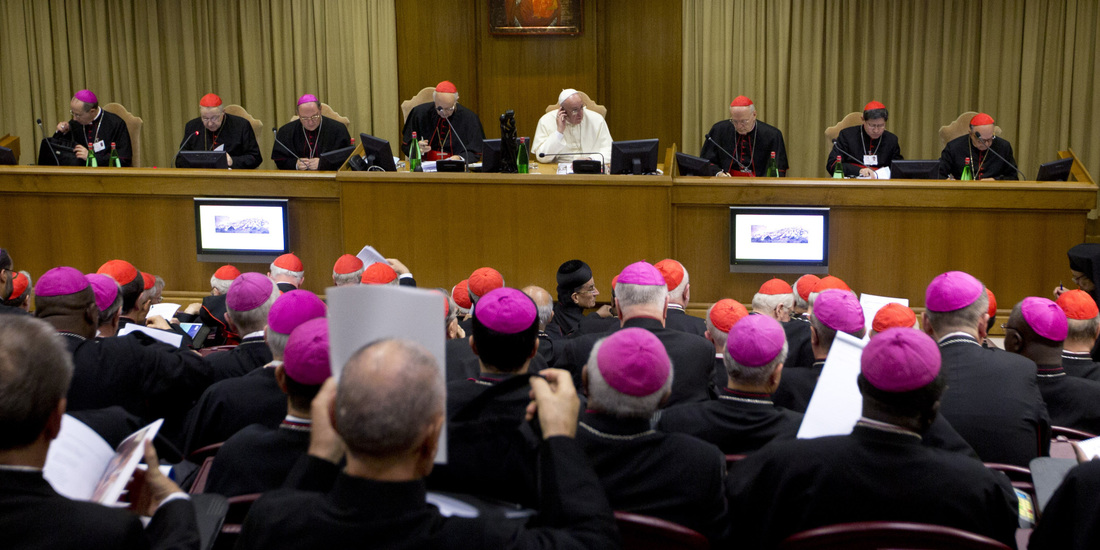
Synod on the Family : 2014
If the forthcoming Synod did not cause us concern as it is, then rumours that no Apostolic Exhortation will follow certainly does.

The Vatican grapevine, which granted can be wrong, is suggesting that the Holy Father will not pronounce as Pope but will limit his comments to closing remarks at the conclusion of the Synod. You may recall this was the modus operandi last year.

Of course, no pronouncement will translate into an emphasis on interpretation
- meaning all will do what they want!

Surely this possibility, undoubtedly in the name of 'pastoral' need, will result in inconsistency at best but concerningly a further erosion, by stealth, of doctrine.

Then there is the reporting of the event. The world's secular media will draft their stories based on which story will read best. If no Exhortation clarifies things, the press will interpret things, very dangerous, especially if they choose a particular angle to report on.

Let's pray that the rumours are unfounded!
0 Comments

No October Mass at Buckley

14/9/2015

0 Comments

 
Picture
You may have gathered from the home page and the Mass listings that there will be no Mass on the first Saturday at Buckley (3rd October).

This is because Father Doyle is away.

The first Saturday Mass will resume in November.
0 Comments

The Exaltation of the Holy Cross

14/9/2015

0 Comments

 
Picture
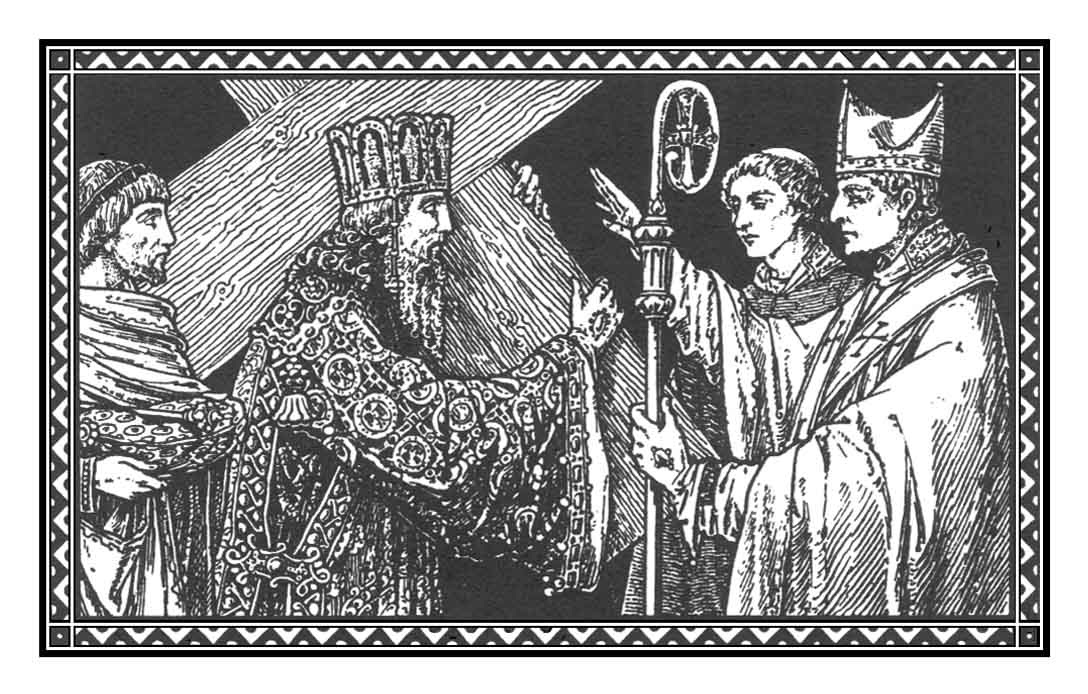
As the liturgy moves along throughout the year, the meaning, substance and beauty of the feasts always seem to exceed each other.Today we celebrate the Exaltation of the Holy Cross.On this date Emperor Constantine dedicated the gigantic basilica which encompassed both Calvary and the Holy Sepulchre.

The date also marked the finding of the True Cross of Our Lord by the Empress Helena, Mother of the Emperor. As if these events were not enough to make this feast one of the greatest of the calendar, it also recalls the return of the True Cross to Jerusalem in 629 by the Emperor Heraclius.

Fifteen years prior It had been taken as war booty by Chosroes, the King of Persia. Defeated in war, Chosroes was forced to return the Cross. The Emperor decided to carry the Holy Cross into Jerusalem upon his own shoulders. Dressed in finery, however, he was held back by a miraculous power and could not enter the city.

Bishop Zacharias told the Emperor that, dressed in gold and fine clothing, haughty and arrogant, he was “far from imitating the poverty of Jesus Christ and His humility in bearing His Cross.” Taking off his fine ornaments and preparing himself by prayer, he walked in rags and barefooted to Calvary where he returned the Cross.

Pray on this feast that we can imitate the lesson of this day long ago and bring back the knowledge of Our Lord and His Suffering and Cross to the ignorant masses and restore Jesus to His proper place!
0 Comments
<<Previous
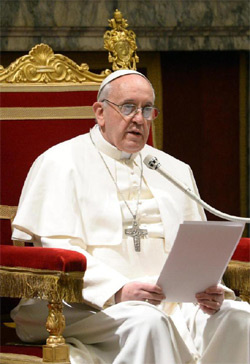
    Pope Francis
    Picture
    Oremus pro Pontifice nostro Francisco: Dominus conservet eum, et vivificet eum, et beatum faciat eum in terra, et non tradat eum in animam inimicorum eius.


    Picture
    Picture
    Omnipotens sempiterne Deus, qui facis mirabilia magna solus: praetende super famulos tuos, et super congregationes illis commissas, spiritum gratiae salutaris; et, ut in veritate tibi complaceant, perpetuum eis rorem tuae benedictionis infunde.


    Any views expressed neither represent those of the Latin Mass Society or the Diocese of Wrexham.

    Archives

    August 2022
    July 2022
    June 2022
    May 2022
    April 2022
    March 2022
    February 2022
    January 2022
    December 2021
    November 2021
    October 2021
    September 2021
    August 2021
    July 2021
    June 2021
    May 2021
    April 2021
    March 2021
    February 2021
    January 2021
    December 2020
    November 2020
    October 2020
    September 2020
    August 2020
    July 2020
    June 2020
    May 2020
    April 2020
    March 2020
    February 2020
    January 2020
    December 2019
    November 2019
    October 2019
    September 2019
    August 2019
    July 2019
    June 2019
    May 2019
    April 2019
    March 2019
    February 2019
    January 2019
    December 2018
    November 2018
    October 2018
    September 2018
    August 2018
    July 2018
    June 2018
    May 2018
    April 2018
    March 2018
    February 2018
    January 2018
    December 2017
    November 2017
    October 2017
    September 2017
    August 2017
    July 2017
    June 2017
    May 2017
    April 2017
    March 2017
    February 2017
    January 2017
    December 2016
    November 2016
    October 2016
    September 2016
    August 2016
    July 2016
    June 2016
    May 2016
    April 2016
    March 2016
    February 2016
    January 2016
    December 2015
    November 2015
    October 2015
    September 2015
    August 2015
    July 2015
    June 2015
    May 2015
    April 2015
    March 2015
    February 2015
    January 2015
    December 2014
    November 2014
    October 2014
    September 2014
    August 2014
    July 2014
    June 2014
    May 2014
    April 2014
    March 2014
    February 2014
    January 2014
    December 2013
    November 2013
    October 2013

    RSS Feed

Powered by Create your own unique website with customizable templates.