THE LATIN MASS SOCIETY IN WREXHAM
  • Home
  • News Blog
  • About the Traditional Mass
    • Responsa Ad Dubia on certain provisions of the Apostolic Letter Traditionis Custodes issued “Motu Proprio”
    • Traditionis Custodes
    • The letter of Pope Francis accompanying Traditionis Custodes
    • CDF 2020 Decree on Saints and Prefaces
    • Universae Ecclesiae
    • Pope Benedict XVI's Letter to the Bishops
    • Summorum Pontificum
    • Holy Days of Obligation >
      • Exchange of Letters
      • LMS Press Release on Holy Days
      • Restoration of Holydays [2017]
    • Apostolic Letter, Sacrificium Laudis
    • Tips on attending the Extraordinary Form
    • Expressions of the Extraordinary Form
    • A quick guide to Mass classification
    • Latin Pronunciation
  • Wrexham Diocese
    • The Cathedral Church
    • About St Richard Gwyn
    • About St Winefride
    • Diocesan Feasts in the 1962 calendar
    • Gweddi dros Gymru
    • Gweddi ar Ddewi Sant
  • LMS Shop
  • Links

Closest Epiphany Masses to Wrexham Diocese

30/12/2016

0 Comments

 
Picture
Epiphany Mass will be celebrated on the proper day, that is Friday 6th January at the following locations/times:

Diocese of Shrewsbury:

SS PETER & PAUL AND ST PHILOMENA CHURCH,
ATHERTON ST, NEW BRIGHTON

at 7pm (Sung Mass)

Archdiocese of Liverpool
(information provided by Mr James Pennington, LMS Representive in the Archdiocese)

ST. ANTHONY OF EGYPT,
SCOTLAND ROAD, LIVERPOOL

at 12 noon (Low Mass)
Contact: Mr. J.Pennington, 0151 426 0361
 
OUR LADY,
SOUTHPORT ROAD, LYDIATE

at 7.00 p.m. (Low Mass)
Parish Priest: Fr Thomas Wood, 0151 526 3843
 
ST MARY’S SHRINE,
BUTTERMARKET ST, WARRINGTON

At 12.10 pm
Contact Shrine Rector: Fr Armand De Malleray 01925 635664

0 Comments

Children and the Traditional Mass : Position Paper 30

28/12/2016

0 Comments

 
Dr. Joseph Shaw has published the latest Position Paper fo the Foederatio Internationalis Una Voce. This is paper number 30 and is on Children and the Extraordinary Form.
Picture
From the FIUV website:

"Since the Extraordinary Form attracts many young families, celebrations are often characterised by the presence of many children. The EF cannot be adapted to children in the way the Ordinary Form sometimes is, but it has certain advantages in respect to children, notably its use of non-verbal forms of communication, the predictability of the Rites, and the relative informality of the congregation during Mass. The powerful impression made on children by the solemn and expressive ceremonies finds a precedent in the experiences of children in Scripture, when they attended the solemn reading of the Law, were blessed by our Lord, and when they proclaimed His Kingship at the Entry into Jerusalem. These also point to the objective value of the liturgy to children, including the many blessings given to the congregation in the liturgy. Above all, a consistent experience of the liturgy, with adults offering a model of an appropriate engagement with it, is a ‘school of prayer’ for children, as for adults.. . . . . . ."

The paper can be downloaded here.

All papers can be downloaded here in one consolidated file.

0 Comments

The good work of the Good Counsel Network

28/12/2016

0 Comments

 
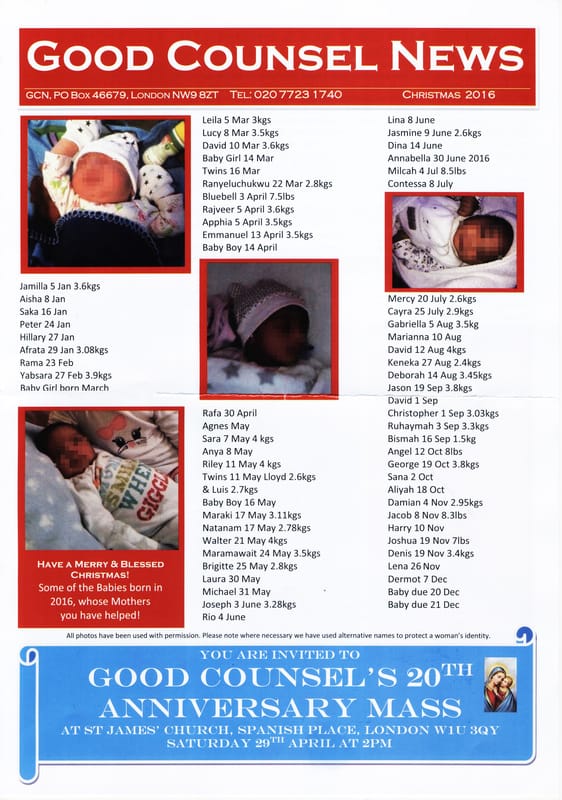
Each year, just before Christmas, the newsletter of the Good Counsel Network arrives and each year I never fail to be moved by their good work, inspired without doubt by their patron, Our Lady of Good Counsel.

Earlier this year, a television programme attempted to muddy their reputation - well judge them by the list of babies saved from abortion (see below) and not a 30 minute TV programme which was particulary one sided and as usual in the abortion debate, dismissed the rights of defenceless and innocent little babies.

On this feast of the Holy Innocents, perhaps you could say a prayer for the work of the Good Counsel Network.
Picture
0 Comments

The Nativity Octave Liturgy

26/12/2016

0 Comments

 
Picture
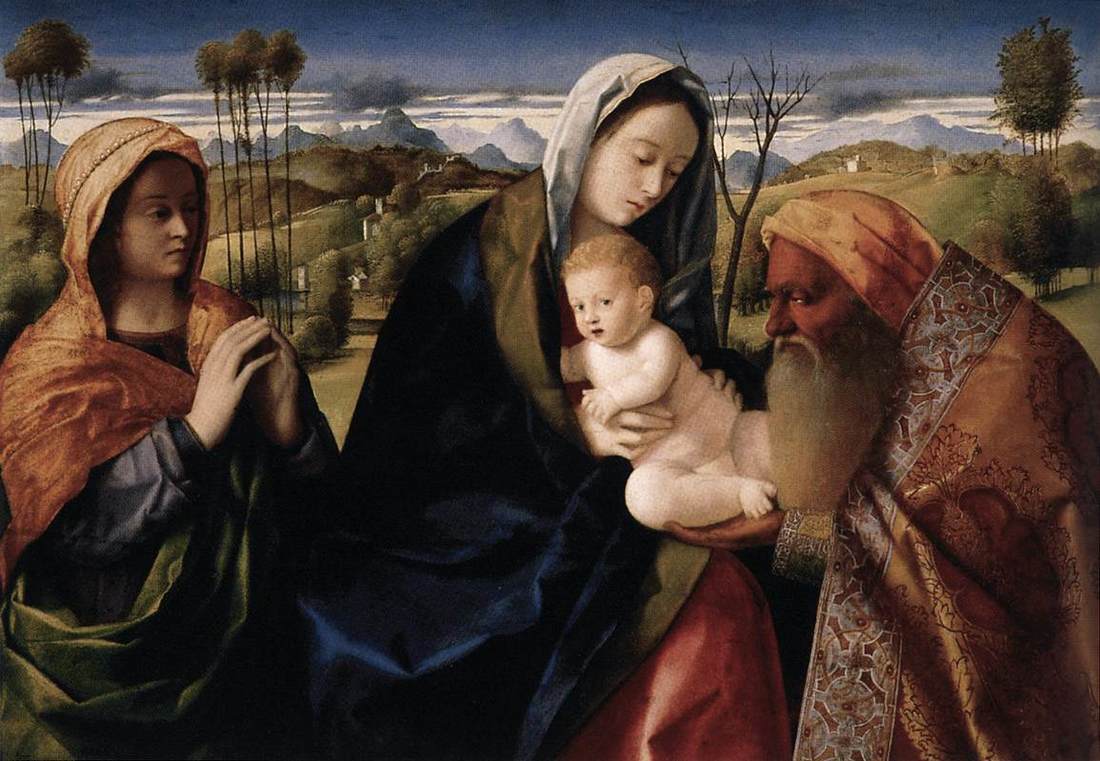
Giovanni BELLINI - Santa Conversazione 1505-10
On the Eve of the Nativity, I posted a commentary on the liturgy of Christmas Night. Today, I post a further short post on the period that follows, the remainder of the octave.

Today, on the second day of the Octave, Monday 26th December, the feast of St. Stephen the First Martyr, whose name is inscribed in the Canon, is celebrated. Stoned to death in Jerusalem, the incidents leading up to his martyrdom are related in the Epistle, a reading from the Acts of the Apostles. Great benefit may be gained from reflection on St. Stephen's last words, as he was stoned to death, "Lord, lay not this sin to their charge." The saint emulated Our Lord, Who on the Cross of Calvary, asked the Eternal Father to "Forgive them, for they know not what they do."
 
On the third day, Tuesday 27th December, within the octave is feast of St. John, the beloved Disciple of Our Lord. The Gospel relates how Simeon blessed Our Lord and said the prophetic words, "Behold, this Child is set for the fall and for the resurrection of many in Israel," and the prediction of the sorrow of Our Blessed Mother was made, "...and thy own soul a sword shall pierce that out of many hearts thoughts may be revealed."
 
The fourth day of the octave, Wednesday 28th December, the joy of the Nativity is somewhat reduced for the Holy Innocents, those innocent children slain by the wicked King Herod, are recalled. Red, rather than the gold or white vestments of joy, previously used during the octave, are worn by the priest. The Gospel relates how St. Joseph was warned by an angel to take the Holy Family and flee into Egypt to protect the Christ Child. The sad prophecy of Jeremias is fulfilled: "A voice in Rama was heard, lamentation and great mourning: Rachel bewailing her children and would not be comforted because they are not." The prophecy is repeated in the Communion of the Mass for emphasis and edification.

The following day (Thursday 29th December), the fifth in the octave, is a Class I feast in England and Wales and therefore first Vespers of the feast of St Thomas of Canterbury occur the evening before. The feast recalls St. Thomas, Archbishop of Canterbury who was murdered by the followers of King Henry II, on 29th December 1170, because while serving as Chancellor, he tried to protect the Church from the encroachments of the king.
 
No saint's feast is celebrated on Friday 30th December, the sixth day of the octave, and the Mass of days within the Octave of the Nativity is celebrated.
 
On New Year’s Eve, the 31st December, the seventh day in the octave, recollects St. Sylvester I, the Pope and Confessor, who ruled the early church in the IV Century and organized the worship of the Church, who later assembled the First Ecumenical Council of the Church at Nicea to condemn the Arian heresy. The Octave of Christmas ends with the Octave Day of the Nativity of Our Lord, which is of the First Class, and was formerly named the Feast of The Circumcision of Our Lord. This year there is no Sunday within the Octave of the Nativity.

0 Comments

Midnight Mass at New Brighton

25/12/2016

0 Comments

 
Picture
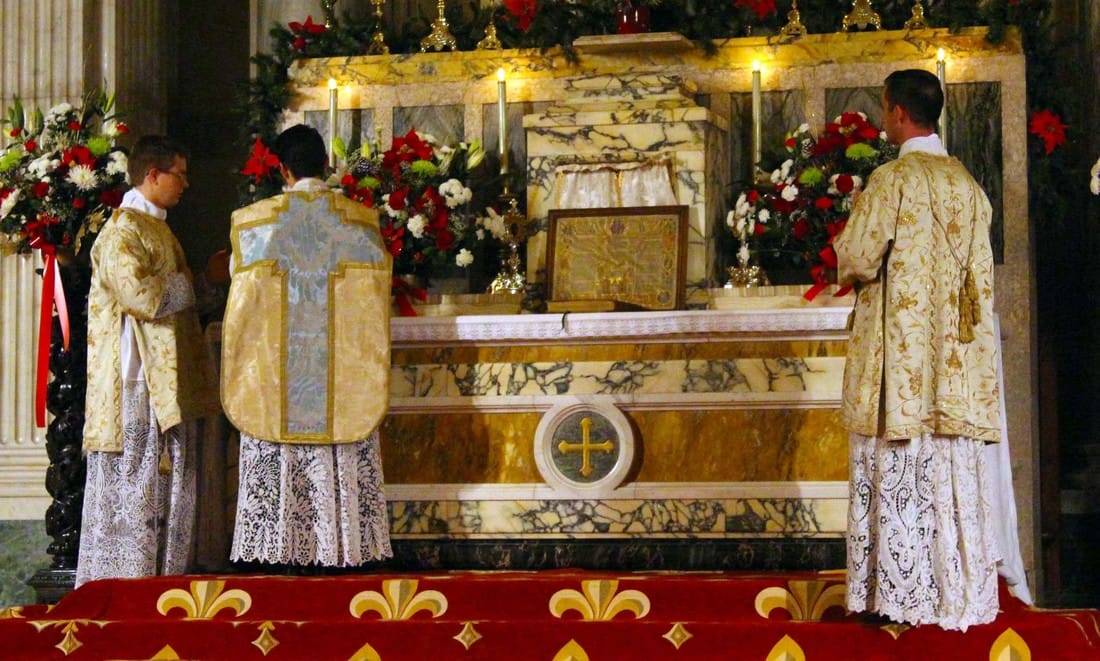
Whilst still a novice with the camera, the ICKSP put me in charge of photography at Midnight Mass! You can see the results by clicking on the image above or here.

A beautiful programme of liturgy began at 7pm with Matins and anticipated Lauds of the Nativity, followed at 1030pm by carols and concluding with the First Mass of the Nativity.
0 Comments

Christmas greeting

24/12/2016

0 Comments

 
Picture
0 Comments

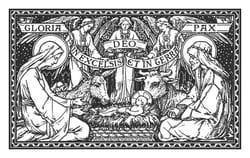
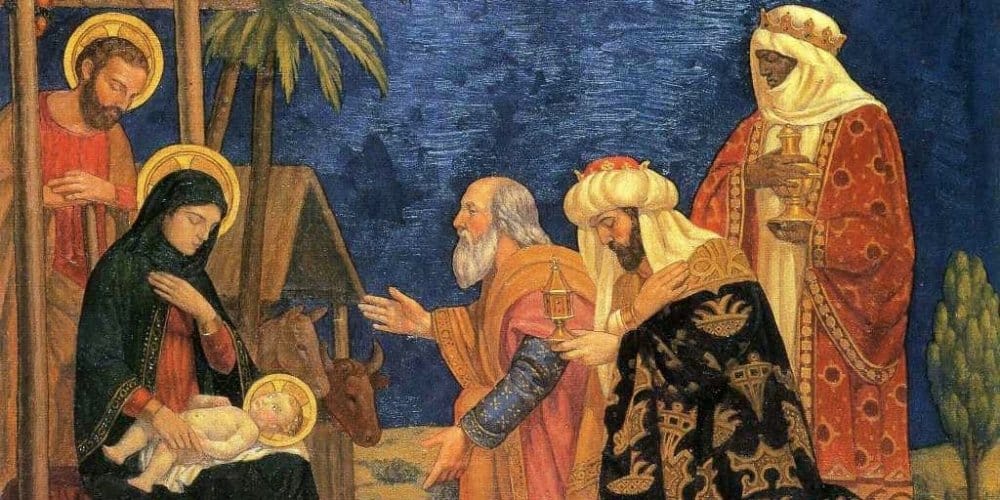
The Liturgy of the Nativity

24/12/2016

0 Comments

 
Picture
The object of today’s liturgy is threefold: first to adore Jesus as true God in His eternal birth as Son of the Father, for to ignore Him would be folly (Introit, Gradual, Communion).
 
Second, to recognise Jesus as true Man in His earthly or temporal birth as Son of Mary, born in a stable where, without speaking a word, but rather by the force of example alone, He teaches humility of service to God and neighbour, instructs us in obedience to the decrees of His Father and the arrangements made by Mary and Joseph, and furthermore warns us against the softening influence of material comforts by the poverty of His manger (Gospel).
 
Third, to realise more and more the spiritual birth of Jesus in our souls (Epistle), by recalling our birth as “reborn” members of His Mystical Body, growing with Him throughout the coming year, by rejoicing in His Joys from Christmas to Lent, by sorrowing with His Sorrows during Lent and by celebrating His Glories during the Easter and Pentecostal periods. Before the crib today, in union with Mary, contemplate this threefold Birth of Jesus.
 
Season of the Nativity

The glorious and joyful I class feast of the Nativity of Our Lord, with II class octave, is 25 December and begins the Season of Christmastide which runs through 5 January.

The first Mass of Christmas is ideally celebrated at midnight. The Gregorian Introit is one of the most moving: Dominus dixit ad me. Filius meus es tu. Ego hodie genui te. (The Lord hath said to me: Thou art My Son. This day have I begotten Thee.) The Gospel of this first Mass tells of the Christmas events, describes how our Lord was born in a stable in Bethlehem, how He was visited by the humble shepherds, who were called by angels, and how a multitude of angels proclaimed, "Glory to God in the highest, and on earth peace to men of good will." The great mystery of Christmas, expressed in the first Mass, consists in realising the great mercy and love of God the Father in allowing His Only Begotten Son, the Second Person of the Trinity, to be born as a creature, of a virgin, in the lowly stable in Bethlehem. Laid into a humble manger, Our Blessed Lord, our own Creator from all eternity, humbled Himself through Divine Love to share our human nature. Some fragments of the original manger have lain for hundreds of years beneath the high altar at St. Mary Major in Rome. The second Mass (of dawn) emphasizes how Our Lord appeared in the world as its True Light. The magnificent Introit relates the prophecy of Isaias concerning Our Redeemer: "A Light shall shine upon us this day for the Lord is born to us, and He shall be called Wonderful, God, the Prince of Peace, the Father of the world to come of whose reign there shall be no end." St. Anastasia, a popular martyr of ancient times, who was slain in the reign of Diocletian by being burned alive, is commemorated through a collect in the Mass. She is the same Anastasia mentioned in the Canon of the Mass. The third Mass of Christmas instructs us that the newborn child is called upon to gain salvation for all mankind. The Gospel is the usual Last Gospel of St. John, the familiar first words being, "In the beginning was the Word, and the Word was with God, and the Word was God." For edification of the faithful it is recommended the proper Last Gospel, previously in use, of Epiphany be said.

In all the Masses of Christmas the particular Preface, Communicantes and Hanc Igitur are used.

Tomorrow, the liturgy of the remainder of the Octave.
0 Comments

Preparing for the new arrival

23/12/2016

0 Comments

 
Picture
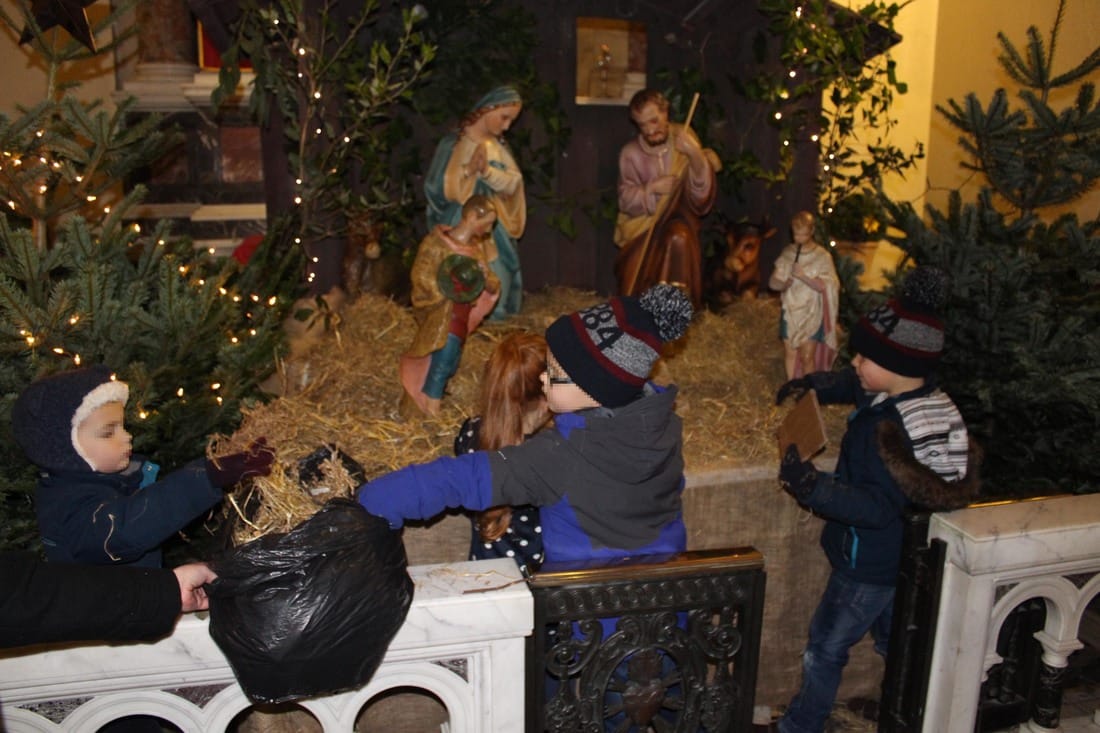
Children including my own daughter, share in the anticipation surrounding the arrival of the Our Lord, the baby Jesus as they prepare the crib scene at Ss Peter & Paul and St Philomena Church at New Brighton earlier this evening.
0 Comments

Sponsor a Pilgrim to Walsingham

20/12/2016

0 Comments

 
Picture
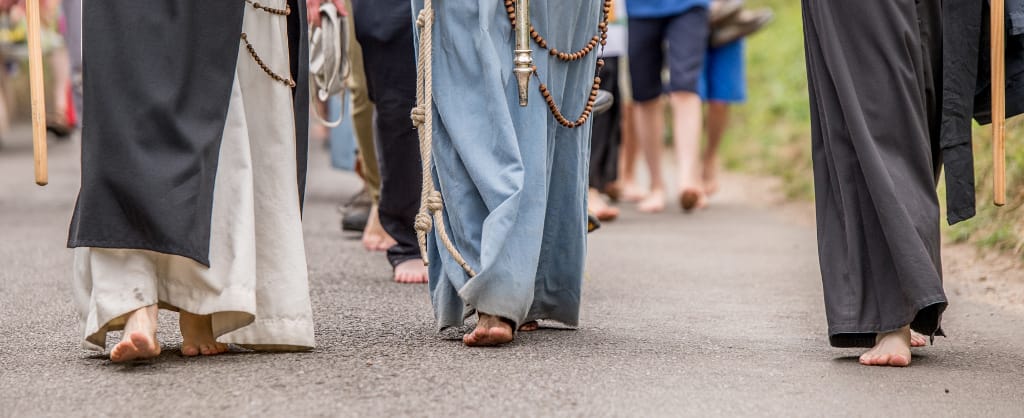
On the last weekend of August, the Society holds its Annual Walking Pilgrimage to Walsingham, covering 59 miles of paths, tracks, and roads, in the footsteps of countless pilgrims since b

Before the Norman Conquest, for the Conversion of England.

Today, we are offering supporters not able to do the walk the chance to share in the graces of the pilgrimage by sponsoring the pilgrims.

We strive to match the sacrifices of the walking pilgrims with splendid liturgy, the best possible support on the road, and proper evening meals, cooked from scratch each day. At the same time, we want to keep pilgrims’ fees as low as possible, with generous discounts for children and students. We don’t charge our chaplains, or seminarians and religious. Our volunteers, also, need to be supported.

To do this in 2017 and beyond, we need your help

In the Middle Ages those who could not go on pilgrimage in person would often sponsor poor pilgrims, and in this way share in the graces received, asking the pilgrims to pray for their intentions. In modern times, pilgrims of the Guild of Our Lady of Ransom carried a satchel of written petitions, from supporters, to Walsingham. There is a box for such written petitions in the Slipper Chapel.

In 2016, LMS pilgrims were accompanied by Fr Michael Rowe from Perth, Australia, and Fr James Mawdsley FSSP.  We had Friars from Gosport, a seminarian, and a lay brother from France.  We’ve been joined over the years by secular clergy, and members of the ICKSP and the F.SS.R. from Papa Stronsay.

Our tireless support team includes three drivers and five cooks, as well as leaders of chapters, marshalls, and singers. In 2016, we had 16 children and students with us.

Don’t miss your chance to play a part in the Walsingham Pilgrimage

The Pilgrimage in 2017 and beyond is only going to be possible with the help of you, our pilgrims’ sponsors.
In return for your help, pilgrims will:
  • Pray for you, with your name, as ‘anon’, or ‘in memoriam’ or your deceased loved ones, listed in pilgrims’ information packs’.
  • Offer Mass for you during the Pilgrimage, on the Saturday morning.
  • Carry your petitions, in written form, by foot from Ely to Walsingham, for deposit beneath the Shrine image in the Slipper Chapel.

See the online sponsorship form here.
0 Comments

Timetable for Formal Correction?

19/12/2016

0 Comments

 
PictureCardinal Burke
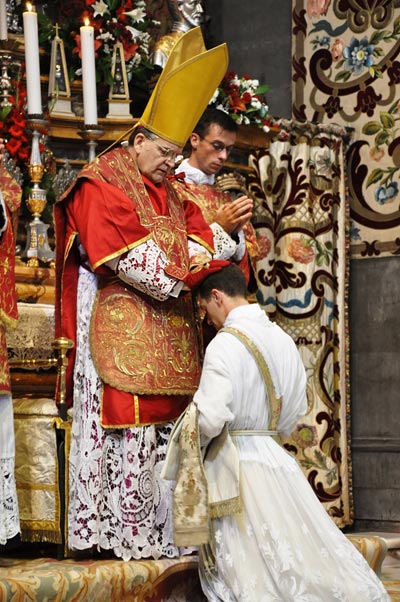
In an exclusive interview with LifeSiteNews, Cardinal Raymond Burke has given an indication of the possible timeline of a “formal correction” of Pope Francis should the Pope not respond to the five dubia seeking clarity on Amoris Laetitia, presented to the Pope by four Cardinals, including Cardinal Burke.

“The dubia have to have a response because they have to do with the very foundations of the moral life and of the Church’s constant teaching with regard to good and evil, with regard to various sacred realities like marriage and Holy Communion and so forth,” Burke said during a telephone interview.

“Now of course we are in the last days, days of strong grace, before the Solemnity of the Nativity of Our Lord, and then we have the Octave of the Solemnity and the celebrations at the beginning of the New Year - the whole mystery of Our Lord’s Birth and His Epiphany - so it would probably take place sometime after that.”

The cardinal, who is the patron of the Sovereign Order of Malta, said the format of the correction would be “very simple.”

“It would be direct, even as the dubia are, only in this case there would no longer be raising questions, but confronting the confusing statements in Amoris Laetitia with what has been the Church’s constant teaching and practice, and thereby correcting Amoris Laetitia,” he said.
The exhortation has caused widespread confusion in the Catholic Church since its release in April, largely due to its ambiguity on important moral questions. This has caused various bishops as well as bishops’ conferences to interpret the document, at times, in ways that are at odds with Catholic teaching on marriage, sexuality, conscience, and reception of Holy Communion. For example, the bishops of Buenos Aires and Bishop Robert McElroy of San Diego have interpreted the document as allowing civilly divorced and remarried Catholics who are living in adultery to receive Holy Communion in certain cases. The Pope himself wrote to the Buenos Aires bishops to praise their guidelines, saying there was “no other interpretation.”

Cardinal Burke, along with Cardinals Walter Brandmüller, Carlo Caffarra, and Joachim Meisner, submitted the dubia, five yes or no questions, in September seeking clarity from Pope Francis on whether the exhortation conforms to Catholic moral teaching. When the Pope did not issue a response after two months, the cardinals released the dubia publicly. It was after this that Cardinal Burke disclosed that a formal act of correction would be necessary, if the Pope refused to clarify the meaning of his exhortation.

While such an act of formal correction is something rare in the life of the Church, it is not without precedent.

Pope John XXII in the 14th century was publicly challenged by cardinals, bishops, and lay theologians after denying the doctrine that the souls of the just are admitted to the beatific vision after death, teaching instead that heaven is delayed until the general resurrection at the end of time. Pope John eventually recanted his position, due in part to a joint letter from theologians from the University of Paris that professed total obedience to the pope while making it clear to him that his teaching contradicted the Catholic faith.

His Eminence called the procedure of correcting the error of a pontiff a “way of safeguarding that office and its exercise.”

“It’s carried out with the absolute respect for the office of the Successor of Saint Peter,” he said.

0 Comments

Early Christmas gift delivered on the Wirral

19/12/2016

0 Comments

 
Picture
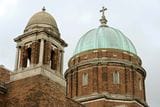
Ss Peter & Paul and St Philomena at New Brighton on the Wirral, one of the English missions of the Institute of Christ the King Sovereign Priest, has gained some funding to make repairs to the roof over the side altars dedicated to the Sacred Heart and Our Lady. The full story can be read here.

0 Comments

Reminder

18/12/2016

0 Comments

 
There is no 4th Sunday Mass at Holywell in December, which falls on Christmas Day.

Canon Doyle has parish duties to undertake on Christmas morning and therefore it would be difficult to be in Holywell for 1130am. The next Mass at Holywell will be on the 22nd January.

The next Traditional Masses in Wrexham Diocese will be at Our Lady of the Rosary in Buckley on Saturday 7th January 2017 at 1230pm and at St Francis of Assisi, Llay on Sunday 8th January 2017.
0 Comments

Meditation for the Fourth Sunday of Advent

17/12/2016

0 Comments

 
Picture
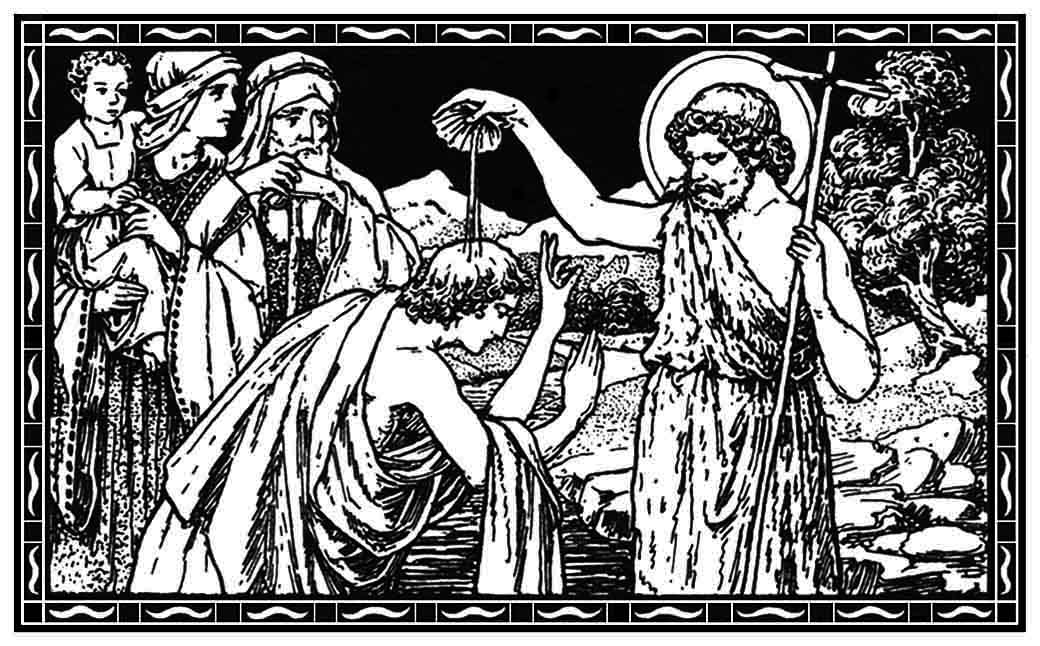
John preaching the Baptism of Penance.

I place myself at the feet of Jesus and ask
Him to prepare my heart for His imminent coming
.

MEDITATION (adapted from Divine Intimacy by Father Gabriel of St Mary Magdalen, O.C.D)

“Call together the nations, tell it among the people and say: Behold our Saviour comes!” (Roman Breviary). The message becomes more and more urgent: in a few days, the Word of God made flesh will show Himself to the world. We must hasten our preparations and make our hearts worthy of Him.

The Incarnation of the Word is the greatest proof of God’s infinite love for men; today’s liturgy very appropriately recalls to our mind the wonderful words: “I have loved thee with an everlasting love, therefore have I drawn thee, taking pity on thee” (Jeremiah 31:3). Yes, God has loved man from all eternity, and in order to draw him to Himself, He did not hesitate to send “His own Son in the likeness of sinful flesh” (Romans 8:3). With hearts full of love, we must run to meet Love who is about to appear “incarnate” in the Infant Jesus. May it be a love that is faithful in great things as well as in small, an ingenious love that is always seeking opportunities to repay God’s infinite love. “Love is repaid by love!” This is the motto which has made saints and spurred a multitude of souls to greater generosity.

With this love prepare for Christmas, be in this love faithful, for as St. Paul says in the Epistle (cf 1 Corinthians 4:1-5), “What we desire is that everyone may be found faithful.”

COLLOQUY

O almighty, omnipotent, eternal God, what greater proof of love could You give Your poor creatures than the gift of Your Word, Your only-begotten Son? For our sake, You clothed with human flesh, like the flesh of sin, Him who is eternal splendor, the perfect image of Your substance!

“God of goodness, who art above all goodness, You alone art sovereign good! You gave us the Word, Your only Son, to live with us, to assume our evil, corrupt nature. Why did You make us such a gift? Out of love, because You loved us even before we existed.

“O eternal Greatness, O fathomless Bounty, You lowered Yourself to ennoble mankind! Wherever I turn, I can see nothing but the abyss and fire of Your charity” (St. Catherine of Siena).

“Whenever I think of Christ, I should remember … how great is Your love, O Father, which in Jesus has given us a pledge of such great tenderness; for love begets love and although I am only a beginner and very wicked, I shall strive ever to bear this in mind and awaken my own love. Once You, O Father, do me the favor of implanting this love in my heart, everything will become easy for me and I shall get things done in a very short time and with very little labour. O my God, give me this love, since You know how much I need it, for the sake of the love You bore us and through Your glorious Son who revealed it to us, at such great cost to Himself” (Teresa of Jesus, Life, 22).

Love will fill the valleys in my heart, and humility will level its mountains and hills. Destroy my pride, arrogance, and vanity, O Lord, by the powerful fire of Your love. By the might of Your all-powerful arm, tear out of my heart every fiber which is infected with the poison of self-love, and which, therefore, does not belong to You. O Lord, I, too, wish to decrease, decrease that You may increase in me, so that on Christmas Day You may find my heart entirely empty and free and therefore ready for the total invasion of Your love.
0 Comments

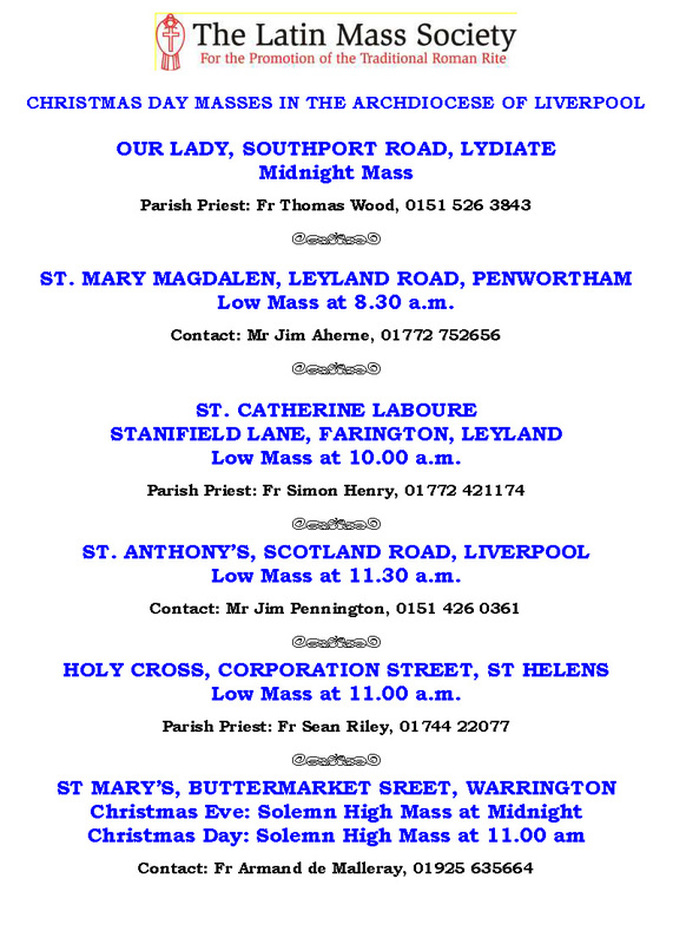
Masses on Christmas Day in Liverpool Archdiocese

14/12/2016

0 Comments

 
Picture
0 Comments

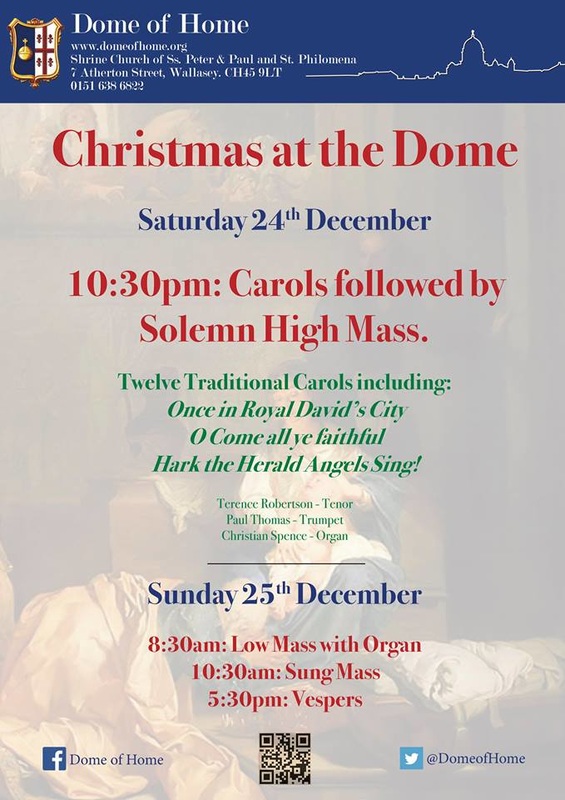
Christmas at New Brighton

11/12/2016

0 Comments

 
Picture
0 Comments
<<Previous
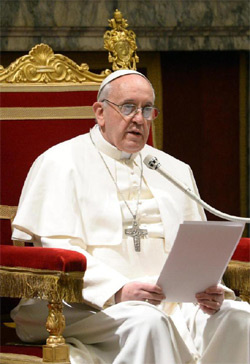
    Pope Francis
    Picture
    Oremus pro Pontifice nostro Francisco: Dominus conservet eum, et vivificet eum, et beatum faciat eum in terra, et non tradat eum in animam inimicorum eius.


    Picture
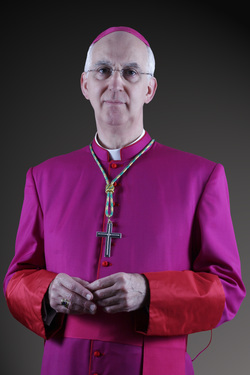
    Picture
    Omnipotens sempiterne Deus, qui facis mirabilia magna solus: praetende super famulos tuos, et super congregationes illis commissas, spiritum gratiae salutaris; et, ut in veritate tibi complaceant, perpetuum eis rorem tuae benedictionis infunde.


    Any views expressed neither represent those of the Latin Mass Society or the Diocese of Wrexham.

    Archives

    August 2022
    July 2022
    June 2022
    May 2022
    April 2022
    March 2022
    February 2022
    January 2022
    December 2021
    November 2021
    October 2021
    September 2021
    August 2021
    July 2021
    June 2021
    May 2021
    April 2021
    March 2021
    February 2021
    January 2021
    December 2020
    November 2020
    October 2020
    September 2020
    August 2020
    July 2020
    June 2020
    May 2020
    April 2020
    March 2020
    February 2020
    January 2020
    December 2019
    November 2019
    October 2019
    September 2019
    August 2019
    July 2019
    June 2019
    May 2019
    April 2019
    March 2019
    February 2019
    January 2019
    December 2018
    November 2018
    October 2018
    September 2018
    August 2018
    July 2018
    June 2018
    May 2018
    April 2018
    March 2018
    February 2018
    January 2018
    December 2017
    November 2017
    October 2017
    September 2017
    August 2017
    July 2017
    June 2017
    May 2017
    April 2017
    March 2017
    February 2017
    January 2017
    December 2016
    November 2016
    October 2016
    September 2016
    August 2016
    July 2016
    June 2016
    May 2016
    April 2016
    March 2016
    February 2016
    January 2016
    December 2015
    November 2015
    October 2015
    September 2015
    August 2015
    July 2015
    June 2015
    May 2015
    April 2015
    March 2015
    February 2015
    January 2015
    December 2014
    November 2014
    October 2014
    September 2014
    August 2014
    July 2014
    June 2014
    May 2014
    April 2014
    March 2014
    February 2014
    January 2014
    December 2013
    November 2013
    October 2013

    RSS Feed

Powered by Create your own unique website with customizable templates.