THE LATIN MASS SOCIETY IN WREXHAM
  • Home
  • News Blog
  • About the Traditional Mass
    • Responsa Ad Dubia on certain provisions of the Apostolic Letter Traditionis Custodes issued “Motu Proprio”
    • Traditionis Custodes
    • The letter of Pope Francis accompanying Traditionis Custodes
    • CDF 2020 Decree on Saints and Prefaces
    • Universae Ecclesiae
    • Pope Benedict XVI's Letter to the Bishops
    • Summorum Pontificum
    • Holy Days of Obligation >
      • Exchange of Letters
      • LMS Press Release on Holy Days
      • Restoration of Holydays [2017]
    • Apostolic Letter, Sacrificium Laudis
    • Tips on attending the Extraordinary Form
    • Expressions of the Extraordinary Form
    • A quick guide to Mass classification
    • Latin Pronunciation
  • Wrexham Diocese
    • The Cathedral Church
    • About St Richard Gwyn
    • About St Winefride
    • Diocesan Feasts in the 1962 calendar
    • Gweddi dros Gymru
    • Gweddi ar Ddewi Sant
  • LMS Shop
  • Links

X Sunday after Pentecost: How do we pray?

31/7/2021

0 Comments

 
Picture
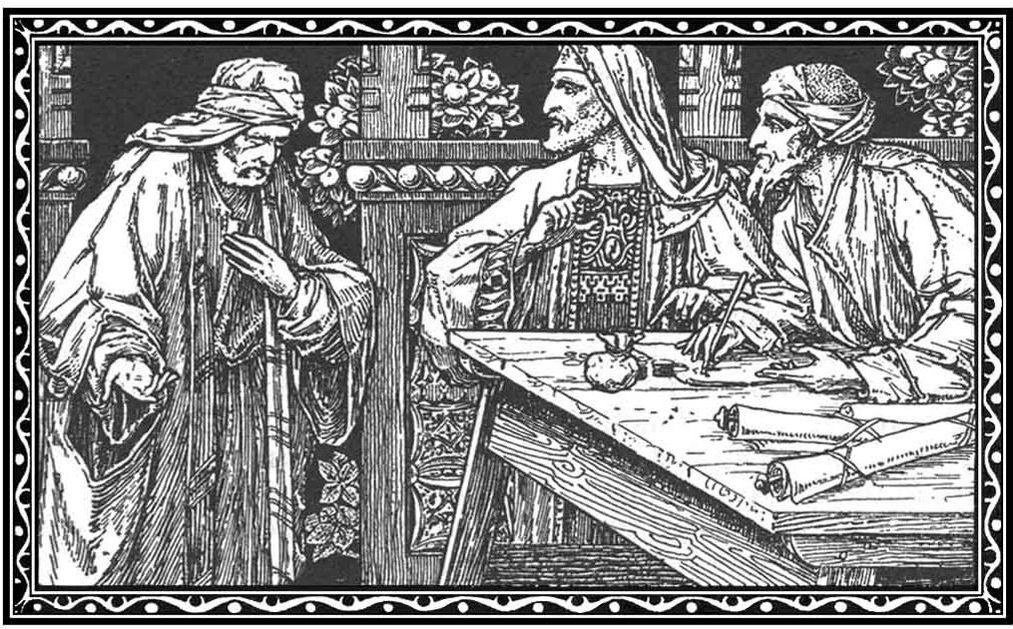
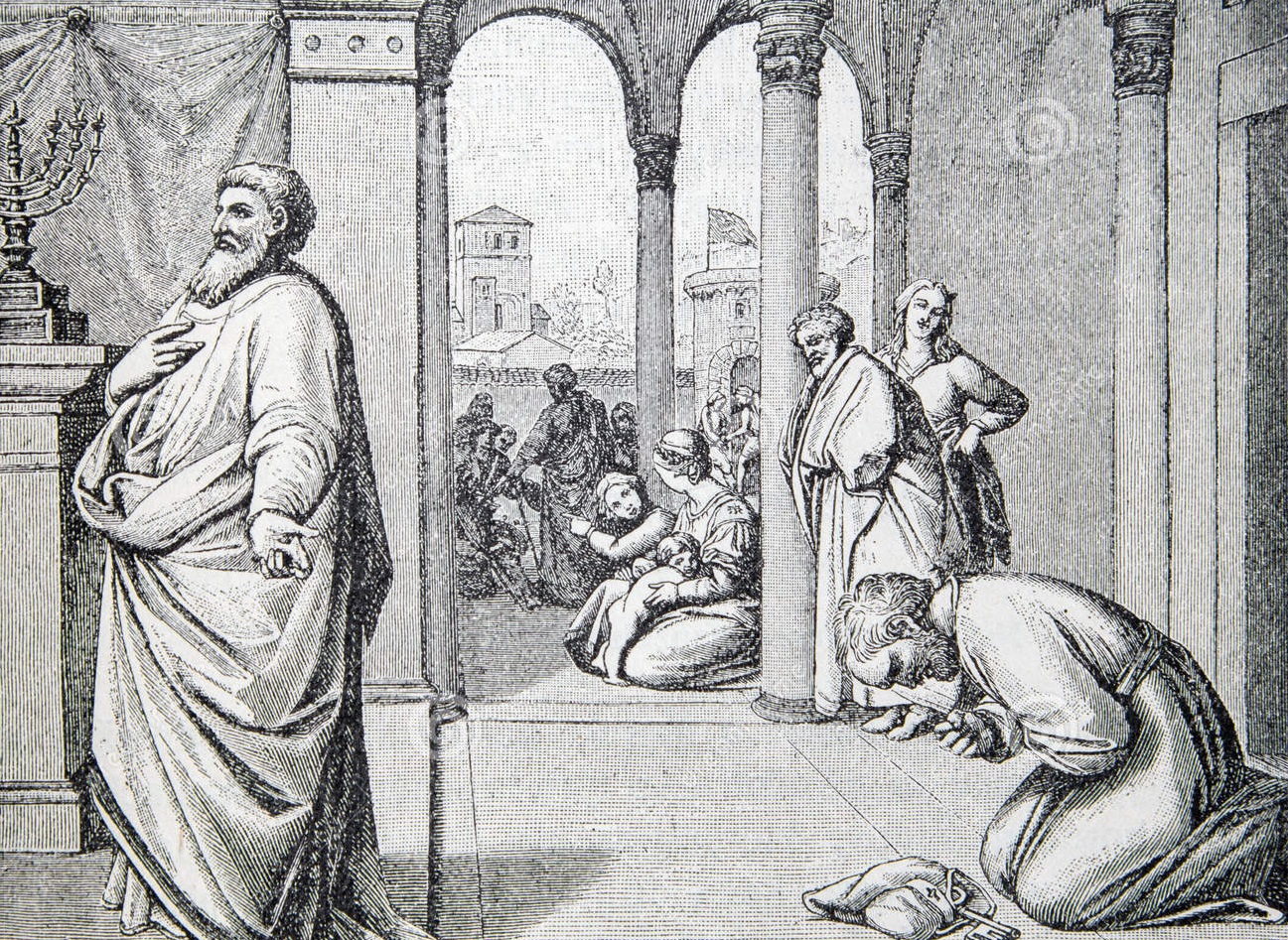
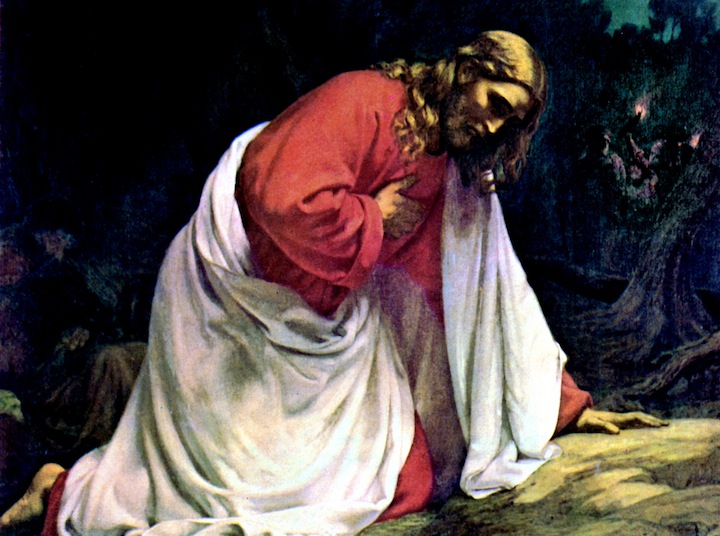
Duo hómines ascendérunt in templum, ut orárent: unus pharisǽus, et alter publicánus
 The question placed before us today is: how do we pray?

We all too often place ourselves in comparison with our neighbour. We look upon his sins and secretly think ourselves better because we have not been tempted to the same sins as he is. Or, we look upon his virtues and secretly consider ours better than his. In either case we make a great mistake.

St. Augustine reminds us that there is no sin which any man commits, that we ourselves might commit if it were not for the grace of God. (Serm 49) Without the grace of God we can fall into each and every sin possible. If we find that we ourselves have not fallen it is truly because God has protected us in this area. It would be foolish for us to consider that we have avoided this or that sin by our own strength and power. Of ourselves we have done nothing to merit praise. If there is any praise that is deserved, then it belongs totally and completely to God, who has worked this grace in us.

Rather than look down upon someone else who has fallen and considering ourselves greater; we should consider that perhaps we are so weak that God has seen fit not to even allow us to be tempted in this area. Perhaps in truth, the one who has sinned may be more pleasing to God as he has been seen fit to have been put into the battle while we are so weak that He has kept us out of the battle. The worse sin appears to be, when we are content to remain in sin, rather than repenting and rising up again to fight the good fight. Our Lord has informed us that there is more joy of the one sinner doing penance than over the ninety-nine who have no need of repentance.

St. Paul admonishes us on the other end of the spectrum not to become despondent when we see that others have received better graces than we have, or to consider that the graces that we have received somehow make us better than our neighbour.

It is the same Holy Ghost that gives one grace to one and another grace to another. He does this as He wills and not necessarily according to the merits or demerits of the person in question. Often we see that God chooses the most unworthy of His children to exhibit the greatest graces and gifts. He often uses the foolish of this world to confound the wise. (1 Cor. 1:27) In such a manner God is sure to be the one honored and glorified for His gifts and it is most obvious that the lowly instrument that He uses is not the source of such magnificent or wondrous things.

We see this manifested most clearly in the lives of the saints, who in the performance of miracles always gave the credit to God and considered themselves unfitted and unworthy of any of the credit.

We too, must learn from the saints. We must avoid considering ourselves above anyone else. If we perchance do observe something better in ourselves than in our neighbour, rather than become puffed up with pride we must constantly remind ourselves that it is God who has done this and not ourselves. Even if we have remained free from one sin or another, we have failed in many others and we would have fallen in this one too if God had not preserved us from it.

The comparison that we are to make is not with ourselves and others, but rather with ourselves and Jesus Christ. He is our role model; He is the one that we must measure up against. Every one of us must find ourselves severely lacking in this comparison and so we must all become like the Publican rather than the Pharisee. If there should ever arise the temptation to compare ourselves against our fellow men let us see in them the good that God has done, and in ourselves the grace that we have wasted or abused. In this manner our prayers will be pleasing and acceptable to God.
0 Comments

The Ninth Sunday after Pentecost

24/7/2021

0 Comments

 
Picture
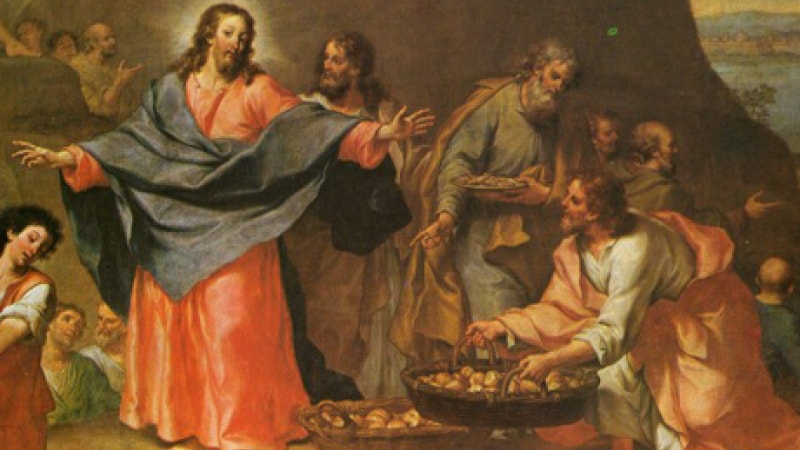
In illo témpore: Cum appropinquáret Iesus Ierúsalem, videns civitátem, flevit super illam
This Sunday's Mass emphasises the theme that the great lesson of history is that men do not profit by its lessons.

The Epistle describes the history of the many evils that befell the ancient Jew after his rejection of the True God and his worship of the flesh. At the same time, it comforts us that there is a distinction between temptation and sin, and that temptation is only the test of character, for "God is my helper" (Introit), Who will "save the humble people" (Offertory) that "hopeth in Him" (Communion).

The Gospel depicts a pitiful picture of Jesus weeping over Jerusalem. "If thou hadst known." It tells of the Jews defilement of God's house, of their future destruction as a chosen race. As for me, I must learn from the Epistle which was "written for our correction." If our prayers deserve to be heard, we must learn to "ask only for those things pleasing to God" (Prayer). We must be Christians of lively faith and learn to see "His Name in the whole earth" (Gradual); praying Him to defend us from enemies that would destroy His Name on earth or His image in our soul. Finally, if we learn to "eat" His Flesh worthily now (Communion), we shall one day learn that His Judgments are sweet (Offertory).

Today is Feast day of St. James the Great, Apostle, son of Zebedee, brother of St. John, one of the first Disciples called to follow Jesus. His name is inscribed in the Canon, and a bow made at its mention. St. James witnessed the Transfiguration with SS Peter and John as well as the agony in the garden. He was put to death by Herod Agrippa. The Saint is venerated as the Apostle of Spain.
0 Comments

The head scratching continues - The World Over

24/7/2021

0 Comments

 
The Thursday edition of EWTN's 'The World Over' is an interesting watch, with contributions by Gerhard Cardinal Müller and Raymond Cardinal Burke and a very good analysis by Robert Royal, Editor-In-Chief of Thecatholicthing.Org, and Fr. Gerald Murray, Canon Lawyer and Priest of the Archdiocese of New York.
0 Comments

Statement of His Eminence, Raymond Leo Cardinal Burke

23/7/2021

0 Comments

 
Picture
Many faithful – laity, ordained and consecrated – have expressed to me the profound distress which the Motu Proprio «Traditionis Custodes» has brought them. Those who are attached to the Usus Antiquior (More Ancient Usage) [UA], what Pope Benedict XVI called the Extraordinary Form, of the Roman Rite are deeply disheartened by the severity of the discipline which the Motu Proprio imposes and offended by the language it employs to describe them, their attitudes and their conduct. As a member of the faithful, who also has an intense bond with the UA, I fully share in their sentiments of profound sorrow.

As a Bishop of the Church and as a Cardinal, in communion with the Roman Pontiff and with a particular responsibility to assist him in his pastoral care and governance of the universal Church, I offer the following observations:

Read more ...

0 Comments

The Eighth Sunday after Pentecost

17/7/2021

0 Comments

 
Picture
The Holy Mass places before us the Christian’s use or abuse of “goods,” either of human nature or of Divine Grace. The Introit recalls that as we now receive “Mercy,” yet one day we must stand before “Justice.” How necessary, then, the “Prayer” for “doing and thinking” what is right.

Active participation in the Mass, advises Pope St. Pius X, is the indispensable source of the true Christian spirit, how to pray and how to live. The Epistle bids us reflect, who you are, “not debtors to the flesh,” by which “you shall die,” but “sons of God, joint heirs with Christ” by Whom you shall live.

The Gospel dramatizes this dignity and duty in the parable of the Steward, the meaning of which is “be wise,” you children of God. Use material treasures so as to make eternal friends. Exercise your talents in the spiritual and corporal works of mercy, and those whom you help to save, will help save you. Finally, the Offertory assures salvation to the humble, warns the proud of their final humbling. Christianity is not so much a “giving up” but rather an “exchange” of “gifts” (Secret), the human for the Divine, to bring healing to “soul and body” (Postcommunion).

The 18th July is the Feast of St. Camillus de Lellis C., who established an order to minister to the sick in hospitals, even those with deadly diseases, in the XVII Century. Pope Leo XIII named the Saint Patron of Hospitals. His name is included in the Litany of the Dying. First Century St. Symphorosa and her Seven Sons, martyred about 120 for the Faith, wife of the Martyr Getullus, are commemorated in the Mass of the Saint. Under the 1960 rubrics of the Mass, no commemoration is made of the Saints.

In these troubled times, a poignant Gospel text is read tomorrow ironically in Ordinary Form Masses. Apt for time in which we find ourselves in :
Mark 6:30-34
Erant sicut oves non habentes pastorem.


In illo témpore:
    Conveniéntes apóstoli ad Iesum renuntiavérunt illi ómnia, quæ égerant et docúerant. Et ait illis: «Veníte vos ipsi seórsum in desértum locum et requiéscite pusíllum». Erant enim, qui veniébant et redíbant, multi, et nec manducándi spátium habébant.
    Et abiérunt in navi in desértum locum seórsum. Et vidérunt eos abeúntes et cognovérunt multi; et pedéstre de ómnibus civitátibus concurrérunt illuc et prævenérunt eos.
    Et éxiens vidit multam turbam et misértus est super eos, quia erant sicut oves non habéntes pastórem, et cœpit docére illos multa.
Mark 6:30-34
They were like sheep without a shepherd


The apostles rejoined Jesus and told him all they had done and taught. Then he said to them, ‘You must come away to some lonely place all by yourselves and rest for a while’; for there were so many coming and going that the apostles had no time even to eat. So they went off in a boat to a lonely place where they could be by themselves. But people saw them going, and many could guess where; and from every town they all hurried to the place on foot and reached it before them. So as he stepped ashore he saw a large crowd; and he took pity on them because they were like sheep without a shepherd, and he set himself to teach them at some length.
0 Comments

Traditionis Custodes

16/7/2021

0 Comments

 
Picture
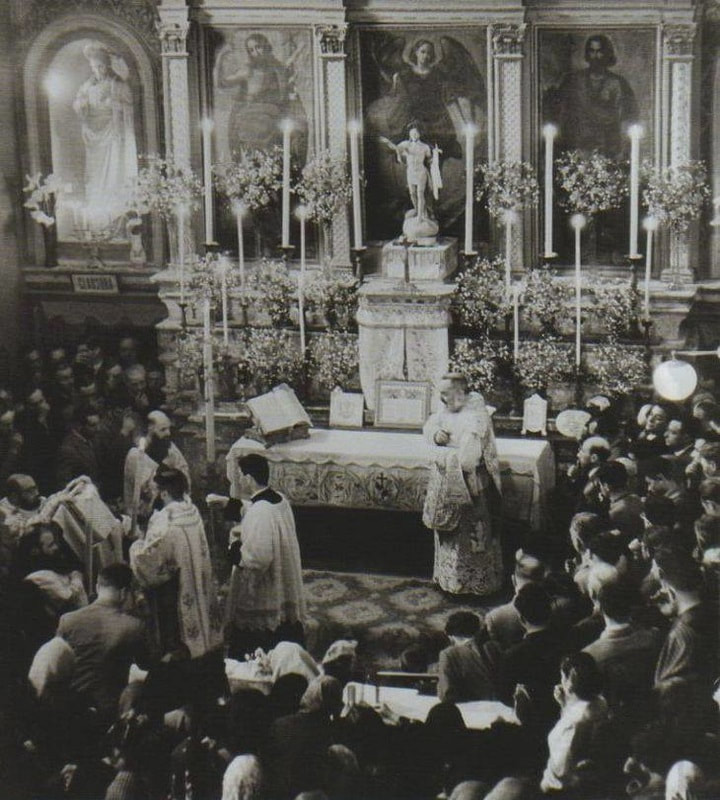
Saint Pio of Pietrelcina celebrates Mass
The depressing text of Traditionis Custodes can be read here.

The instruction of the Pope, of his own initiative, will make it EXTREMELY difficult to bring back the celebration of the Mass in this Diocese as it will be the world over.

Over the course of the day, I have reflected and having spoken to a good priest, I urge you to avoid becoming irate and pushed toward saying and thinking things that are unbecoming - pray for this Pontificate - it needs prayers in abundance.

The intial comments of the Chairman of the Society, Dr Joseph Shaw can be found here.

My own view is this is an act akin to the self inflicted amputation of a wing of the Roman Church - it fails to acheive what the 'stated' aim is i.e. unity. It will cause disaffection from excellent clergy who are  balanced in their liturgical and pastoral responsibilities, it will cause heartache for the faithful.

If Rome is the HQ of Catholic PLC, the CEO today made a poor decision but the board of directors, selected for their loyalty to the CEO and not perhaps the best interests of the company will not be overly critical. Those who have spoken out sit outside the boardroom having long since been shown the door because they present those challenges!

Meanwhile, His Eminence Raymond Leo Cardinal Burke prefect emeritus of the Apostolic Signatura, noted what he sees as a number of flaws in Traditionis Custodes, saying he could not understand how the new Roman Missal is the “unique expression of the lex orandi of the Roman Rite,” as the new motu proprio states. The Extraordinary Form of the Mass “is a living form of the Roman Rite and has never ceased to be so,” Cardinal Burke noted.

He also could not understand why the motu proprio takes effect immediately, as the decree “contains many elements that require study regarding its application.”

His Eminence further noted that in his long experience he has not witnessed the “gravely negative situation” Francis describes in his letter.

While some faithful may have “erroneous ideas,” he said, he has found the faithful in question generally “have a profound love for the Church and for their pastors in the Church” and “in no way ascribe to a schismatic or sedevacantist ideology. In fact, they have often suffered greatly in order to remain in the communion of the Church under the Roman Pontiff,” he said.

Cardinal Burke added that if there are situations “of an attitude or practice contrary to the sound doctrine and discipline of the Church, they should be addressed individually by the pastors of the Church, the Roman Pontiff and the Bishops in communion with him.”  

Cardinal Burke also questioned the motu proprio’s tone, observing that it is “marked by a harshness” towards faithful who worship in the Extraordinary Form.

“I pray that the faithful will not give way to the discouragement which such harshness necessarily engenders but will, with the help of divine grace, persevere in their love of the Church and of her pastors,” he said.

Our Lady of Mount Carmel, pray for us.
0 Comments

Seventh Sunday after Pentecost

10/7/2021

0 Comments

 
Picture
Atténdite a falsis prophétis, qui véniunt ad vos in vestiméntis óvium, intrínsecus autem sunt lupi rapáces
The Pentecostal Season is well on its way with the twelve “fruits” of the Holy Spirit.

Hence, as summer also advances toward the harvest, today’s Holy Mass has a timely lesson, observed by Jesus from fruit trees. The Introit is a call to prayer, yes, but a call to prayer followed by Catholic Action. It bespeaks “the voice of joy,” yes, but also counsels “clap your hands,” which in ancient times signified not only to praise a person by the tongue but to work for him with the hands.

Since if all the tree’s life goes into the wagging tongues of waving leaves, how can there be any fruit? Deeds, not mere words, are acceptable to God and are the best kind of example to neighbour.

“The fruit” of sin is shame and death (Epistle), while the fruit of sanctity is life everlasting. “By their fruits” shall you know false teachers of false Christians (Gospel).

Not so much what one “says” about the Lord, but he who “does” His Will, brings forth good fruit. The Holy Eucharist is “health giving” (Postcommunion) the fruit of Calvary, to counteract the poison laden “Dead Sea” fruit of the world.

Today is Feast of St. Pius I, Pp. M., of the II Century, successor of St. Hyginus, who served as Holy Father from 141 to 155 and although not commemorated in the Mass, using the newer rubrics, pray for strength to maintain the true doctrines of the Catholic Church in these tumultuous times.
0 Comments

Statement from Una Voce International on Summorum Pontificum

6/7/2021

0 Comments

 
Picture

Living the faith, living the future:
The Extraordinary Form of the Roman Rite
Declaration of the International Federation Una Voce

The International Federation Una Voce (FIUV), founded in 1965, brings together associations of the lay faithful attached to the Extraordinary Form of the Roman rite (the Traditional Latin Mass).

In 2007, the Apostolic Letter Summorum Pontificum recognised the vitality of the traditional liturgy, the freedom of priests to celebrate it, and of the faithful to request it. This has led to an ongoing increase in the number of celebrations of the ancient Latin Mass, and of its spiritual fruits.

During 2020 the FIUV conducted a worldwide survey of the faithful on the implementation of Summorum Pontificum. From this survey, which included results from 364 dioceses in 52 countries, we found:

  • The ancient Latin Mass is deeply appreciated by groups of faithful of all ages, especially families with children, young people and converts, found in all social and cultural environments, on all continents and in an ever increasing number of countries.
  • In many areas the increased availability of this Mass has favoured the normalisation of relations between the faithful attached to it and their bishops, relations increasingly characterised by mutual understanding and respect.

Nevertheless, we have noticed that, contrary to the previous policy of the Holy See, there are still people within the Church, including some bishops, who would like to see the Extraordinary Form of the Roman rite explicitly suppressed, or subject to further restrictions. For this reason, the FIUV, in view of the faithful who adhere to the Latin Mass, feels the duty to express its opinion, encouraged by Pope Francis’ exhortations to the members of the Church to use parrhesia with the necessary humility.

The growth of interest in the traditional liturgy is not due to nostalgia for a time we do not remember, or a desire for rigidity: it is rather a matter of opening ourselves to the value of something that for most of us is new, and inspires hope. Pope Francis has characterised the ancient liturgy in terms of a “sense of adoration” (Press conference of 28 July 2013), we can also apply his words to it: a “living history that welcomes us and pushes us forward” (Evangelii Gaudium 13).

Today we only wish to be part of that “great orchestra” of “unity in variety” which, as Pope Francis said (General Audience of 9 October 2013), reflects the true catholicity of the Church. The Apostolic Letter Summorum Pontificum continues to transform the conflicts of the past into harmony: long may it to continue to do so.

Felipe Alanis Suarez, President                                                                                        
www.fiuv.org

0 Comments

6th Sunday after Pentecost

3/7/2021

0 Comments

 
Picture
“I have compassion on the multitude.” This sentiment of the Divine and Human Heart (Gospel), so endearing to us, inspires our pleas to God in the Introit, that He save us because we belong to Him. The Prayer, alluding to our Baptism, when He implanted in us a love of His Name (which means “to save”) beseeches God to foster and then to protect “what is good.” What is “good?” It is to “foster” the “new life” in Christ Jesus begun at Baptism (Epistle); “dead to sin” is its negative side; “alive to God” is its positive.

To “protect” and to nourish this Life is the object of the Eucharist, which is its food. A hunger for the Divine Life and “Goodness” is universal to all times and places, as prefigured in the Gospel, “Can anyone fill them in the wilderness” of life, where the mind hungers for Truth, the will and heart hunger for Love? At the altar of sacrifice God will not “allow the hopes of anyone to be in vain” (Secret). Only at the altar of the Sacrament are we really “filled” (Postcommunion).
0 Comments
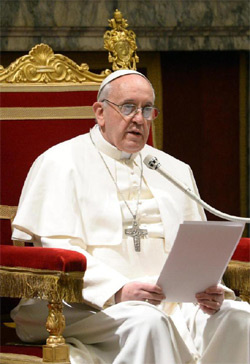
    Pope Francis
    Picture
    Oremus pro Pontifice nostro Francisco: Dominus conservet eum, et vivificet eum, et beatum faciat eum in terra, et non tradat eum in animam inimicorum eius.


    Picture
    Picture
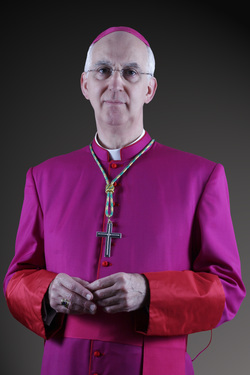
    Omnipotens sempiterne Deus, qui facis mirabilia magna solus: praetende super famulos tuos, et super congregationes illis commissas, spiritum gratiae salutaris; et, ut in veritate tibi complaceant, perpetuum eis rorem tuae benedictionis infunde.


    Any views expressed neither represent those of the Latin Mass Society or the Diocese of Wrexham.

    Archives

    August 2022
    July 2022
    June 2022
    May 2022
    April 2022
    March 2022
    February 2022
    January 2022
    December 2021
    November 2021
    October 2021
    September 2021
    August 2021
    July 2021
    June 2021
    May 2021
    April 2021
    March 2021
    February 2021
    January 2021
    December 2020
    November 2020
    October 2020
    September 2020
    August 2020
    July 2020
    June 2020
    May 2020
    April 2020
    March 2020
    February 2020
    January 2020
    December 2019
    November 2019
    October 2019
    September 2019
    August 2019
    July 2019
    June 2019
    May 2019
    April 2019
    March 2019
    February 2019
    January 2019
    December 2018
    November 2018
    October 2018
    September 2018
    August 2018
    July 2018
    June 2018
    May 2018
    April 2018
    March 2018
    February 2018
    January 2018
    December 2017
    November 2017
    October 2017
    September 2017
    August 2017
    July 2017
    June 2017
    May 2017
    April 2017
    March 2017
    February 2017
    January 2017
    December 2016
    November 2016
    October 2016
    September 2016
    August 2016
    July 2016
    June 2016
    May 2016
    April 2016
    March 2016
    February 2016
    January 2016
    December 2015
    November 2015
    October 2015
    September 2015
    August 2015
    July 2015
    June 2015
    May 2015
    April 2015
    March 2015
    February 2015
    January 2015
    December 2014
    November 2014
    October 2014
    September 2014
    August 2014
    July 2014
    June 2014
    May 2014
    April 2014
    March 2014
    February 2014
    January 2014
    December 2013
    November 2013
    October 2013

    RSS Feed

Powered by Create your own unique website with customizable templates.