THE LATIN MASS SOCIETY IN WREXHAM
  • Home
  • News Blog
  • About the Traditional Mass
    • Responsa Ad Dubia on certain provisions of the Apostolic Letter Traditionis Custodes issued “Motu Proprio”
    • Traditionis Custodes
    • The letter of Pope Francis accompanying Traditionis Custodes
    • CDF 2020 Decree on Saints and Prefaces
    • Universae Ecclesiae
    • Pope Benedict XVI's Letter to the Bishops
    • Summorum Pontificum
    • Holy Days of Obligation >
      • Exchange of Letters
      • LMS Press Release on Holy Days
      • Restoration of Holydays [2017]
    • Apostolic Letter, Sacrificium Laudis
    • Tips on attending the Extraordinary Form
    • Expressions of the Extraordinary Form
    • A quick guide to Mass classification
    • Latin Pronunciation
  • Wrexham Diocese
    • The Cathedral Church
    • About St Richard Gwyn
    • About St Winefride
    • Diocesan Feasts in the 1962 calendar
    • Gweddi dros Gymru
    • Gweddi ar Ddewi Sant
  • LMS Shop
  • Links

XIIth Sunday after Pentecost

31/8/2019

0 Comments

 
Picture
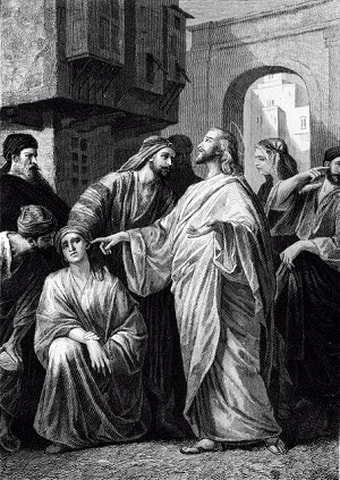
We are often told that we must love our enemies and to do good to those who persecute us. In today’s gospel Holy Mother Church reminds us once again to open up our hearts to our fellow men.
We must be cautious not to condone evil or to give support (either real or apparent) to evil doers in their evil. At the same time however, we are commanded to love them and to seek that which is good for them. In the face of evil and sin of others we must pray and work that they may obtain their salvation through repentance and grace.

The corporal works of mercy are given to us as guides in this matter. We must ever be ready to do what we can for the aid of our fellow men in need. It is truly difficult to discern who to help or how much to help, because we do not wish to become enablers. We do not wish Godspeed to heretics and schismatics lest we become accomplices in their guilt. Yet, for this same reason we do not wish to see them lost for all eternity either. Let us therefore keep in mind the spiritual works of mercy too and learn to admonish the sinner in all charity.

The errors of humanism have become very rampant today and are but a corruption of the corporal works of mercy that God has given us to practice towards each other. To love our neighbor and seek his salvation demands that we preach to him the truth and assist him in any way we can to arrive at the truth. It is completely against the will of God for us to seek to help the Buddhist to become a better Buddhist; or the Muslim to become a better Muslim, etc. This is not the love of our neighbour that God wishes us to practice.

There appears to be a strong desire in this humanism in the world today spurred on by the examples of people like Mother Teresa of Calcutta who made this humanistic idea her own and openly promoted it. She did not go to convert anyone to the true faith she only sought to make them better humanists.

There is a very strong parallel in this with today’s gospel. The people passed by the wounded man without giving him the aid he needed. In today’s humanism we witness poor sinners sunk deep in the errors of paganism, heresy, and schism yet far from coming and offering the aid that we should for their souls we pass by or even encourage them in their evil – thus leaving them to spiritually die of the maladies of their souls.

Missionaries are not sent out to make better humanists or to improve the physical lot of peoples, but are sent first and foremost to bring salvation to those who lack it; to save that which is lost as Our Lord came to do. The material improvement in their lives will come as a result of their cooperation with the spiritual advancements that are offered them. The aid offered to the body is reflection or symbol of the aid that is offered to the soul.

To offer material aid that is devoid of the spiritual is to only become an accomplice in their evil. To truly love our enemies is to seek for them to come to repentance and salvation in the true, One, Holy, Catholic, and Apostolic Church.

Let us not be fooled into believing that God is pleased with pure humanism. This is not true love. This is not enough and often becomes the source of greater evils. True love compels us not to just offer a cup of water to someone who is thirsty, but demands further of us that we do it for the sake of Jesus Christ. In coming to the aid of one another we must do so for the sake of Jesus. In this way the charity is seen as coming from Him and inspires others to seek Him and find Him. Such actions give much more than water for the body but gives a drink of eternal life that comes through Jesus Christ.
0 Comments

Eleventh Sunday After Pentecost

24/8/2019

0 Comments

 
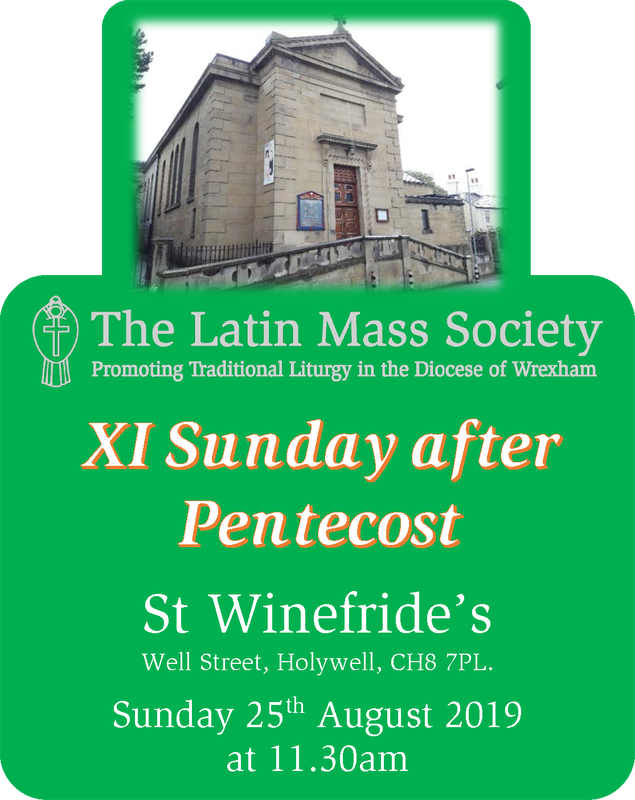
 Mass is celebrated at St Winefride's, Holywell on Sunday 25th August at 11.30am
Picture
The theme of this Sunday’s Mass: Let your ears tune in on the Word of God speaking through His Church.

Let your tongue broadcast the message of the Gospel in the “holy place” of your parish activities, in the “house” of your family, amongst the “people” of your acquaintance (Introit). In the Epistle St. Paul relates how he received God’s Word through Divine mercy; how he then became Christ’s witness, testifying everywhere to Christ’s Resurrection which calls for our faith in His divinity.

Before curing the man “deaf and dumb,” Jesus took him apart. If we are to “hear” His Voice at our Sunday Mass, we must go “apart” from the outside “multitude” of weekday distractions. Only then, like the cured deaf mute, shall we be able to return and “publish” the truth.

Realising our chronic indifference and frequent defiance of His Word, let us cry, “O God, be not silent” (Gradual) lest we shut out Thy Voice forever. The Prayer reveals how the Mercy of God is more willing to give than we are to ask or even deserve.

This same Mercy will receive our offering of “His Sacrifice and ours” to “support our weakness” (Secret) and will bestow help for body and soul on receiving “His Sacrament and ours” (Postcommunion).

Today, had it not been a Sunday would have been the Feast of St. Louis King C., King of France in the XIII Century, who built the Sainte Chapelle in Paris which housed the Crown of Thorns and relics of the True Cross. The King attended two Masses daily and felt it better to die than commit a mortal sin. Two practices which spread to the Church from his chapel: Kneeling at Et Homo factus est in the Credo and at Christ’s death in the reading of the Passion.  A Saint to help us increase our Faith and devotion!


0 Comments

Fourth Sunday at Holywell

18/8/2019

0 Comments

 
Picture
0 Comments

The Tenth Sunday after Pentecost

17/8/2019

0 Comments

 
Picture

"Everyone that exalts himself shall be humbled and everyone that humbles himself shall be exalted"

The humble man went away justified whereas the proud man was not justified. It is always the grace of God that begins the process of justification. Without the initial grace of God we would never even be able to see the miserable state of our soul and the need for us to change it. Every sinner that has ever experienced the pangs of his conscience followed by remorse for his evil deeds has experienced the grace of God.

Tragically there are many who imagine that these pangs of conscience come from themselves. They do not acknowledge that this is a gift from God but imagine that this is a goodness that they still possess deep within their own souls. Even though they may realize that they are in mortal sin and that there is no longer any goodness in them because their souls are dead, they still imagine that the pangs of conscience come from themselves and not God. This pride becomes an obstacle to justification. This pride may lead them to penance but it is not the completely humble penance that it should be.

In our confessions we should strive for perfect contrition. Perfect contrition is when our sorrow is motivated by our love for God. Perfect contrition is not nearly as common as it should be, and many through pride imagine that they have this when they do not. They resemble the Pharisee in today's Gospel. While they despise their fellow men or think themselves better than someone else they imagine that they have true love for God. And when they do acknowledge some of their sins they think that the pain they feel from their conscience arises from their tremendous love for God, rather than a special unmerited grace that God has given them.

Imperfect contrition on the other hand is the minimum necessary for the sacrament of Confession. Imperfect contrition is when we are sorry because we fear the punishment that our sins have brought upon us. And this too is an unmerited grace from God.

While we should strive for perfect contrition we must likewise be cautious to guard against pride and vanity. We must watch out for presumption lest we imagine that our contrition is motivated by a great love for God and begin to think ourselves something whereas we are truly nothing.

The graces of God come to us unmerited. We receive the grace of faith, we believe what God has revealed because He has revealed it. We cannot find this grace or earn it or have it forced upon us. It comes to us as a free gift that we either accept and cooperate with or reject. God has given first to us and all that we can do is reciprocate through cooperation with His grace.

The grace of hope fills us with desire that God will continue to be gracious towards us and will forgive us and give us all that we need not only to receive and cooperate with His graces but to also one day obtain the reward of this cooperation with His graces in the eternal happiness of heaven.

The grace of love is the highest of the virtues for it will continue into eternity. This too is unmerited and is first given to us and only through our cooperation with this grace does it increase and multiply in our souls. God gives the first grace and if we cooperate with it, He will send us the second, and if we continue to cooperate He will send us another and another until we arrive at such love that we are eternally united with Him in heaven.

This process has often been compared to the forging of a chain. God gives the first link of the chain. If we cooperate with this grace we in turn forge the second link in the chain to which God attaches the next grace or link in the chain, etc. And it is in this manner link by link that we forge the chain by which we are pulled into heaven.

This process is too often frustrated by our pride and vanity. Once we forget that these graces are from God and begin to think that they are from ourselves we interrupt this chain of graces. The Pharisee in today's gospel imagined that his good works came from himself and were not inspired and brought about by God's graces, and in this he becomes both a thief and a liar. He has attempted to steal the credit and honor from God and he lies when he says that the graces he received from God are his own works.

The publican, who only acknowledged sin as belonging to himself, implied that any good that was in him was not his own but was the work of God. This humility (honesty or truth) is what merited for him the mercy and justification from God.

Let us learn from this parable to see that any good that is within us is a gift from God and any evil that is within us is truly our own. And in this humble position let us strike our breasts as the publican and beg the mercy of God, so that we will be found worthy to receive the next link in our chain of graces.
0 Comments

The Ninth Sunday after Pentcost

10/8/2019

0 Comments

 
REMINDER: No Mass at Llay today - Mass resumes at Llay on the 8th September.
Picture
Jesus Weeps Over Jerusalem

Gospel. Luke xix. 41-47.

At that time: When Jesus drew near Jerusalem, seeing the city, He wept over it saying: If thou also hadst known, and that in this thy day, the things that are to thy peace, but now they are hidden from thy eyes. For the days shall come upon thee: and thy enemies shall cast a trench about thee, and compass thee round: and straiten thee on every side, and beat thee flat to the ground, and thy children who are in thee, and they shall not leave in thee a stone upon a stone: because thou hast not known the time of thy visitation. And entering into the temple, He began to cast out them that sold therein, and them that bought, saying to them: It is written: My house is the house of prayer; but you have made it a den of thieves. And He was teaching daily in the temple.

The time was near at hand when the Saviour of the world was to suffer for mankind: when the occurrences took place which are related in the gospel of this day. Our Lord was coming from Bethany and going to Jerusalem; He was to suffer the death of the cross for fallen man.

The news soon spread through the city that Jesus, the great prophet, was about to enter the town, and great was the stir that this news produced. The people came in crowds to the city gates; with palm branches in their hands they met Him, and cried out, "Hosanna to the Son of David; blessed is He that cometh in the name of the Lord." And wherever He passed they spread a carpet of trees, green leaves, and flowers; they even spread their garments on the ground that He might walk on them. Everything and everybody had put on a festive appearance, and great joy was manifested by all at this public entry into Jerusalem. But, wonderful to relate, Our Lord was not filled with joy at this triumphal entry. He was sad; tears fell from His eyes. Why was this? Because He saw that in a few days this very multitude of people would reject Him; now they believed in Him, but soon they would lose their faith and cry out for His crucifixion. He remembered the many miracles He had wrought, the many kindnesses and graces He had bestowed on them, and the black ingratitude they gave Him in return for all He had done; and this came so vividly to His mind that He wept over the city.

Just as Jesus wept over that ungrateful city of Jerusalem, is He pressed to weep over many Christians, and over the growing generation of young people. Can it be that there are people who make Jesus weep over them? Yes, indeed, and many even among us grown people; we are so easily led astray that the sufferings of Our Lord count as nothing to us. There are many who care nothing for His graces and favours, who disregard, outrage, and offend Him. Who is there that has not committed sin? And if you have sinned you are the cause of the tears of Our Lord; and if you have sinned often, so often have you made Him say: "I have brought up children and exalted them, but they have despised Me." I have brought up children and given them so many manifestations of My goodness both in the spiritual and natural order, and now that they have grown up they refuse to serve Me; they are worse than the children of infidels. They are the children of the Church, fed by the Bread of angels, and yet they have all the vices of those that are totally ignorant of Me. The old bishop, St. Polycarp, was accused at the tribunal of the proconsul of being a follower of Christ; and neither by prayers nor threats could his persecutors make him deny his faith. Finally the Proconsul proposed that if Polycarp would pretend to blaspheme the name of Jesus, he should not only be allowed to go back to his see, but there should also be heaped on him honours and riches. To this the old bishop answered: "Eighty-six years have I served the Lord, and during all that time He never did me any wrong; on the contrary He has shown me many favours. Is it reasonable that I should deny my Lord?" In the meantime the stake at which he was bound was set on fire, and Polycarp, full of joy, died a martyr's death.

You ought to do the same thing; when the occasion of sin presents itself, you, too, ought to say, "God has never done me any injury; on the contrary He has heaped on me many benefits; how can I be so ungrateful as to disobey Him?"

Our Lord and Redeemer, with tears in His eyes, said of the Jews: " O Jerusalem, if thou also hadst known, and that in this thy day, the things that are to thy peace, but now they are hidden from thy eyes!" Indeed the Jews did not know the graces which Our Lord had offered them. He offered them conversion, but by their own fault and malice they refused to listen to Him.

By miracles, by prophecies, and by His own words proved from the Old Testament, Our Lord demonstrated that He was the promised Redeemer; but the Jews did not want to know it and closed their eyes to all evidence. This made them unworthy of any extraordinary graces by which their eyes might be opened to the truth. The same thing happens to us when we obstinately refuse grace. "They have eyes and see not, ears and hear not." We abuse the graces given to us, and it is our own fault if we are abandoned to our obstinacy and self-will. When the sinner falls into this dreadful state by his own fault, he makes no effort to arouse himself from his fatal sleep. The ministers of God try to bring him to his senses by prayer, by preaching, by kind and loving threats of the eternal punishment, of the Last Judgment, but he remains obstinate; friends and parents will give advice, but all to no purpose. His heart is hardened. Salutary punishments come upon him in this life, sickness, troubles, mishaps of all kinds, but he will not see that they are meant as graces. Almighty God, seeing that all chastisements and blandishments are in vain, will say, "I have ordered your destruction because you have not profited by My visitation. 'Thou hast not known the time of thy visitation.' From henceforth I abandon you, no more will you feel My kind reprimands, no more will light be sent to you, you will fall deeper and deeper; you will die in your obstinacy and come before My judgment-seat, when you will hear Me condemn you to everlasting torment."

Have a care, my dear young friends, not to deserve this severe sentence. Jerusalem was a city dear to Our Lord. What a fair city, a picture of the heavenly Jerusalem, would she have been, prominent on the beautiful hills of Palestine, had she acknowledged the Lord! "What should I have done for My vineyard, and I have not done it?" Yes, the greater the graces which God has bestowed on you, the greater should be your efforts to correspond to them. You have been like favourite children, who have received many kindnesses; but you disobeyed God and defiled your sacred bodies by abominable sins. Could not Our Lord say, "If youths less favoured than you had done this, I should not wonder, but that you, after so much kindness, should do it, I will not overlook."

When the sinner is thus abandoned by God, the same dreadful ruin will happen to him as was foretold of Jerusalem: "For the days shall come upon thee: and thy enemies shall cast a trench about thee, and compass thee round: and straiten thee on every side: and beat thee flat to the ground, and thy children who are in thee, and they shall not leave in thee a stone upon a stone."

Voices were heard in the Temple, shortly before its destruction, "Let us go away from here, let us leave this place." The angels shall fly; the devils will gather about in numbers; then will be terror and fear of what is to come. The sinner will cry out for mercy, but the Lord will no longer listen to his lamentation. His cries do not proceed from a penitent heart, but from the anguish of despair. Did not almighty God give you sufficient caution all your lifetime, did He not say that He would let you die in sin? The hour has now arrived. Hear Him say: " For a long time you did not think of Me, neither will I turn My thoughts on thee: I leave you now in the power of Satan, to whom you have given your body and soul, and whose bidding you were so anxious to do."

If you are in the state of mortal sin, be converted, turn not a deaf ear on God. "Now is the time of your salvation. This may perhaps be your last chance. You have been deaf to God through your life, and God will be deaf to you at your death." This was the salute which a saint gave to a great sinner whom he met; he had often tried to convert him, but all in vain, and these were the last words he spoke to him.

When Our Lord came into Jerusalem on the day of His triumphal entry He went directly to the Temple to preach to those who had welcomed Him. When He reached there He found a great bustle going on; people were buying and selling in this place consecrated exclusively to the worship of God. Our Lord was angry and, making a scourge of ropes, He Chased the wretches from the Temple, saying: "My house is the house of prayer, but you have made it a den of thieves." Our Lord appeared severe to all who saw Him, but He wished to impress on their minds a very salutary lesson: scrupulous respect for the house of God. The good Jesus, who on all occasions was so mild and so meek, that He said of Himself, "Learn of Me, because I am meek and humble of heart," was indignant. The zeal of the Lord glowed in His soul and He arose in His might and chased the buyers and sellers from the sacred place. Should Our Lord come personally into our churches, what would be His conduct toward some of us, my dear young friends? He would there find His wrath rising within Him, and would chastise those whom He found there; or drive out of the house of God young people who, instead of praying, talk, laugh, and ridicule their neighbours. The house of God is the house of prayer, and should not be used in any other way. Remember what St. Paul says: "If any man violates the temple of God, him shall God destroy."

Let us learn, then, from this severe act of Our Lord how necessary is respect for the place of His habitation on earth. Enter with faith, keeping vividly before your mind that Christ is really present; that this is the great palace of the King of heaven and earth, and that if we would behave in a respectful manner in the palaces of the great of this world, so we should also act, but with more seriousness, in the house of God. Enter it with fear and trembling, for God is there and naturally you should fall on your face in prayer and adoration; enter it as the angels would, who come before the face of Jesus with a fervent love for Him.

0 Comments

Reminder

4/8/2019

0 Comments

 
There is no Mass at Llay on Sunday 11th August at Llay as Canon Lordan is away. Mass resumes at Llay on Sunday 8th September 2019 at 1230pm
0 Comments

Eight Sunday after Pentecost

3/8/2019

0 Comments

 
Picture
The Parable of the Unjust Steward Sermon.
The Holy Mass of this Sunday places before us the Christian's use or abuse of "goods," either of human nature or of Divine grace. The Introit recalls that as we now receive "Mercy," yet one day we must stand before "Justice." How necessary then the "Prayer" for "doing and thinking" what is right.

Active participation in the Mass, advised Pope St. Pius X, is the indispensable source of the true Christian spirit, how to pray and how to live. The Epistle bids us reflect who you are, "not debtors to the flesh," by which "you shall die"; but "sons of God, joint heirs with Christ," by Whom you shall live.

The Gospel dramatizes this dignity and duty in the parable of the Steward, the meaning of which is "be wise," you children of God; use material treasures so as to make eternal friends; exercise your talents in the spiritual and corporal works of mercy, and those whom you help to save will help save you.

Finally, the Offertory assures salvation to the humble, warns the proud of their final humbling. Christianity is not so much a "giving up" but rather an "exchange" of "gifts" (Secret), the human for the Divine, to bring healing to "soul and body" Postcommunion.

Today is Feast Day of St. Dominic of XII-XIII Century France, great preacher who formed the Order of Friars Preachers, who fought the Albigensian heretics, who murdered priests. Pope Innocent III dreamt that the Lateran Basilica was collapsing but held up by the strong shoulders of a friar. St. Dominic was known for purity, and statues of the Saint oftentimes show him holding a lily. He was especially devoted to the Holy Mother of God and the Holy Rosary. Although not commemorated in the Mass using the 1962 book, one can pray to the Saint today for help in maintaining purity and coming closer to Our Holy Mother Mary.
0 Comments
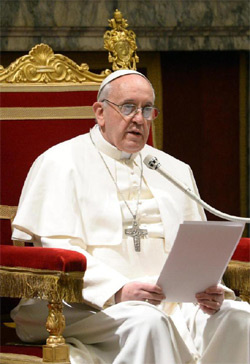
    Pope Francis
    Picture
    Oremus pro Pontifice nostro Francisco: Dominus conservet eum, et vivificet eum, et beatum faciat eum in terra, et non tradat eum in animam inimicorum eius.


    Picture
    Picture
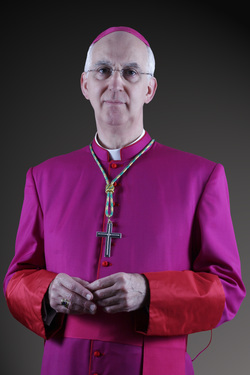
    Omnipotens sempiterne Deus, qui facis mirabilia magna solus: praetende super famulos tuos, et super congregationes illis commissas, spiritum gratiae salutaris; et, ut in veritate tibi complaceant, perpetuum eis rorem tuae benedictionis infunde.


    Any views expressed neither represent those of the Latin Mass Society or the Diocese of Wrexham.

    Archives

    August 2022
    July 2022
    June 2022
    May 2022
    April 2022
    March 2022
    February 2022
    January 2022
    December 2021
    November 2021
    October 2021
    September 2021
    August 2021
    July 2021
    June 2021
    May 2021
    April 2021
    March 2021
    February 2021
    January 2021
    December 2020
    November 2020
    October 2020
    September 2020
    August 2020
    July 2020
    June 2020
    May 2020
    April 2020
    March 2020
    February 2020
    January 2020
    December 2019
    November 2019
    October 2019
    September 2019
    August 2019
    July 2019
    June 2019
    May 2019
    April 2019
    March 2019
    February 2019
    January 2019
    December 2018
    November 2018
    October 2018
    September 2018
    August 2018
    July 2018
    June 2018
    May 2018
    April 2018
    March 2018
    February 2018
    January 2018
    December 2017
    November 2017
    October 2017
    September 2017
    August 2017
    July 2017
    June 2017
    May 2017
    April 2017
    March 2017
    February 2017
    January 2017
    December 2016
    November 2016
    October 2016
    September 2016
    August 2016
    July 2016
    June 2016
    May 2016
    April 2016
    March 2016
    February 2016
    January 2016
    December 2015
    November 2015
    October 2015
    September 2015
    August 2015
    July 2015
    June 2015
    May 2015
    April 2015
    March 2015
    February 2015
    January 2015
    December 2014
    November 2014
    October 2014
    September 2014
    August 2014
    July 2014
    June 2014
    May 2014
    April 2014
    March 2014
    February 2014
    January 2014
    December 2013
    November 2013
    October 2013

    RSS Feed

Powered by Create your own unique website with customizable templates.