
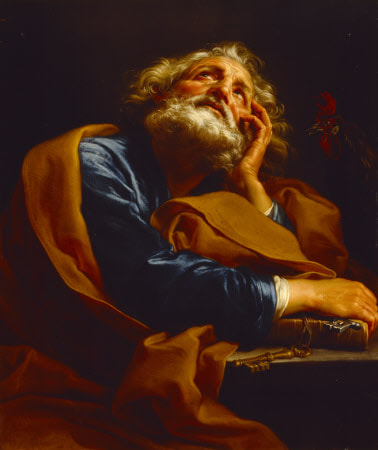
St Peter
| 1 Petri 4:7-8 Caríssimi: Estóte prudéntes, et vigiláte in oratiónibus. Ante ómnia autem mútuam in vobismetípsis caritátem contínuam habéntes, quia cáritas óperit multitúdinem peccatórum. | 1 Peter 4:7-8 My beloved: Be prudent, therefore, and watch in prayers. But before all things have a constant mutual charity among yourselves: for charity covereth a multitude of sins. |
On the Sunday after Ascension, St. Peter tells us that we must have “a constant mutual charity” among ourselves, and Jesus tells us in today’s gospel that “the hour cometh, that whosoever killeth you will think that he doth a service to God.” With these two thoughts in our mind let us consider our own lives and attitudes toward one another.
How often there are disagreements among Catholics over sometimes very petty things, and the devils fan these into heated arguments and sometimes into outright hatred for one another? The command of Christ to love one another and even to love our enemies and those who persecute us seems to have fallen upon deaf ears.
Our efforts to “win” or appear “right” in the eyes of men often supersedes the ultimate command to have charity. We forget that the first and greatest commandment is to love God with our entire being and with a love of preference and the second is to love our neighbor as we love ourselves. We forget that charity covers a multitude of sins.
So often we hear of people who refuse to engage in discussions of religion or politics. They consider that they are doing something noble or grand in avoiding an honest look and pursuit of justice and goodness, but they are more often cowards hiding behind a false charity. On the other side of this coin we see people who only want to argue and hound everyone into seeing or believing what they perceive with their own narrow and short sided “insights.”
Virtue is always in the middle (avoiding either extreme). We must be eager to share and enlighten others to the truth. However, it must not be our own “truth” but God’s truth that we elucidate and attempt to inculcate in others. To be certain that we are truly right is a condition that too many often overlook because they are shown a very narrow picture and outside of this they will not look. Their pride is enflamed and off they go attempting to “teach” the world.
Humility dictates that we recognize that in most of these matters we are very limited in our understanding and insights and therefore we must be open to hear other’s opinions. In politics where we are to place our hope and trust in a politician who is more often than not (perhaps always) guided by worldly rather than religious motives, we must be on our guard. In religion we should always look to the authority of the Church: in scripture and tradition, trusting in the legitimate authority that God has entrusted us to.
It is always best to distrust ourselves first rather than to distrust others first. Then with time and objective observation and study, enlightened by the grace of God in all humility and truth we can form correct opinions and charitably accept or reject the opinions of others (always preferring the objective truth).
We find that the saints often held different and even opposing positions on various points but they still became saints because they held onto this principle of Charity. They never compromised on the declared doctrines and moral principles of the Church, but they strove to be open in all charity to those who opposed them (correctly or incorrectly). Many of the saints became martyrs as Our Lord foretold. They went to their deaths not with threats and violence but in all humility and charity; often praying for those who opposed them. They loved even their enemies and those who persecuted them.
Let us imitate them as we are contradicted and accosted by our fellow men. Let us yield whenever it is possible for the sake of peace and concord (never to the point of denial of the faith), but always striving to imitate Jesus who is meek and humble of heart. Let us strive to always have a heart animated with charity and in this we can cover a multitude of sins.
Let us not fear death even from those who think that they are pleasing God by seeking it, but rather let us look forward to being united with Christ in heaven. In this frame of mind our enemies actually become our greatest benefactors. They give us the opportunity to see God, or if they do not take us this far they at least give us the opportunity to practice the virtues that Christ wishes us to apply in our lives. In any event they do us a good turn and therefore have earned our gratitude and love. Thus, we are naturally brought to love them and offer them our forgiveness and pray that God will do likewise: “forgive us our trespasses as we forgive those who trespass against us.”
How often there are disagreements among Catholics over sometimes very petty things, and the devils fan these into heated arguments and sometimes into outright hatred for one another? The command of Christ to love one another and even to love our enemies and those who persecute us seems to have fallen upon deaf ears.
Our efforts to “win” or appear “right” in the eyes of men often supersedes the ultimate command to have charity. We forget that the first and greatest commandment is to love God with our entire being and with a love of preference and the second is to love our neighbor as we love ourselves. We forget that charity covers a multitude of sins.
So often we hear of people who refuse to engage in discussions of religion or politics. They consider that they are doing something noble or grand in avoiding an honest look and pursuit of justice and goodness, but they are more often cowards hiding behind a false charity. On the other side of this coin we see people who only want to argue and hound everyone into seeing or believing what they perceive with their own narrow and short sided “insights.”
Virtue is always in the middle (avoiding either extreme). We must be eager to share and enlighten others to the truth. However, it must not be our own “truth” but God’s truth that we elucidate and attempt to inculcate in others. To be certain that we are truly right is a condition that too many often overlook because they are shown a very narrow picture and outside of this they will not look. Their pride is enflamed and off they go attempting to “teach” the world.
Humility dictates that we recognize that in most of these matters we are very limited in our understanding and insights and therefore we must be open to hear other’s opinions. In politics where we are to place our hope and trust in a politician who is more often than not (perhaps always) guided by worldly rather than religious motives, we must be on our guard. In religion we should always look to the authority of the Church: in scripture and tradition, trusting in the legitimate authority that God has entrusted us to.
It is always best to distrust ourselves first rather than to distrust others first. Then with time and objective observation and study, enlightened by the grace of God in all humility and truth we can form correct opinions and charitably accept or reject the opinions of others (always preferring the objective truth).
We find that the saints often held different and even opposing positions on various points but they still became saints because they held onto this principle of Charity. They never compromised on the declared doctrines and moral principles of the Church, but they strove to be open in all charity to those who opposed them (correctly or incorrectly). Many of the saints became martyrs as Our Lord foretold. They went to their deaths not with threats and violence but in all humility and charity; often praying for those who opposed them. They loved even their enemies and those who persecuted them.
Let us imitate them as we are contradicted and accosted by our fellow men. Let us yield whenever it is possible for the sake of peace and concord (never to the point of denial of the faith), but always striving to imitate Jesus who is meek and humble of heart. Let us strive to always have a heart animated with charity and in this we can cover a multitude of sins.
Let us not fear death even from those who think that they are pleasing God by seeking it, but rather let us look forward to being united with Christ in heaven. In this frame of mind our enemies actually become our greatest benefactors. They give us the opportunity to see God, or if they do not take us this far they at least give us the opportunity to practice the virtues that Christ wishes us to apply in our lives. In any event they do us a good turn and therefore have earned our gratitude and love. Thus, we are naturally brought to love them and offer them our forgiveness and pray that God will do likewise: “forgive us our trespasses as we forgive those who trespass against us.”


 RSS Feed
