THE LATIN MASS SOCIETY IN WREXHAM
  • Home
  • News Blog
  • About the Traditional Mass
    • Responsa Ad Dubia on certain provisions of the Apostolic Letter Traditionis Custodes issued “Motu Proprio”
    • Traditionis Custodes
    • The letter of Pope Francis accompanying Traditionis Custodes
    • CDF 2020 Decree on Saints and Prefaces
    • Universae Ecclesiae
    • Pope Benedict XVI's Letter to the Bishops
    • Summorum Pontificum
    • Holy Days of Obligation >
      • Exchange of Letters
      • LMS Press Release on Holy Days
      • Restoration of Holydays [2017]
    • Apostolic Letter, Sacrificium Laudis
    • Tips on attending the Extraordinary Form
    • Expressions of the Extraordinary Form
    • A quick guide to Mass classification
    • Latin Pronunciation
  • Wrexham Diocese
    • The Cathedral Church
    • About St Richard Gwyn
    • About St Winefride
    • Diocesan Feasts in the 1962 calendar
    • Gweddi dros Gymru
    • Gweddi ar Ddewi Sant
  • LMS Shop
  • Links

Second Sunday after Pentecost

29/5/2016

0 Comments

 
Picture
From from Divine Intimacy by Fr Gabriel of St Mary Magdalen OCD

PRESENCE OF GOD - O Jesus, grant that I may always answer Your invitation and participate worthily in Your banquet.

The Invitation to the Banquet

MEDITATION

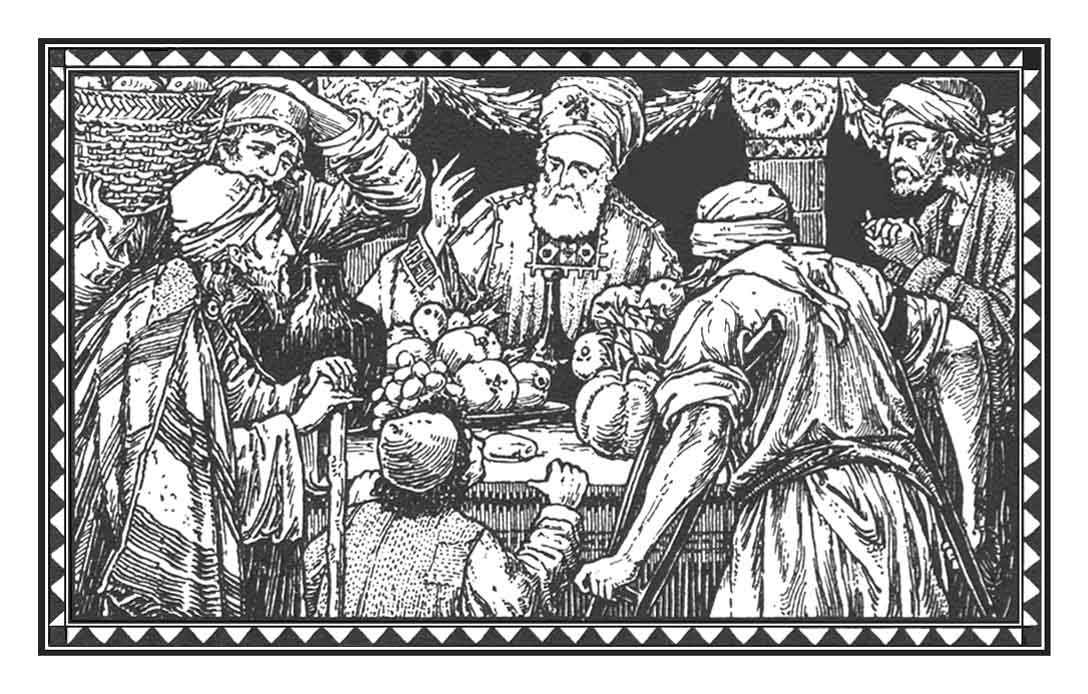
1. Today's Gospel (Lk 14, 16-24) fits perfectly with the feast of Corpus Christi "A certain man made a great supper, and invited many." The man who makes the supper is God; the great supper is His Kingdom where souls will find full abundance of spiritual blessings while on earth, and eternal happiness in the next life. This is the real meaning of the parable, but we can also interpret it more specifically, seeing in the supper and in the man who prepares it a figure of the Eucharistic banquet and of Jesus, inviting men to partake of His Body and Blood. "The table of the Lord is set for us," sings the Church, "Wisdom [the Incarnate Word] has prepared the wine and laid the table" (RB). Jesus Himself, when announcing the Eucharist, addressed His invitation to all: "I am the Bread of life! He that cometh to Me shall not hunger, and he that believeth in Me shall never thirst....Your fathers did eat manna in the desert, and are dead. This is the bread which cometh down from heaven; that if any man eat of it, he may not die" (Jn 6, 35.49.50). Jesus does not limit Himself, like other men, to preparing the table for a supper, inviting many, and serving delicious food; he is an unheard-of procedure, which no man, however rich and powerful he might be, could ever imitate. Jesus offers Himself as Food. St. John Chrysostom said to those who wanted to see Christ in the Eucharist with their bodily eyes, "Behold, you do see Him; you touch Him, you eat Him. You would like to see His garments; He not only permits you to see Him, but also to eat Him, to touch Him, and to receive Him into your heart.... He whom the angels look upon with fear, and dare not gaze upon steadfastly because of His dazzling splendour, becomes our Food; we are united to Him, and are made one body and one flesh with Christ" (RB).

COLLOQUY

... Although a beggar I come to You because You invite me; You, who being rich became poor for me, so that Your poverty would make me rich. Weak as I am, I shall draw near, for it is not the healthy who need the physician, but the sick. I shall approach you like a cripple and say: 'Set my feet in Your paths.' I shall come like a blind person and say: 'Give sight to my eyes, that I may never sleep the sleep of death' " (St Augustine).
0 Comments

A reflection for Corpus Christi

26/5/2016

0 Comments

 
Picture
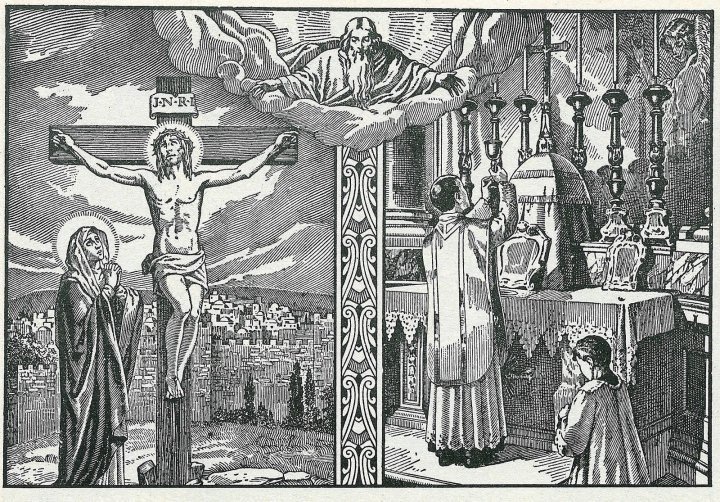
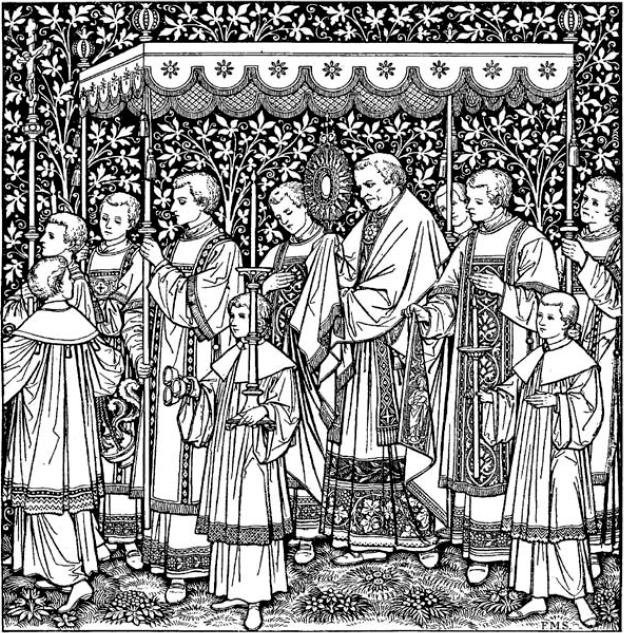
Today is the Solemnity of Corpus Christi. This great feast day in honour of the Blessed Sacrament should cause us to reflect upon what It means in our own lives. We cherish relics of the True Cross and even souvenirs of Calvary where Our Lord poured out His Precious Blood for us.

Yet, we are perhaps cold and unmoved as we neglect Our Lord by declining His invitation to come to Him in the Sacrament of the Altar where He is still redeeming the world of sin and making certain that Sanctifying Grace continues to flow into the world.

The feast of Corpus Christi was extended to the entire Church in 1264 by Pope Urban IV in response to a crisis of unbelief in Europe.

Yes, the feast was instituted to combat unbelief and today the world still suffers from the same affliction by denying Our Lord total love and gratitude. Maybe we could look at Him at the consecration and place all our trials and tribulations before Him for resolution! He has all the answers - simple faith and belief and He will deliver!

Incidentally, the propers of the Mass and Office were written by St. Thomas Aquinas, a master of faith and reason!
0 Comments

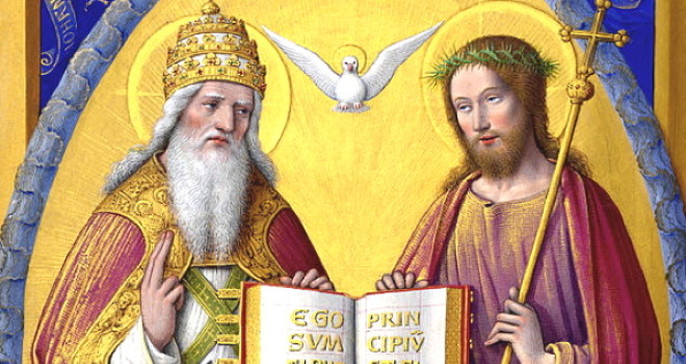
The Blessed Trinity

21/5/2016

0 Comments

 
Holy Mass in the Extraordinary Form for Trinity Sunday will be offered at 1130am on Sunday 22nd May at St Winefride's, Holywell, click here for details.
Picture
From Divine Intimacy - Father Gabriel of St Mary Magdalen, O.C.D.

Presence of God – O most Holy Trinity, You who have created me for Your glory, grant that I may give You all the glory of which I am capable.

MEDITATION

The mystery of the Most Blessed Trinity is the root and centre of all the other mysteries of our holy faith: the root from which they all spring and upon which they depend, the centre about which they gravitate. For example, the great work of creation and the love-filled work of Redemption are the gifts of the Blessed Trinity, the free, gratuitous outpouring of infinite goodness and love, yet, at the same time, ordered for the glory of the august Trinity. “We have been predestined in Christ,” says St. Paul, “according to the purpose of Him who worketh all things according to the counsel of His will, that we may be unto the praise of His glory” (cf. Ephesians 1:11-12). The work of Redemption, which bestowed the greatest of divine benefits on us, and which far exceeds the work of Creation, is, as the Apostle says again, “unto the praise of the glory of His grace” (ibid. 1:6), that is, of the infinite goodness of God. If inanimate things, if the heavens and the earth “show forth the glory of God” (Psalm 19:2) because they testify to His power, wisdom, and infinite beauty, the works which effected our elevation to the supernatural state sing the glory of the Blessed Trinity because they are the most glorious manifestation of His goodness. This goodness is so great that it has impelled God, not through necessity, but solely through love, to impart to us, His little creatures, something of His own sovereign good, of His divine nature, of His eternal felicity. It also caused Him to reveal to us the mystery of His life in the Trinity and to share this divine life with us. All this was done, not through any merit on our part, nor through any need God had for us in His infinite beatitude, in the felicity and glory which He enjoys in Himself, but solely because of His goodness. Who, then, more than man, should be “the praise of God’s glory,” man, whom He endowed, not only with natural, but also with supernatural beauty, making him like to Himself, and a partaker in His own divine life?


COLLOQUY

“O Most Holy Trinity, I adore You, I bless You and glorify You in all Your mysteries, uniting myself to all the mutual love and praise of Your divine Persons. I offer You all the glory You have in Yourself, rendering You infinite thanks together with the whole Church: ‘Gratias agimus tibi, propter magnam gloriam tuam.’ We give You thanks, because of Your great glory. O my God and my Father, how I rejoice to see that Your Son and Your Holy Spirit love You and praise You from all eternity and for all eternity with a love and praise worthy of Your greatness! O only-begotten Son of God, my soul exults when it sees the infinite love and glory You receive from Your Father and from Your Holy Spirit! O Holy Spirit, my heart rejoices at the thought of the love and the praises unceasingly given You by the Father and the Son! O Most Holy Trinity, how great is my joy, my exultation, my gladness, to know that You possess indescribable glory, inconceivable beatitude, and an infinite number of incomparable treasures and splendours!

“How joyful I am too, knowing that You, Most Holy Trinity, already infinitely glorious in Yourself, do not look with disdain upon the glory which this wretched creature can give You, but rather, that You have created me precisely for Your glory! Therefore, I consecrate and sacrifice myself entirely to You. If I possessed all creation, the lives of all the angels and of all men, if millions of worlds were in my power, I would be ready to sacrifice them all for Your honour. O my God, exercise Your infinite power and goodness to take me and possess me entirely, so that I may be consecrated to You forever, O my God, and may immolate myself totally for Your glory” (St. John Eudes).
0 Comments

Trinity Sunday at Holywell

20/5/2016

0 Comments

 
Picture
St Winefride's - Holywell Parish Church
Holy Mass in the Extraordinary Form of the Roman Rite
for
Trinity Sunday


Sunday 22nd May 2016
1130am


St Winefride's
Well Street
Holywell
Flintshire CH8 7PL

Picture
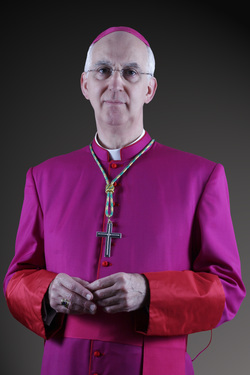
Our celebrant this month is Canon Brendan Hoban (pictured left) who we welcome back to Holywell to cover for Canon Francis Doyle who is away on the Wrexham Diocesan Pilgrimage to Lourdes.

Canon Hoban is a priest of the Diocese of Shrewsbury and is a former Vicar General of that diocese. I am thankful for his stepping in to cover.

0 Comments

Corpus Christi at Swansea

20/5/2016

0 Comments

 
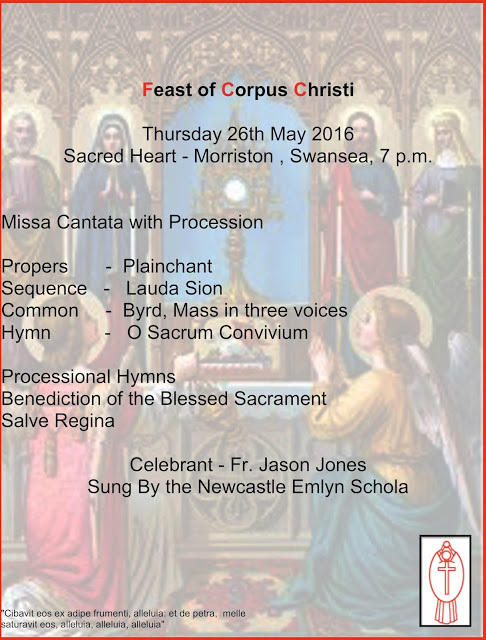
For those in the south of Wrexham Diocese: you may wish to take the opportunity to attend Mass  and a procession at Sacred Heart, Morriston, Swansea.
Picture
0 Comments

Corpus Christi Masses in Liverpool Archdiocese

20/5/2016

0 Comments

 
Holy Mass in the Traditional Latin Rite will be offered on the feast of

CORPUS CHRISTI
Thursday, 26th. May

at
 
St. Anthony’s, Scotland Road, Liverpool
Low Mass – 12.00 p.m.
 
St. Catherine Laboure, Farington, Leyland
Missa Cantata - 7.00. p.m.
 
Our Lady, Southport Road, Lydiate
Low Mass, 7 pm
 
St Mary’s Shrine, Buttermarket Street, Warrington
Low Mass - 12.10 pm

Holy Cross, Corporation Street, St Helens
Exposition of the Blessed Sacrament from 6 pm
 Confessions from 6.15 pm
 Low Mass at 7 pm
followed by Benediction of the Blessed Sacrament.

 
Please come if you can, and pass on the word to those without email facilities.

 
For further information contact the Liverpool Archdiocese
Latin Mass Society Representative:
Mr. J.Pennington, 0151 426 0361
0 Comments

Vatican Latinist passes away, aged 90

18/5/2016

0 Comments

 
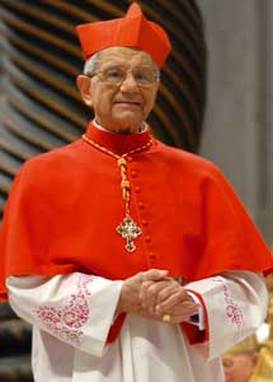
PictureH.E. Cardinal Coppa
Cardinal Giovanni Coppa, an expert Latinist and former nuncio, died on 16th May at the age of 90.

Pope Francis, in a condolence message on 17th May, said the cardinal had “lived with fidelity his long and fruitful priesthood and episcopacy at the service of the Gospel and the Holy See. I recall with gratitude his generous and competent work as a steadfast collaborator of six popes, my predecessors, who entrusted him with delicate and important offices.”
Born in Alba, Italy, on 9th November 1925, he was ordained to the priesthood in 1949. After studies at the Catholic University of Milan, he began working at the Vatican in what was known as the Apostolic Chancery. The office was responsible for drafting, in Latin, formal papal documents, such as those for canonisations and beatifications or those marking the establishment of new dioceses or announcing pontifical honours.

He served as a Latinist at the Second Vatican Council and later worked in the Vatican Secretariat of State, which had taken over the duties of the Apostolic Chancery.

Late in 1979, St. John Paul II named him an archbishop and personally ordained him a bishop in early 1980. Given the task of promoting communications between the Vatican and its diplomatic missions abroad, “he visited all of the nunciatures, traveling all the way around the world five times,” said his official Vatican biography.

He served as nuncio first to Czechoslovakia and then to the Czech Republic from 1990 until 2001, when he retired.

In his condolence message, Pope Francis said the late cardinal’s work at the Vatican Secretariat of State demonstrated “pastoral wisdom and thoughtful attention to the needs of others,” and his work in Prague was “particularly intense and fruitful for the spiritual good of that nation.”
Pope Benedict XVI had made him a cardinal in 2007.

Cardinal Coppa’s death leaves the College of Cardinals with 214 members, 114 of whom are under the age of 80 and therefore eligible to vote in a conclave.

Source: Catholic Universe

0 Comments

Life Site News: H.E. Cardinal Burke says exhortation must be read ‘critically'

18/5/2016

0 Comments

 
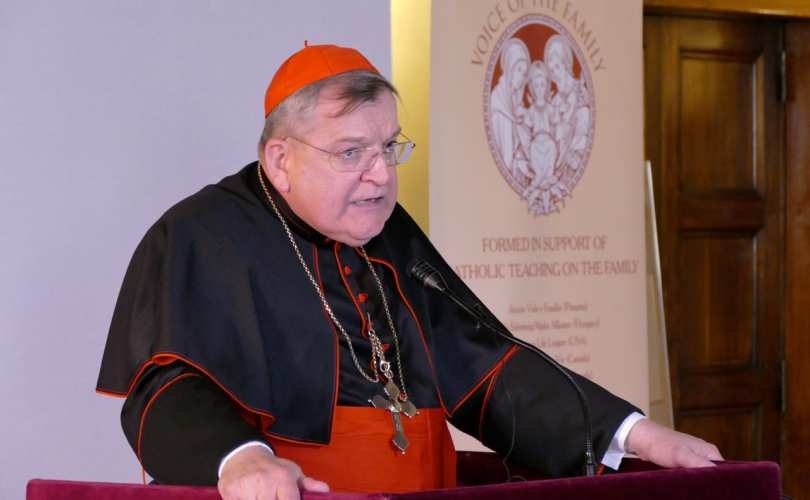
Picture
Two days after the Rome Life Forum in which he called faithful Catholics to be prepared to endure the “Martyrdom of Witness” for the sake of “the defense of human life and its cradle in the conjugal union of husband and wife,” I was privileged to obtain a personal interview with Cardinal Raymond Burke for LifeSiteNews in which he made clear that in his view, Amoris laetitia can be read “critically.” He spoke gravely, even sadly, deploring the fact that many Catholics today are “ignorant of their Catholic faith,” underscoring also that “the part played by artificial contraception is fundamental and lethal” to many marriages that fail, “because what it does is diminish the love between the husband and wife.”

The post-synodal Apostolic Exhortation has been widely criticized by many lay Catholics on several points, including its almost complete lack of condemnation of contraception.  At the Rome Life Forum, having called attention to several of Amoris laetitia’s marked failings to uphold the Church’s traditional teaching, a very large majority of participants vocally approved an appeal to withdraw the text.

“Those parts which support and give full expression to the Church's magisterium are fine, but there may be other things that are reflections of the Holy Father, but they are not magisterium.”
In his interview, Cardinal Burke recalled that “we have all the tools in our faith to understand correctly this kind of writing,” parts of which, being “personal thoughts” of Pope Francis, are not “part of the magisterium.” Up to now, such an appeal has not been made by any prelate of the Church, but many, including Cardinal Burke, have asked for it to be interpreted in the light of its constant teaching regarding Faith and morals.

Answering a question in which I remarked that “many Catholics are troubled by the text,” Cardinal Burke did not deny that some of the Exhortation’s elements are open to a non-orthodox interpretation, underscoring that these cannot be part of the magisterium. “I think the important thing is that when one reads critically the document, one is always respectful of the person of the Pope,” Cardinal Burke said, thus conceding that in itself a critical reading is not contrary to the Catholic faithful’s correct mindset.

“Some people criticized me for saying that the document is not magisterium; they said it was a Post-synodal Apostolic Exhortation and, therefore, must be part of the magisterium; but the title of the document doesn't give it the quality of magisterium. You have to read the contents and when you do, you see that this document has to be read critically in the light of the Catechism, in the light of the Church's magisterium. Those parts which support and give full expression to the Church's magisterium are fine, but there may be other things that are reflections of the Holy Father, but they are not magisterium.”

As regards absolution for the divorced and “remarried,” Cardinal Burke explained why they cannot obtain absolution without deciding to separate or at least to live “as brother and sister.” The cardinal placed this requirement in the light of the “grace” which is bestowed on every person who is married to live “in fidelity to that marriage,” whatever the circumstances.

He also clarified that while Amoris laetitia affirms that “no one can be condemned forever, because that is not the logic of the Gospel,” man can indeed refuse grace and choose hell.

The Interview:

Your Eminence, you have spoken out loudly and clearly about the necessity of upholding the Church’s true teaching on marriage, the family and human sexuality. Is this teaching sufficiently known to Catholics?
No, it is not. We have suffered in the Church now for several decades from a very poor catechesis and also from a certain tendency in preaching to avoid a systematic exposition of the faith, and it has left many Catholics ignorant of their Catholic faith, and even of the teachings of the moral law, which is an important part of our Catholic faith. So the fact of the matter is that in a world that grows ever more insane in its rebellion against God and His law, Catholics are ill-equipped to respond and to do their duty in defending the faith for the sake of the salvation of the world.

What would you advise Catholics to read and meditate before entering their adult lives and what points should be stressed during marriage preparation?
I would urge all Catholics to read the Catechism of the Catholic Church which is the compendium of our Catholic faith, and if they don't have the time to read the whole Catechism at least to read the Compendium, and then to go to the entire Catechism for further illustration of points that they may not have understood. This is critical for us today. Our faith is our salvation and if we don't know our faith we certainly run the risk of losing our salvation. That means for us eternal salvation, but it also means for us our happiness here on this Earth, which is an anticipation of the fullness of that happiness in the world to come. But regarding marriage preparation I think it has to emphasize most those fundamental goods of marriage, in other words, a union between one man and one woman, that is faithful. We need to insist on fidelity which is a virtue which in many respects is frequently violated in our culture. Secondly, that it is lifelong; and thirdly, that it is by its very nature procreative. And we need to emphasize with those who are preparing for marriage that the married life is a particular participation in the life of God. It reflects the love of the three Persons in the Holy Trinity, which is faithful, enduring and life-giving. Accordingly, it should be emphasized that the love of marriage is best understood and most effectively nourished through our communion with God in prayer and through the Sacraments, above all, the Holy Eucharist. So I think those are the things that should be most stressed. Then, it seems to me important to help the young people to recognize the aspects of our culture which are particularly threatening to the good of marriage, so that they may be attentive and may safeguard themselves against those kind of influences which would lead them to betray the truth of their marriage.

No one would think that you can break the link between a mother and her child or a father and his child: is it the same sort of link that exists between a man and a woman who are married?
Of course. In fact, the bond between a father and mother, and their children is a link constituted by the father’s and mother’s love for each other. A child will not grow and develop properly unless his father and mother communicate the love they have for each other. We absolutely need this for our growth and development: to have the love of a father and a mother, and to have it communicated by both parents.

In this age of rampant divorce and failed marriage, what is the part being played by artificial contraception, and do you think the Church can turn the tide on the contraceptive mentality?
The part played by artificial contraception is fundamental and lethal because what it does is diminish the love between the husband and wife by removing the totality of the love which includes the conjugal union, that always includes the great gift of procreation: the crown of the marriage union is the gift of children. And so when a contraceptive mentality enters in, that love is distorted. And in fact we see that people use the argument that sexual union without its life-giving aspect is marital to argue for sexual activity between two persons of the same sex and so forth, because they say: "Well, this is loving activity even if it isn't life-giving." But this is an abuse of the conjugal union: the conjugal union can only be between one man and one woman who are united in love. So the contraceptive mentality is at the root of a number of the most serious threats to marriage today. And the Church, to my knowledge, is the only institution which has been upholding the inherent evil of contraception, and so she is called upon more than ever today to defend the truth about the conjugal union and its fundamentally life-giving nature. And I believe very strongly that Blessed Pope Paul VI recognized this in 1968, when there was a tremendous pressure upon him by so-called "leading theologians", moral theologians, to relax the Church's teaching, and in fact to change it. He held to the Church's teaching in an heroic way, and thank God for that. And then his successor, Pope St. John Paul II, after the brief pontificate of Pope John Paul I , gave so much of his magisterium to illustrating the truth that is  contained in Blessed Pope Paul VI’s Encyclical Letter Humanae vitae.

There are many repetitive sins and habitual infidelities that cut us off from sanctifying grace, but that can be absolved in Confession; could you explain why the divorced and “remarried” cannot obtain absolution without deciding to separate or at least to live “as brother and sister”?
Here it is important to make a distinction between an individual sin, for instance, an individual act in which one fails to respect fidelity, and living in a public state that is in violation of that fidelity. First of all one can argue that in the individual act there was a force of passion, a pressure, whatever it may be that may have diminished in some respect the culpability. One cannot say that about a state because one freely chooses to live with another person as husband and wife, even though one or the other is bound, or both are bound to a marriage. To confuse these two situations is very harmful. And so the individual who fails and goes to confession, truly repentant and with a firm purpose of amendment not to do this again, can be absolved, but if one goes to confession to confess the sin of infidelity, when one has the intention to continue to live in that situation, then an essential element of the repentance – the firm purpose of amendment -- is not there, and therefore the person cannot be absolved and, of course, cannot approach to receive Holy Communion. People talk about an internal forum solution; in other words, a solution within the Sacrament of Penance. There exists only one such solution, and that is that, in the Sacrament of Penance the man and woman agree to live as brother and sister, in other words to observe continence and to respect the fidelity of the marriage relationship to which they are bound. Then they are permitted to receive the sacraments, but only in a place where this will not give scandal, in other words, in a place where people will not know what their situation is. One sees in this discipline of the church – very ancient – how tremendously important the truth about marriage is to the whole life of the Church and how the Church safeguards that truth. I know many people whose marriages have broken up and who devote the rest of their lives to living in fidelity to their marriage union, even though their marriage partner has abandoned them. In the end, they tell me very clearly, that in this fidelity that they find their happiness.

Your first reaction to “Amoris laetitia” was to say that we must listen to the Roman pontiff with respect, but that all his sayings and writings are not part of the “infallible magisterium”. Does this mean that, with respect, we can make a critical reading of the post-synodal Exhortation, or even that some of its elements are open to a non-orthodox interpretation?
I don't think it can be otherwise because the Pope himself says that the document is his reflections after the experience of the Synod, and those reflections are personal. The church has never held that everything that the Pope says or all of his reflections are part of the magisterium. To teach in the Church is a very serious matter in which one understands that he is not speaking personally, but that he is speaking as the Successor of Saint Peter. And so this document has to be read in that way. Some people criticized me for saying that the document is not magisterium; they said it was a Post-synodal Apostolic Exhortation and, therefore, must be part of the magisterium; but the title of the document doesn't give it the quality of magisterium. You have to read the contents and when you do, you see that this document has to be read critically in the light of the Catechism, in the light of the Church's magisterium. Those parts which support and give full expression to the Church's magisterium are fine, but there may be other things that are reflections of the Holy Father, but they are not magisterium.

Many Catholics are troubled by the text but are reluctant about expressing their doubts and even misgivings because its author is the Pope. What would you advise them to do?
My own thought is that we haven't been accustomed to this kind of writing on the part of the Holy Father. In the past the Holy Father spoke very seldom, or wrote very seldom, and it was always with a great attention to the fact that he is the Vicar of Christ on Earth and therefore, that every expression of the Faith had to be faithful to the truth of her magisterium. I was recently talking with a Cardinal who worked very intimately with Blessed Pope Paul VI, and he told me how even in his homilies, he would go over them and over them before their publication because, as he openly acknowledged, his responsibility was very grave. Pope Francis has chosen to write and speak in a way in which there is a kind of mixture between presenting the Church's teaching and also giving his own thoughts, and many times in a very colloquial language, where it isn't so easy at times even to know exactly what it means. And so I think that we have to realize that we have a different kind of papal writing here, and we have all the tools in our faith to understand correctly this kind of writing, but it is not familiar to us. But to take the position, for instance, that this document which is not written in the same way as documents like the Encyclical Letter Evangelium vitae, or Familiaris consortio which was also a post-synodal Apostolic Exhortation, is part of the magisterium in the same way as they were is simply not true. It is written in a very different way.
In that regard too, I think the important thing is that when one reads critically the document, one is always respectful of the person of the Pope. To engage in a lack of charity with regard to any fellow Christian, and in a preeminent way toward the Roman Pontiff, is completely inappropriate and wrong.

In particular, the question of eternal damnation appears to have been set aside: “No one can be condemned for ever, because that is not the logic of the Gospel!” Even if God’s mercy wants to reach out to every man, is it not possible for man to refuse grace and to choose hell?
Of course. The Church has always taught that. God respects our freedom and so people can be hard of heart, even at the moment of death. Christ  Himself spoke about it in the Gospel. The logic of the Gospel is: God wants to save all men, there is no question about that. He sent his only Son to save all men. But men remain free and some of them reject salvation, and if they do so, they merit eternal damnation: if you reject salvation, how can you be saved?

Speaking about the divorced and remarried, some priests are saying that in certain concrete situations it is hard to say they are living “in sin”. The Exhortation says: “Hence it is can no longer simply be said that all those in any ‘irregular’ situation are living in a state of mortal sin and are deprived of sanctifying grace.” How should we interpret this?
The only way to interpret it is the following: if they are living in what appears to be a state of sin but in fact are not sinning, in other words if they are living as brother and sister, then it is true. But if they're engaging in marital relations, that objectively is sinful and it cannot be any other way. It cannot not be sin and be sin at the same time. Objectively, to have sexual relations with a person who is not your spouse is either fornication or adultery.

In any case it would require a blessing of the union.
Of course! And for the same reason cohabiting outside of marriage is greatly wrong and denies people the sacraments.

And if “moral culpability” is indeed attenuated, is this a sufficient reason to allow these couples to receive communion? Or to put it differently: while God’s mercy can operate their eternal salvation, is it wise on the ecclesiastical level to allow them to receive communion?
­First of all, I return to the distinction between attenuating circumstances with regard to an individual act and attenuating circumstances with regard to living in a state of sin: the attenuating circumstances are applied to individual acts, and that remains true, that for an individual act there can be some circumstance which diminish the degree of culpability. But with regard to living publicly in the state of sin, given that our Lord provides to every person who is married the grace to live in fidelity to that marriage, we can say that, yes, they can live in fidelity in the marriage because they have the grace to do so. While there may be all kinds of serious considerations, children to be educated and for whom to provide a home, they can all be respected while remaining faithful to the marriage union.

Has contemporary ignorance about the rules and goods of marriage reached such a level that many marriages are invalid?
I think that the confusion that is in the world, and now is also entering into the Church, has an influence on a person who is contemplating marriage. But I think also that we have to recall that the good of marriage is taught to us by nature itself, and so to say that, for instance, widespread divorce, sexual promiscuity and so forth condition people so that they cannot enter a valid marriage, is incorrect. The young person knows within his or her heart what marriage is, and is even helped in that by good preparation, and therefore even though in the society there are all sorts of pressures contrary to a marriage the young person can well choose marriage as it truly is. The only way to say a marriage is invalid is to show that a particular individual applied to his marriage consent the right to divorce or infidelity. In other words: in giving consent to marry a person reserved the right to divorce or reserved the right to have sexual relations with another partner.

From childhood I was taught in Catechism that the virginal calling is objectively superior to marriage, which is man’s ordinary state. Has this changed?
No, not at all. That has been the Church's constant teaching. It is in the Gospel, it is in the Fathers of the Church. There is no change regarding the fact that the perfect continence of the virgin represents the perfection of love and is, therefore, a source of inspiration and also strength for the married to live chastity in their relationship with each other. That is the meaning of Our Lord too when He tells us that in the life which is to come, we will neither marry nor be given to each other in marriage because there will be that perfection of love. No, that teaching has not changed.

In these times of confusion, are we not paying too much attention to the accomplishment of self and the fact of “being part” of a community instead of realizing that our ultimate goal and happiness is in Christ?
Exactly. Our attention should be completely on Christ-like goodness, our fidelity, our cooperation with His grace in order to grow in His likeness, and in that way we are then bound in charity to all our brothers and sisters. But if we don't concentrate our attention on grace, viewing all things in the perspective of eternity, then we would descend into a worldly way of thinking, and so our life in the Church becomes a kind of a political reality, associationism and so forth. But our bond in the Church, the bond between us which is of course the most profound bond possible, is the life of the Holy Spirit within us, it is the love of Christ within us. I am very disturbed today by an increasing ecclesial language which is completely mundane, referring to members of the Church as more "conservative" or more "liberal", and all this kind of thing, as if we were a body made up of political parties. There is one faith, we all share it, and that binds us together.

You have been calling Catholics to pray the Rosary for the family. Would you like to call on my French-speaking readers to do this also?
I urge you to do so! There is no question that we are living in very difficult times in the Church today, and we as members of Christ's Body must pray fervently for the Church in our time. And one of the most powerful prayers which our Lord has given us is the Rosary. That is why I have been so supportive of "Operation Storm Heaven", as we call it in English, asking people to pray a Rosary every month for the Church, and of course urging themto pray even more frequently, but one hopes that that monthly, so to speak, "solemn" praying of the Rosary also informs a daily attitude of prayer for the Church, which is so needed.

And you yourself are celebrating Mass…
Yes, every first day of the month, I celebrate the Holy Mass for all the intentions of those who are part of “Operation Storm Heaven.”

0 Comments

Pentecost

14/5/2016

0 Comments

 
Picture
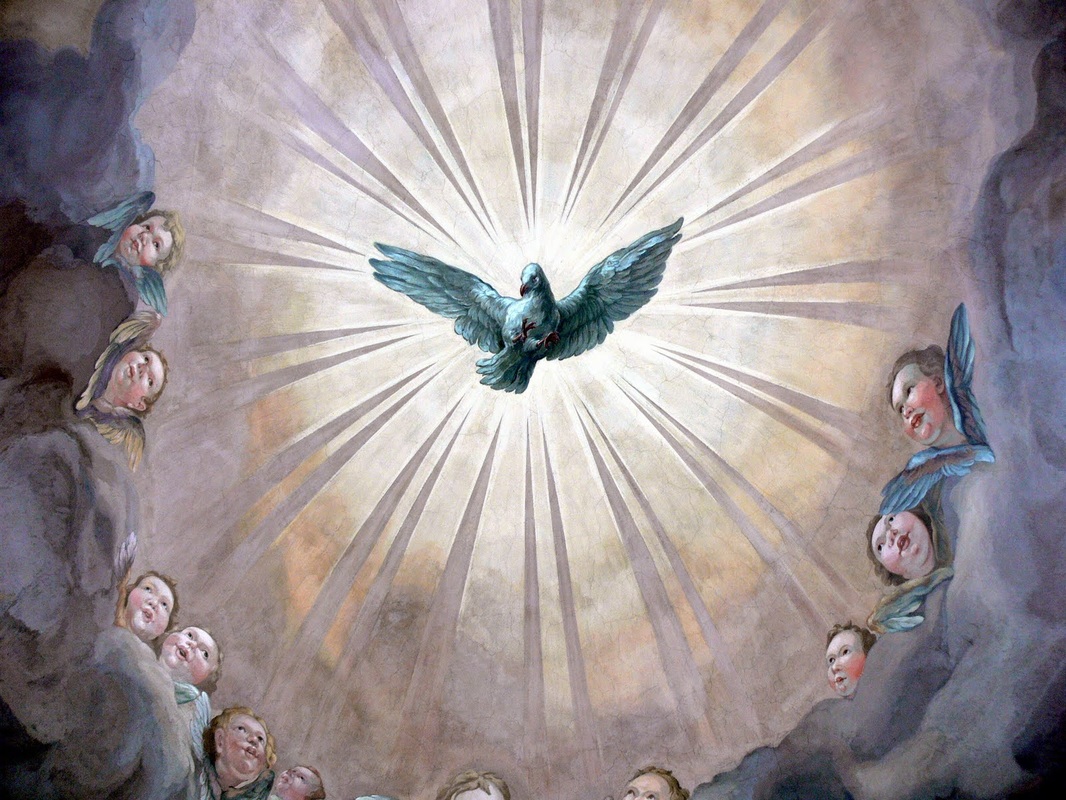
The name “Pentecost” comes from the Greek word meaning “fiftieth.” Like Easter, it is tied to a Jewish feast. 49 days (7 weeks, or “a week of weeks”) after the second day of Passover, the Jews celebrated the Feast of Weeks (Shavuot).

Passover celebrates the freeing of the Jews from slavery; Shavuot celebrates their becoming God’s holy people by the gift and acceptance of the Law; and the counting of the days to Shavuot symbolises their yearning for the Law.

From a strictly practical point of view, Shavuot was a very good time for the Holy Spirit to come down and inspire the Apostles to preach to all nations because, being a pilgrimage festival, it was an occasion when Jerusalem was filled with pilgrims from many countries.

Symbolically, the parallel with the Jews is exact. We are freed from the slavery of death and sin by Easter; with the Apostles, we spend some time as toddlers under the tutelage of the risen Jesus; and when he has left, the Spirit comes down on us and we become a Church.
Picture
“And  I will ask the Father and he will give you another Advocate
to dwell with you forever...”

Jn. 14:16
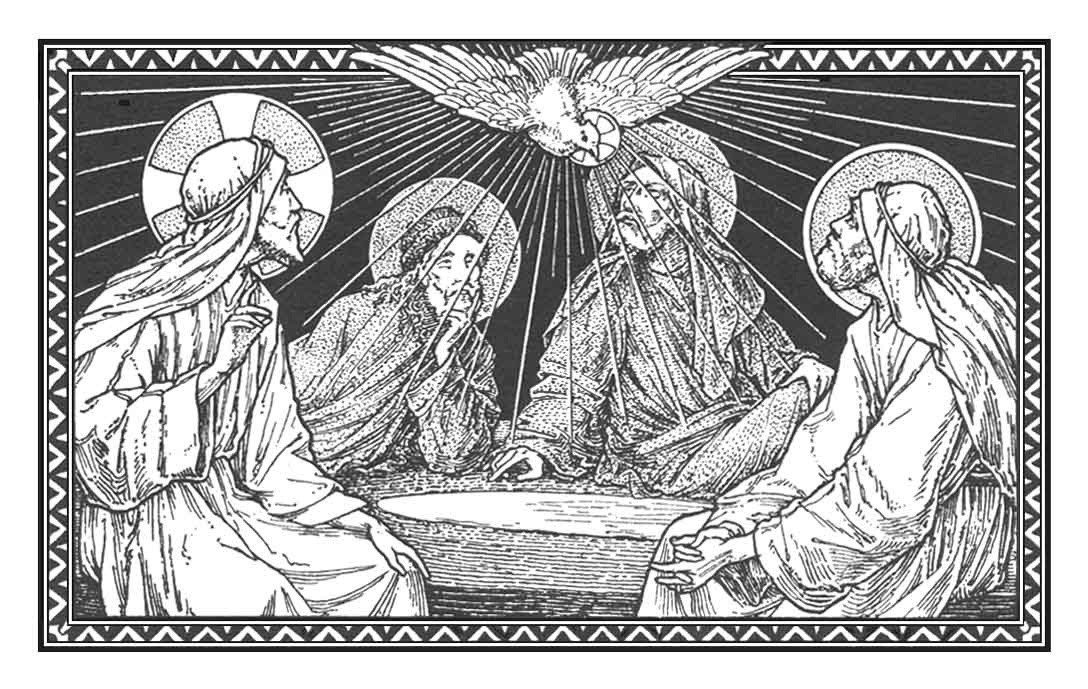
This Sunday, we rejoice in the Solemnity of  Pentecost, which along with Christmas and Easter, is one of the  three principal events in the liturgical year.  Dom Prosper Gueranger in his The Liturgical Year Vol. 9 comments: “Four great events mark the sojourn of man on earth; and each of them is a proof of God’s infinite goodness towards us.  The first is the creation of man and his vocation to a supernatural state, which gives him, as his last end, the eternal vision and possession of God. The second is the Incarnation of the divine Word, who, by uniting the human to the divine Nature,  raises a created being to a participation of the Divinity, and, at the same time, provides the Victim needed for redeeming Adam and his race from the state of perdition into which they fell by sin. The third event is that which we celebrate today, the descent of the Holy Ghost, when He will free His bride, the Church, from the shackles of mortality, and lead her to heaven, there to celebrate His eternal nuptials with her.  In these four divine acts, the last of which has not yet been accomplished, is included the whole history of mankind; all other events bear, more or less, upon them.” Gueranger, p. 303-4
 
Pentecost and the Paschal Mystery

Dom Gueranger explains how important the mystery of Pentecost is in relation to the Paschal solemnity:  “The Pasch is the redemption of man by the victory of Christ; Pentecost is the Holy Ghost taking possession of man redeemed.  The Ascension is the intermediate mystery; it consummates the Pasch, by placing the Man-God, the Conqueror of death, and our head, at the right hand of the Father; it prepares the mission of the Holy Ghost to our earth. This mission could not take place until Jesus had been glorified, as St. John tells us (cf. Jn. 7:39 “...for the Spirit had not yet been given, since Jesus had not yet been glorified.”); ...This divine mission was not to be given to the Third Person until men were deprived of the visible presence of Jesus.  As we have already said, the hearts of the faithful were henceforward to follow their absent Redeemer by a purer and wholly spiritual love. Now who was to bring us this new love, if not He who is the link of the eternal love of the Father and the Son?  This Holy Spirit of love and union is called, in the sacred Scriptures, the ‘Gift of God’; and it is on the day of Pentecost that the Father and the Son send us this ineffable Gift. Let us call to mind the words spoken by our  Emmanuel to the Samaritan woman at the well at Sichar: ‘If thou didst know the Gift of God!’ Jn 4: 10. We know the Gift of God; so that we have but to open our hearts to receive Him as did the three thousand who  listened to St. Peter’s sermon.” Gueranger, p. 291-3
 
Old Pentecost and New Pentecost

The descent of the Holy Ghost at Pentecost is foreshadowed in the Old Testament promulgation of the Ten Commandments on Mt. Sinai fifty days after the Jews had crossed the Red Sea. Dom Gueranger comments on the interrelationship of the two Pentecosts:  “The Pentecost (fiftieth day) was honoured by the promulgation of the ten commandments of the divine law; and every following year, the Israelites celebrated the great event by a solemn festival. But their Pentecost was figurative, like their Pasch; there was to be a second Pentecost for all people, as there was to be a second Pasch, for the Redemption of the whole world. The Pasch, with all its triumphant joys, belongs to the Son of God, the Conqueror of death; Pentecost belongs to the Holy Ghost, for it  is the day whereon He began His mission into this world, which, henceforward, was to be under His Law.... In this second Pentecost, ...repentance and gratitude are the sentiments now uppermost. A divine fire burns within their souls, and will spread throughout the whole world....”  Gueranger., p. 277-8
 
Second Pentecost

Dom Gueranger again explains the intense spiritual awakening that occurs on the Jewish feast of Pentecost:  “Jerusalem is filled with pilgrims, who have flocked thither from every country of the Gentile world. ...they have come to keep the feasts of Pasch and Pentecost. ...Amidst these Jews properly so called, are to be seen many Gentiles... This influx of strangers, who have come to Jerusalem out of a desire to observe the Law, gives the city a Babel-like appearance for each nation has its own language. They are not under the influence of pride and prejudice, as are the inhabitants of Judea; neither have they, like these latter, known and rejected the Messias, nor blasphemed His works.... so now, at this hour of Tierce (9:00 AM), the Father and the Son send upon earth the holy Spirit who proceeds from them both. He is sent to form the Church, the bride and the kingdom of Christ; He is to assist and maintain her; He is to save and sanctify  the souls of men; and this His mission is to continue to the end of time. 

“Suddenly is heard, coming from heaven, sound of a violent wind; it startles the people in the city, it fills the cenacle with its mighty breath. A crowd is soon round the house that stands on Mount Sion;  the hundred and twenty disciples that are within the building feel the mysterious emotion within them, of which their Master once said: ‘The Spirit breatheth where He will, and thou hearest his voice’. Jn. 3:8  ...A silent shower falls in the house; it is a shower of fire which, as holy Church says ‘burns not but enlightens, consumes not but shines.’ (Responsory for Thursday within the Octave)  Flakes of fire, in the shape of tongues, rest on the heads of the hundred and twenty disciples; it is the Holy Ghost taking possession of all and each. The Church is now not only in Mary, but also in these hundred and twenty disciples. All belong now to the Spirit that has descended upon them; His kingdom is begun, it is manifested, its conquests will be speedy and glorious.”  Gueranger,. 278-280
 
Speaking in all tongues


Dom Gueranger highlights the great miracle of tongues for all to believe: “Since the confusion of Babel, there have been so many languages;  ...How, then, is the word to become the instrument of the world’s conquest, and to make one family out of all these nations that cannot understand each other? ...With other gifts, wherewith He has enriched the hundred and twenty disciples, He has given them understanding in every language. In a transport of holy enthusiasm, they attempt to speak the languages of all nations; their tongue and their ear take in, not only without effort, but with charm and joy, this plentitude of word and speech which is to reunite mankind together. The Spirit of love has annulled the separation of Babel; men are once more made brethren by the unity of language... What is the surprise of this multitude, composed as it is of people of so many different nations, when these poor uneducated Galileans address them, each in the language of his country?   ...The Holy Spirit makes His presence and influence to be felt in the hearts of these favoured listeners A few moments previously they were disciples of Sinai, who come from distant lands to celebrate the by-gone Pasch and Pentecost; now they have faith, simple and full faith, in Christ.  They repent of the awful crime  of His death, of which they have been accomplices; they confess His Resurrection and Ascension...These children of Israel had to make the sacrifice, or they never could have shared in the graces of the new Pentecost:  ...three thousand declared themselves disciples of Christ, and received the mark of adoption in holy Baptism. ...To-morrow, Peter is to preach in the temple, and five thousand men will enrol themselves as disciples of Jesus of Nazareth. Hail! Then, dear creation of  the Holy Ghost! Militant on earth; triumphant in heaven; beautiful, noble, immortal Church, all hail! And  thou, bright Pentecost! Day of our truest birth! How fair, how glorious, thou makest these first hours of Jesus’ bride on earth! The divine Spirit thou givest us, has written, not on upon stone, but upon our hearts, the Law that is to govern us.” Gueranger,   p.  281, 287, 289- 291.
0 Comments

SPUC Chief calls for withdrawal of Exhortation

11/5/2016

0 Comments

 
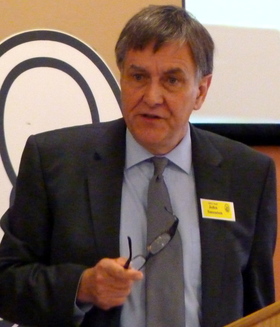
PictureJohn Smeaton
Over 100 pro-life and pro-family leaders from all over the world leapt to their feet in applause at a meeting in Rome on Saturday after hearing a call for Pope Francis to withdraw his controversial exhortation Amoris Laetitia.

John Smeaton, co-founder of Voice of the Family and the CEO of Society for the Protection of Unborn Children (SPUC), issued the request to the Pope in his keynote address at the annual Rome Life Forum.

Smeaton spoke following Bishop Athanasius Schneider, who in his speech decried growing confusion in the Church, and who has previously expressed grave concerns about the exhortation. Smeaton highlighted several concerns with the exhortation, including:

  • the section about sex education, which speaks at length about sex education in schools, without reference to the rights of parents;
  • references to public adultery which fail to point out the intrinsic evil of adultery;
  • the suggestion that adulterous sexual acts may be justifiable; and,
  • the false message that marriage is not indissoluble.

The failure to speak clearly on adultery "shows a lack of mercy" said Smeaton, "because it denies Catholics the truth about right and wrong."

"It denies Catholics the knowledge they need to exercise true freedom, freedom from sin. It also shows a lack of mercy because it sends children the false message that marriage is not indissoluble. Arguably, Your Holiness, the most effective way of destroying children is to destroy marriage as an indissoluble lifetime union of a man and a woman."

In his open letter, Smeaton tells the Pope that he personally knows “of women and men who've been deserted by their spouse for another person and either left alone with children or left alone without their children.”

“If that deserted spouse were then to see their wife or husband with a new partner, receiving the Body of Christ in Communion, that sends the message to everyone, including the children, that marriage is not indissoluble after all,” said Smeaton.

Smeaton concluded his appeal to the Holy Father by asking him to “recognise the grave errors in the recently published Apostolic Exhortation, Amoris Laetitia, in particular those sections which will lead to the desecration of the Holy Eucharist and to the harming of our children, and to withdraw the Apostolic Exhortation with immediate effect.”


0 Comments

Sunday after Ascension

7/5/2016

0 Comments

 
Holy Mass in the Extraordinary Form of the Roman Rite

Sunday 8th May 2016
at 12.30pm

for Sunday after Ascension

St Francis of Assisi Church
Llay Chain

Llay LL12 0NT
Picture
This Sunday is like a proelongation of the Feast of the Ascension. The Introit reflects the feelings which the Apostles must have experienced during the time between the departure of Jesus and the descent of the Holy Spirit: “Hear, O Lord, my voice calling to You... I seek Your face, O Lord, do not hide Your face from me.”  
 
As on the day of the Ascension, the eyes of the Apostles are turned toward heaven, where they saw their Master disappear , and their hearts sigh after Him. As long as we are on our earthly pilgrimage, far from God, He must be the constant yearning of our souls. But we should not remain idle while we are waiting to go to our fatherland. In the Epistle of the day, Peter teaches us what we must do to make our life on earth a real preparation for our meeting with God: “Watch in prayers. But before all things, have a constant mutual charity among yourselves.”
 
This is exactly what the Apostles did as they waited for the Holy Spirit: together in the Cenacle they were persevering in prayer in the unity of fraternal love . God does not look with favour on the prayers and sacrifices of one who does not love his neighbour no matter who he maybe — with sincere benevolence. Jesus has expressly said: “If therefore thou offer thy gift at the altar, and there thou remember that thy brother that anything against thee; leave there thy offering... and go first to be reconciled to thy brother.” Prayer alone will not suffice to draw down divine graces, nor will it acquire eternal life for us. Fraternal charity, the surest pledge of the sincerity of our love for God, is an absolute requisite.  The holy Spirit, who is the spirit of charity, who is substantial love, cannot enter a heart which is narrow and mean in its relations with its neighbour; lack of charity is one of the greatest obstacles to His action, because it is directly opposed to His essence. Just as water paralyzes the action of fire, so does lack of charity paralyze the action of the Holy Spirit. Furthermore, as long as we live on earth, we are all liable to fall; all of us, therefore, need pardon; “charity,” says the Epistle, “covers a multitude of sins.”
 
In today’s Gospel Jesus reiterates His promise concerning the descent of the Holy Spirit: “When the Paraclete cometh, whom I will send you from the Father... you shall give testimony [of Me].” As on the day of His Ascension, He connects the coming of the Holy Spirit with the mission of the Apostles, that mission which will consist essentially in giving testimony of Christ.  “You shall receive the power of the Holy Spirit...  and you shall be witnesses unto Me... even to the uttermost part of the earth” Today’s Gospel explains the scope of this testimony which the Apostles, as well as all future Christians, will be called upon to give.
 
“They will put you out of the synagogues: yea, the hour cometh that hosoever killeth you, will think that he doth a service to God.” Jesus died on the Cross to give testimony to the Father; His disciples will have to suffer, undergo persecution, and even death itself, to give testimony to Him.
 
We cannot follow a road different from the one which Jesus has trodden: “If any man will come after Me, let him take up his cross and follow Me”. He repeats to us. A calm, tranquil testimony, which is made without facing danger will always have only relative value and ordinarily gives no guarantee of its genuineness or its strength; on the contrary, the more it costs, the greater its
value in proving the fidelity o f him who renders it .
 
To witness to Christ, without regarding the difficulties, sufferings or struggles that may be encountered, is the program of the true Christian. But who will give us courage? To us as to the Apostles, courage will come from the Holy Spirit, from His gift of fortitude; it will come from assiduous meditation on the example which Christ has given us; it will also come from His own words, spoken of coming persecutions: “I have told you these things, that you may not be scandalized in Me.”
 
Fr. Gabriel of St. Mary Magdalen,
Divine Intimacy
0 Comments

Masses this weekend

6/5/2016

0 Comments

 
Picture
A reminder that there is a Mass in the Extraordinary Form on both Saturday and Sunday this coming weekend.

Saturday 7th May 2016
Low Mass at 12:30pm
Our Lady of the Rosary
Jubilee Road, Buckley,

Flintshire CH7 2BF

Sunday 8th May 2016
Low Mass
at 12:30pm

St Francis of Assisi
Llay Chain
Llay LL12 0NT

0 Comments

Ascension

5/5/2016

0 Comments

 
Picture
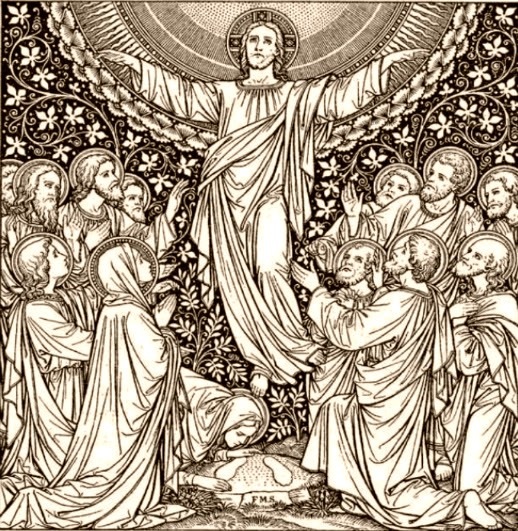
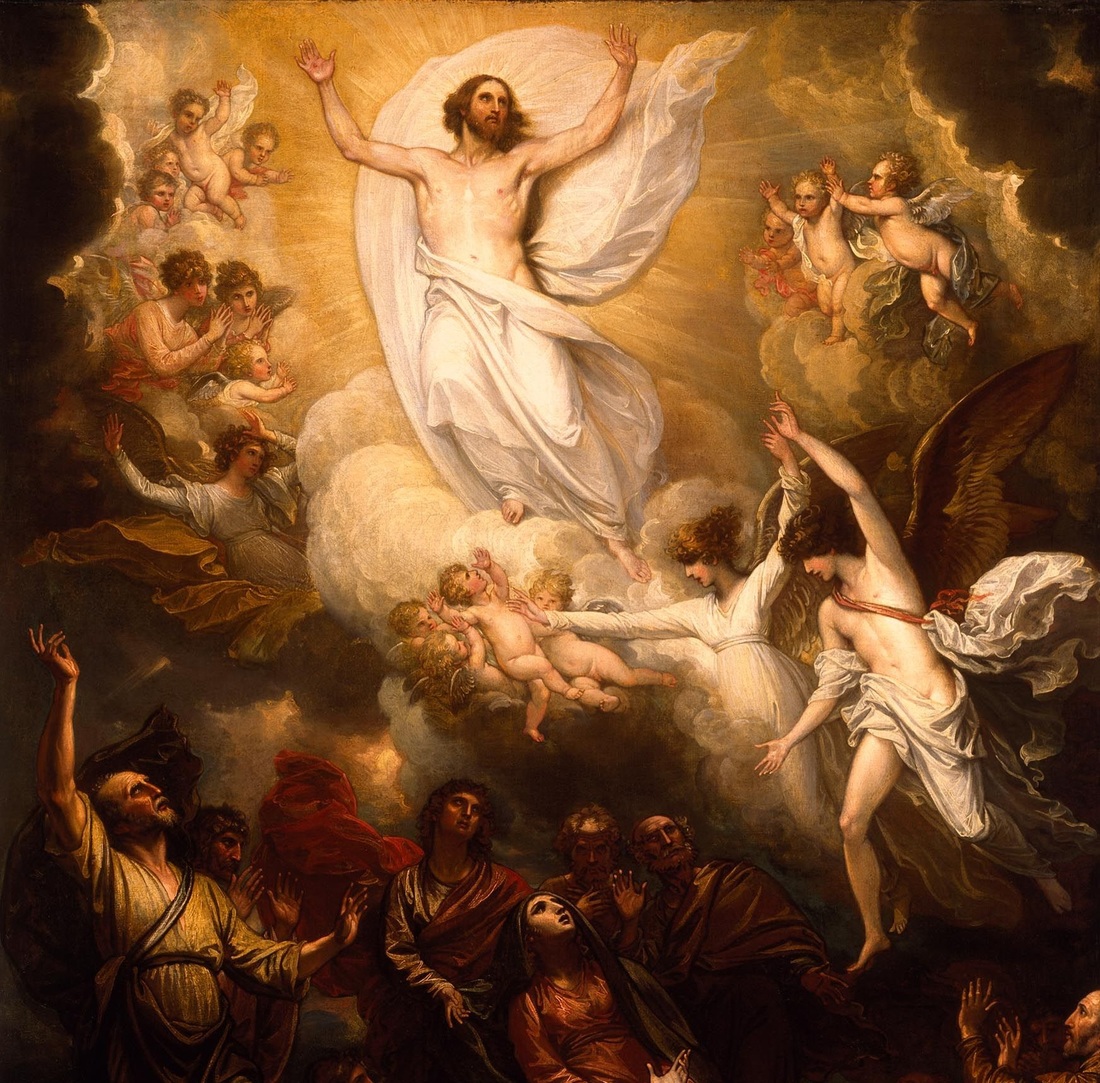
The Ascension is traditionally regarded as the culmination of the mystery of the Incarnation in that it marked the completion of the mission of Our Lord with His Apostles and marked Our Lord’s
Ascension to Heaven in His Glorified human Body.

The bodily Ascension into Heaven is understood as the final token of the Divine and Human Natures of Our Lord. Christ's Ascension into heaven is understood as necessary for the sending of the Holy Ghost at Pentecost. The biblical texts regarding the Ascension also prophesy the Second Coming of Christ, stating that Jesus will return not only in the same glorious manner, but in the same place. In other words, the Second Coming and Last Judgment will take place on the Mount of Olives.

The Disciples returned to Jerusalem with great joy after the Ascension for Our Lord had opened the door to Heaven for mankind, closed since the sin of Adam. By exalting human nature, Our Lord exalted our own human nature and made it capable of contemplating the Divine Nature. Our Lord promised to prepare a place for us in Heaven and to intercede with the Father for us.

We should rejoice on Ascension Thursday as Jesus told the Disciples “Your joy no man shall take from you.” Whenever we have tribulations, we shall exclaim with the Apostle: “I exceedingly abound with joy in all our tribulations.” Also: “Knowing that as you are partakers of His sufferings,
so shall you be also of His consolations.”

The Apostles were filled with courage after Ascension and strength against temptation. The martyred Apostles were filled with strength and joy and declared, “The sufferings of this time are not worthy to be compared with the glory to come that shall be revealed in us.” Keep within your heart the fruits of this meditation about the Ascension that we may fill our hearts with inspirational thoughts indelibly impressed upon our hearts by Jesus, Our Lord.
0 Comments

Local(ish) venues for Ascension Day Mass

2/5/2016

1 Comment

 
Ss Peter & Paul and St Philomena, Atherton Street, New Brighton, CH45 9LT
  • 0900 Low Mass with Organ
  • 1900 Sung Mass

St Mary's, Buttermarket Street, Warrington, WA1 2NS
  • 1210
  • 1930

St Anthony’s, Scotland Road, Liverpool, L5 5BD
  • 1230 (this is a revision from the original published time)

Holy Cross, Corporation Street, St Helens, WA10 1EF
  • Low Mass at 7.00 pm
preceded by:
  • Exposition of the Blessed Sacrament from 6.00 pm
  • Confessions from 6.15 pm


1 Comment

Second Sunday Mass at Llay

2/5/2016

0 Comments

 
Picture
Holy Mass in the Extraordinary Form of the Roman Rite

Sunday 8th May 2016
at 12.30pm

for Sunday after Ascension

St Francis of Assisi Church
Llay Chain

Llay LL12 0NT
0 Comments
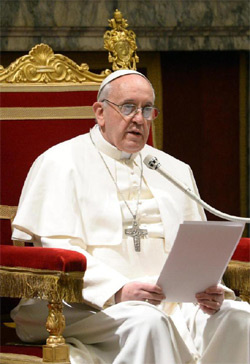
    Pope Francis
    Picture
    Oremus pro Pontifice nostro Francisco: Dominus conservet eum, et vivificet eum, et beatum faciat eum in terra, et non tradat eum in animam inimicorum eius.


    Picture
    Picture
    Omnipotens sempiterne Deus, qui facis mirabilia magna solus: praetende super famulos tuos, et super congregationes illis commissas, spiritum gratiae salutaris; et, ut in veritate tibi complaceant, perpetuum eis rorem tuae benedictionis infunde.


    Any views expressed neither represent those of the Latin Mass Society or the Diocese of Wrexham.

    Archives

    August 2022
    July 2022
    June 2022
    May 2022
    April 2022
    March 2022
    February 2022
    January 2022
    December 2021
    November 2021
    October 2021
    September 2021
    August 2021
    July 2021
    June 2021
    May 2021
    April 2021
    March 2021
    February 2021
    January 2021
    December 2020
    November 2020
    October 2020
    September 2020
    August 2020
    July 2020
    June 2020
    May 2020
    April 2020
    March 2020
    February 2020
    January 2020
    December 2019
    November 2019
    October 2019
    September 2019
    August 2019
    July 2019
    June 2019
    May 2019
    April 2019
    March 2019
    February 2019
    January 2019
    December 2018
    November 2018
    October 2018
    September 2018
    August 2018
    July 2018
    June 2018
    May 2018
    April 2018
    March 2018
    February 2018
    January 2018
    December 2017
    November 2017
    October 2017
    September 2017
    August 2017
    July 2017
    June 2017
    May 2017
    April 2017
    March 2017
    February 2017
    January 2017
    December 2016
    November 2016
    October 2016
    September 2016
    August 2016
    July 2016
    June 2016
    May 2016
    April 2016
    March 2016
    February 2016
    January 2016
    December 2015
    November 2015
    October 2015
    September 2015
    August 2015
    July 2015
    June 2015
    May 2015
    April 2015
    March 2015
    February 2015
    January 2015
    December 2014
    November 2014
    October 2014
    September 2014
    August 2014
    July 2014
    June 2014
    May 2014
    April 2014
    March 2014
    February 2014
    January 2014
    December 2013
    November 2013
    October 2013

    RSS Feed

Powered by Create your own unique website with customizable templates.