THE LATIN MASS SOCIETY IN WREXHAM
  • Home
  • News Blog
  • About the Traditional Mass
    • Responsa Ad Dubia on certain provisions of the Apostolic Letter Traditionis Custodes issued “Motu Proprio”
    • Traditionis Custodes
    • The letter of Pope Francis accompanying Traditionis Custodes
    • CDF 2020 Decree on Saints and Prefaces
    • Universae Ecclesiae
    • Pope Benedict XVI's Letter to the Bishops
    • Summorum Pontificum
    • Holy Days of Obligation >
      • Exchange of Letters
      • LMS Press Release on Holy Days
      • Restoration of Holydays [2017]
    • Apostolic Letter, Sacrificium Laudis
    • Tips on attending the Extraordinary Form
    • Expressions of the Extraordinary Form
    • A quick guide to Mass classification
    • Latin Pronunciation
  • Wrexham Diocese
    • The Cathedral Church
    • About St Richard Gwyn
    • About St Winefride
    • Diocesan Feasts in the 1962 calendar
    • Gweddi dros Gymru
    • Gweddi ar Ddewi Sant
  • LMS Shop
  • Links

Latin Mass Society representation in Wrexham Diocese

29/8/2022

0 Comments

 
I have been the LMS representative in the diocese of Wrexham for nearly 10 years, I was appointed in April 2013. For most of those years I have also performed as a trustee and Secretary of the Society and my second term as Secretary ended following the Annual General Meeting at the end of July.

Locally in the Diocese of Wrexham, the situation following Covid-19 and Traditionis custodes has not seen a resumption of the very few Masses that were celebrated before.

We were very grateful for monthly Sunday Masses at Llay and Holywell and a First Saturday Mass at Buckley and additionally the annual pilgrimage Masses to Holywell and Wrexham.

My attempts to get things back to how they were have been documented in Mass of Ages. It is most disconcerting that absolutely no reach out to those devoted to Usus Antiquior has been forthcoming from the Diocese.

Consequently, I have given much thought and prayer to my own efficacy and Raison d'être. It is clear to me that the current parameters mean that I hold a title without function/activity and therefore I have informed the Committee that they should not consider reappointing me when every representative appointment is reviewed at the September committee meeting.

If any LMS member wishes to succeed me then make yourself known! You can contact the Society on [email protected]

Finally, I would like to thank Canon Francis Doyle and Canon Bernard Lordan for their dedication to the ancient liturgy during my tenure.
0 Comments

The Twelfth Sunday after Pentecost

27/8/2022

0 Comments

 
Picture
The Mass of this Sunday recalls the great Commandment, “Thou shalt love the Lord, thy God, with thy whole heart, and with thy whole soul, and with thy whole mind, and thy neighbour as thyself.”

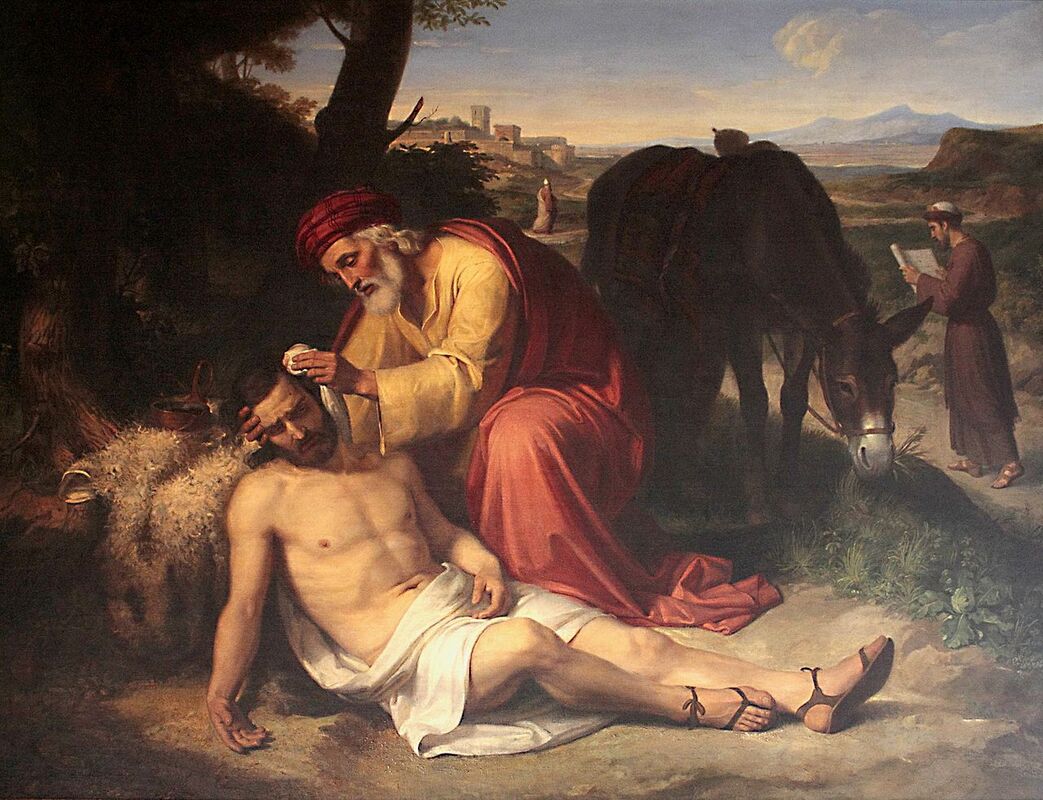
 The parable of the Good Samaritan encapsulates the history of mankind as well as our own personal lives into a few simple words. The man coming down to Jericho represents Adam and therefore each of us. From the spiritual realms, we descend to worldly realms. Adam left Paradise and entered the worldly life symbolized by Jericho. On the way down, we have fallen among robbers — the devils.

The robbers first stripped the man of his garments; the devils first strip men of their spiritual garments. They first lead us to question God, to doubt the true Faith. Once the garment of the faith is removed the devils find no obstacles to prevent them from inflicting harm upon us. Adam was first stripped of the true faith because he preferred to listen to his wife rather than God. Eve was first stripped of the true faith because she preferred to listen to the serpent rather than God and Adam. Once deprived of spiritual life, it was nothing for the devils to take away the physical life. Adam had freely chosen death; the moment he chose not to listen to God. Each time we individually sin we renew within ourselves the suicidal choice of Adam.

With the sin of Adam, he and all mankind were left to die by the robbers/devils. The Law and the Prophets both passed by, unwilling or unable to give any help. The Law and Prophets only served to further condemn us. That which is forbidden only arouses the desire to do what is forbidden. Without the garment of faith and grace, we become incapable of improving our lot, but only make matters worse with every attempt. The sick person seldom knows or does what is best for his health. He often seeks relief of his pain, only to end up making matters worse than before. This is the case of mankind and the case of every sinner. The sick person needs the physician to diagnose the problem, determine a course of action and to implement it — because he cannot clearly see his own malady or what is truly in his best interest.

The Divine Physician is revealed to us in today's parable as the Good Samaritan. Jesus Christ is the Good Samaritan — Who has come along and taken pity upon us. He has bound our wounds, poured on oil and vinegar. The curative medicines that the Samaritan administered symbolise to us the Words of Christ. If we will only allow the Words of God to touch us, they will heal us. The binding of the wounds may be painful, the pouring on of vinegar will be painful, but the oil will soothe and help to heal us. Some of the Words of God are painful and sting us, while other Words of God soothe and heal our souls.

The Samaritan does not stop here. He raises the poor man upon his own beast and takes him to an inn. Christ is, likewise, not content just to apply the healing remedies, but He takes us spiritually upon Himself and carries us to the inn. The Fathers of the Church tell us that the inn represents the Church. Jesus Christ brings us to the Church. In the morning (after the Resurrection), Jesus entrusts us to the inn-keeper promising to repay the inn-keeper whatever he spends, in the care of us, upon His return. We are entrusted to the Church hierarchy who shall be repaid for all their efforts for our cure when Christ returns at the end of time.

This is what Jesus has done for all of mankind, and this is what Jesus has done for each of us individually. What is left for us, is simply to not resist; and to follow the prescription of the Divine Physician. We must not fear the cross and painful cures that our disease of sin makes necessary. Instead of wincing and turning away from the stinging cleansing and purging, we should welcome them. If we welcome these, then we will soon discover the soothing healing oil being poured upon us. Our crosses will be made sweet and joyful. Our burden will become light as Christ picks us up and carries us. Once we find ourselves at the inn (The Church), we must not turn away or refuse the inn-keeper (the true clergy). It is true that they are not Jesus, but they are His representatives and He has entrusted us to them. We must allow them to continue the cleansing and purging that are necessary for our healing. They will apply the curative Word of God to our souls. Sometimes it will cause a sting of pain or hurt; but if we realize this is what God has given the Church to do and that it is for our own good; then, we will welcome it. And from time to time our souls will be soothed and filled with the gladness of the Word of God, as the Church pours on the healing oils.
 
Sunday 28th August is the Feast Day of St. Augustine E. C. D. Though using the 1962 missal rubrics his feast is not commemorated, he is one of the most important Fathers of the Church. In the ancient Church catechumens attending Mass left after the sermon, were not permitted to stay for the Canon, which was revered as a great mystery, unlike to-day, where it has become routine. At least once, St. Augustine advised the Faithful, after departure of the catechumens, to be careful to invite only persons seeking Our Lord and believing in His Church and Teachings, not opportunists, who wished to join the Church to update their social status or some such unholy reason. Other secular organisations do the same, admitting candidates through a series of degrees, and only after a period of time and study.

0 Comments

Dominica XI Post Pentecosten

20/8/2022

0 Comments

 
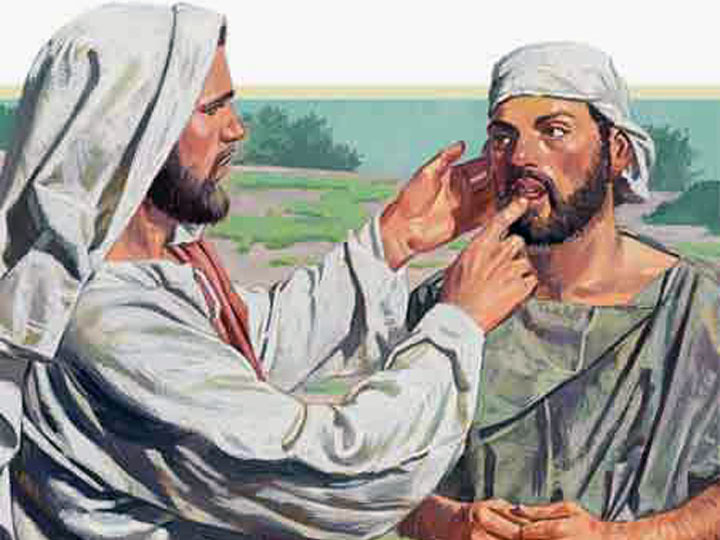
Picture
Et suspíciens in cœlum, ingémuit, et ait illi: Ephphetha.
The liturgy of this Sunday begins three Sundays stressing the Sacraments necessary for salvation. This Sunday emphasises Baptism and Holy Eucharist.

We reflect upon the fact in the Introit that the Church is actually the dwelling place of God. It is here that “He shall give power and strength to His people.” Only in the church, and strengthened by the Sacraments of Holy Eucharist and Penance in particular, can we gain strength to withstand the onslaught of the World, the Flesh and the Devil.

The Epistle renews our faith in the doctrines of the Catholic Church. St. Paul lists proofs for the Resurrection of Our Lord from the dead. St. Paul recalls his own Baptism wherein he received the Grace of the Sacrament. The joy of our own Baptism is recalled in the Gradual and Alleluia of the Mass.

The Gospel emphasises that we are spiritually deaf and dumb and need the graces of God through the Sacraments of Baptism and the Holy Eucharist to open our ears to the eachings of Christ and then use our
tongue to spread His Word. The Church since earliest times has used this Gospel as a symbol of Baptism.  By extension the Holy Eucharist continues what Baptism initiated.

Sunday 21st August is the Feast of St, Jane Frances Fremiot de Chantal who devoted herself to God following the death of her husband with the assistance of St. Francis de Sales and founded the Order of the Visitation in XVII Century France. Although not commemorated in the Mass using the 1962 book, pray today for restoration of our religious orders.
0 Comments

The Tenth Sunday after Pentecost

13/8/2022

0 Comments

 
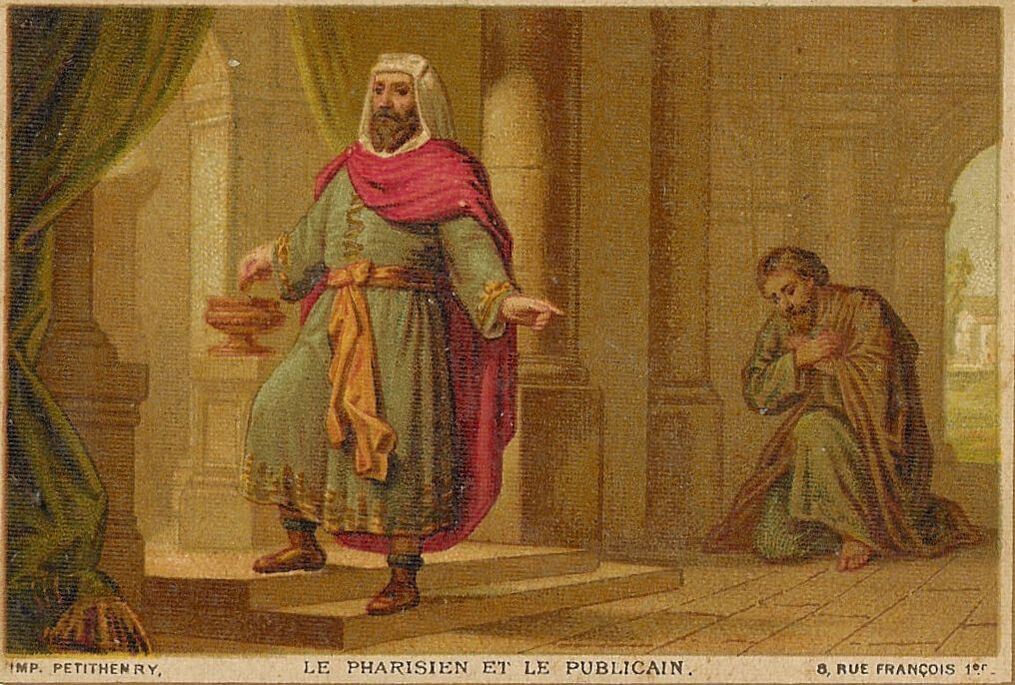
Picture
Duo hómines ascendérunt in templum, ut orárent: unus pharisǽus, et alter publicánus.
Sunday 14th August might be regarded as “Mercy Sunday” as the liturgy shows us how humility and penitence on the part of man brings forgiveness from God.
 
Sin cuts off the flow of Divine Graces to the soul. Pride, the basis of all sin, turns us into devils. Humility makes us the friend of God again. The Introit reminds us that God hears our “voice” when we are humble. The Collect reflects the sentiment that God shows “mercy and pity” in exercising His Power. It is a matter of serious reflection that the Epistle warns us that the Holy Ghost will enter only into the soul of the humble person.
 
Rather than attempting to do things on our own, without the help of God we should implore Him to “Keep me, O Lord, as the apple of Thy eye; protect me under the shadow of Thy wings.” (Gradual). The Gospel gives Our Lord’s own views on the subject of humility: “everyone who exalteth himself shall be humbled, and he that humbleth himself shall be exalted.” With all the science of today, most people in the world live as atheists, having as Satan told Adam and Eve the attributes to “be like God, knowing good and evil,” which is only an arrogant manner of saying as Satan did “I will not serve” rather than humbling oneself and accepting the teachings of Our Lord.
 
The Offertory is our plea for God to intervene and keep our enemies at bay who try to prevent us from following the teachings of Our Lord. The Secret reminds us that the gifts being offered first came from God, and that we are but returning them. At Communion time we should remind ourselves of the humility of the publican so ashamed of his weakness and sinfulness. Rather than raise his eyes to Heaven he merely struck his breast and said: “O God, be merciful to me a sinner.”
 
The Postcommunion reminds us that our strength comes from humble reception of the “Holy Sacraments.”

Assumption of the Virgin Mary

Nothing is said of the Vigil of the Assumption in the Liturgy today, the feast itself begins with first Vespers later on Sunday.

Although the fact of the Assumption of the Virgin Mary, body and soul, into heaven following her death was believed by most Cathol ics in accordance with tradition, Pope Pius XII proclaimed the doctrine Ex Cathedra on November 1, 1950 and obligated all Catholics to believe the doctrine as a part of the Faith. The Assumption was the reward of Our Lord to His Immaculate Mother Mary and ensured that her pure and virginal body, which had borne the Second Person of the Most Holy Trinity, might not suffer corruption.
0 Comments

Ninth Sunday after Pentecost

6/8/2022

0 Comments

 
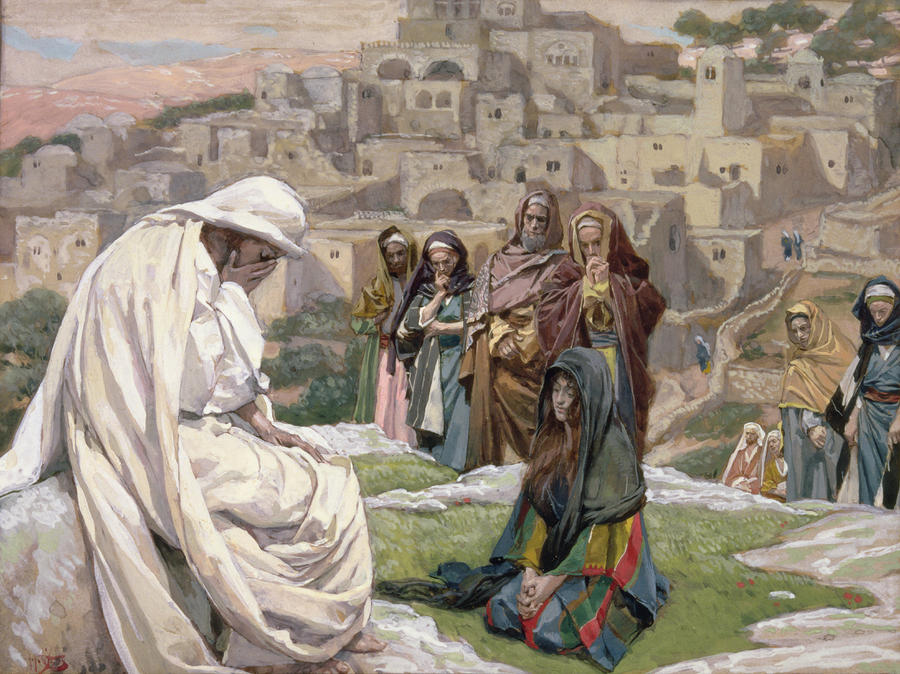
Picture
Cum appropinquáret Iesus Ierúsalem, videns civitátem, flevit super illam
This Sunday's Mass emphasises the theme that the great lesson of history is that men do not profit by its lessons.

The Epistle describes the history of the many evils that befell the ancient Jew after his rejection of the True God and his worship of the flesh. At the same time it comforts us that there is a distinction between temptation and sin, and that temptation is only the test of character, for "God is my helper" (Introit), Who will "save the humble people" (Offertory) that "hopeth in Him" (Communion).

The Gospel depicts a pathetic picture of Jesus weeping over Jerusalem. "If thou hadst known." It tells of the Jews" defilement of God's house, of their future destruction as a chosen race. As for me, I must learn from the Epistle which was "written for our correction."

If our prayers deserve to be heard, we must learn to "ask only for those things pleasing to God" (Prayer). We must be Christians of lively faith and learn to see "His Name in the whole earth" (Gradual); praying Him to defend us from enemies that would destroy His Name on earth or His image in our soul. Finally, if we learn to "eat" His Flesh worthily now (Communion), we shall one day learn that His Judgments are sweet (Offertory).

Today is Feast of St. Cajetan C., founder of the Theatines, devoted to total confidence in God for all needs. He was regarded as “hunter of souls,” an angel at the altar, who passed away in 1547 at Naples on this day. Commemorated in the Mass is St. Donatus E. M., Bishop of Tuscany, and beheaded for the Faith in 361. Although not commemorated in the Mass using the 1962 Missal, pray to the Saints for strength to maintain your Catholic Faith!

0 Comments

Eighth Sunday after Pentecost

30/7/2022

0 Comments

 
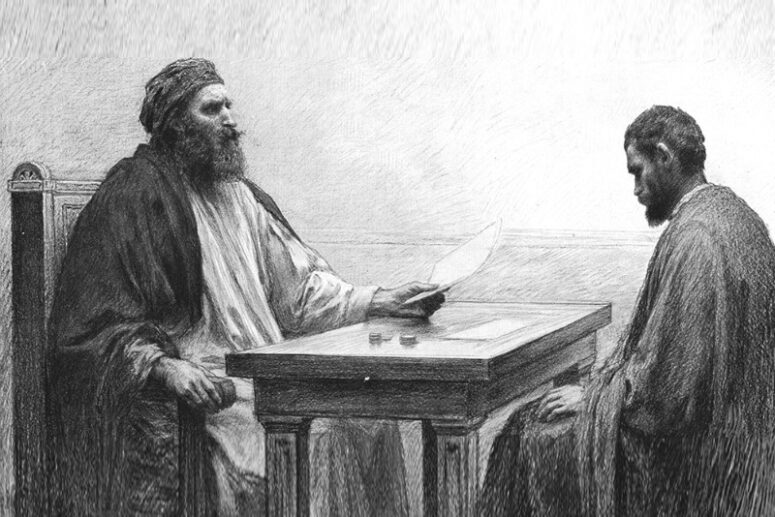
Picture
Homo quidam erat dives, qui habébat víllicum: et hic diffamátus est apud illum, quasi dissipásset bona ipsíus
The Holy Mass of this Sunday places before us the Christian's use or abuse of "goods," either of human nature or of Divine grace. The Introit recalls that as we now receive "Mercy," yet one day we must stand before "Justice." How necessary then the "Prayer" for "doing and thinking" what is right. Active participation in the Mass, advised Pope St. Pius X, is the indispensable source of the true Christian spirit, how to pray and how to live. The Epistle bids us reflect who you are, "not debtors to the flesh," by which "you shall die"; but "sons of God, joint heirs with Christ," by Whom you shall live.

The Gospel dramatises this dignity and duty in the parable of the Steward, the meaning of which is "be wise," you children of God; use material treasures so as to make eternal friends; exercise your talents in the spiritual and corporal works of mercy, and those whom you help to save will help save you. Finally, the Offertory assures salvation to the humble, warns the proud of their final humbling. Christianity is not so much a "giving up" but rather an "exchange" of "gifts" (Secret), the human for the Divine, to bring healing to "soul and body" Postcommunion.

On Sunday 31st July 2022: The Great Feast Day of the Jesuit, St. Ignatius of Loyola C., occurs. St. Ignatius was XV Century nobleman who became a priest after suffering war wounds, was converted and formed the Jesuit Order. However, the great saint gives way for the green Mass of the 8th Sunday.

Indulgentia Portiuculae On Monday and Tuesday, one may enter any church, say 6 Pater’s, 6 Ave’s and 6 Gloria’s for benefit of a poor soul and gain a Plenary Indulgence.

0 Comments

The Seventh Sunday after Pentecost

23/7/2022

0 Comments

 
Picture
The Pentecostal Season is well on its way with the twelve “fruits” of the Holy Spirit. Hence, as summer also advances toward the harvest, today’s Holy Mass has a timely lesson, observed by Jesus from fruit trees.

The Introit is a call to prayer, yes, but a call to prayer followed by Catholic Action. It bespeaks “the voice of joy,” yes, but also counsels “clap your hands,” which in ancient times signified not only to praise a person by the tongue but to work for him with the hands.

Since if all the tree’s life goes into the wagging tongues of waving leaves, how can there be any fruit? Deeds, not mere words, are acceptable to God and are the best kind of example to neighbour.

“The fruit” of sin is shame and death (Epistle), while the fruit of sanctity is life everlasting. “By their fruits” shall you know false teachers of false Christians (Gospel).

Not so much what one “says” about the Lord, but he who “does” His Will, brings forth good fruit. The Holy Eucharist is the “health giving” (Postcommunion) fruit of Calvary, to counteract the poison laden “Dead Sea” fruit of the world.

Sunday 24th July is the Feast of St. Christina V. M., martyred under Diocletian about 307 at Bolsena, Italy. Her Father was a Roman Governor who tried to break the Faith of his daughter, failed, had her tortured, while finally she was be-headed. Although not commemorated in Masses using the 1960 rubrics, we should pray to the Saint to help our society move back to purity.'
0 Comments

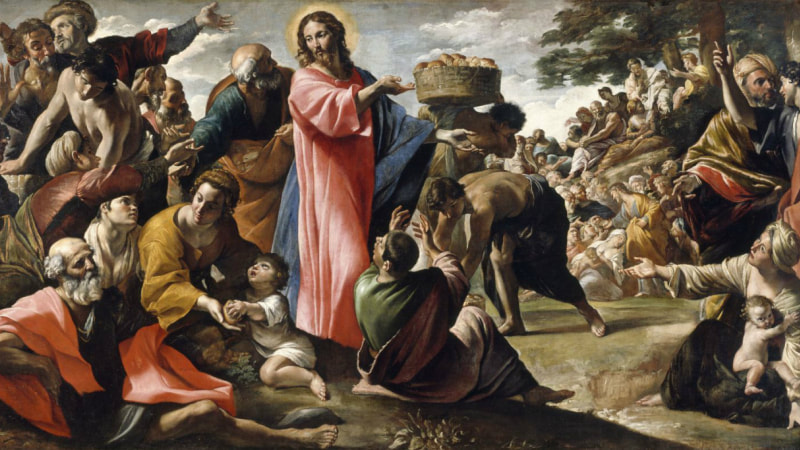
Sixth Sunday after Pentecost - Multiplication of the Loaves

16/7/2022

0 Comments

 
Picture
“I have compassion on the multitude.” This sentiment of the Divine and Human Heart (Gospel), so endearing to us, inspires our pleas to God in the Introit, that He save us because we belong to Him. The Prayer, alluding to our Baptism, when He implanted in us a love of His Name (which means “to save”) beseeches God to foster and then to protect “what is good.”

What is “good?” It is to “foster” the “new life” in Christ Jesus begun at Baptism (Epistle); “dead to sin” is its negative side; “alive to God” is its positive. To “protect” and to nourish this Life is the object of the Eucharist, which is its food. A hunger for the Divine Life and “Goodness” is universal to all times and places, as prefigured in the Gospel, “Can anyone fill them in the wilderness” of life, where the mind hungers for Truth, the will and heart hunger for Love? At the altar of sacrifice God will not “allow the hopes of anyone to be in vain” (Secret). Only at the altar of the Sacrament are we really “filled” (Postcommunion).

Today is Feast of St. Alexis C., of the IV Century, who gave up the wealth of his family, returned surreptitiously to the family home where he was a servant and slept under the family home. Although not commemorated in the Mass today, using the 1960 rubrics, pray to the Saint for his assistance as we progress through difficult economic times.
0 Comments

V Sunday after Pentecost

9/7/2022

0 Comments

 
Picture
Si ergo offers munus tuum ad altáre, et ibi recordátus fúeris, quia frater tuus habet áliquid advérsum te: relínque ibi munus tuum ante altáre et vade prius reconciliári fratri tuo: et tunc véniens ófferes munus tuum.
The theme of Mass this Sunday is love of neighbour.

The Gospel should give us pause. Jesus tells us that hating our brother is equivalent to murder and put us in “danger of hell fire.” The advice Our Lord renders is that before we make an offering at the altar but remember that our brother has something against us, to “leave thy offering...and be reconciled” to him first before presenting our gift. Thus, if we wish that God “forsake me not” (Introit) love toward others must be shown. We ask God to help prepare us by pouring into our hearts “love toward Thee.”

St. Augustine, in discussing the Gospel reading, tells us that the Pharisees regarded perfection as not murdering anybody physically, which is a minimum morality. However, God desires perfection and Our Lord teaches that avoiding anger is perfection in that we avoid murdering somebody interiorly. Thus, if we think about it, Our Lord was subjected to the lies, hatred and open insults of the Sanhedrin who accused Him of blasphemy falsely and thus shared in murdering Jesus. St. Peter explains how we love our neighbour by refraining our “tongues from evil” and seeking after “peace” with our brother.

The Offertory tells of the joy that comes from having received “understanding” from God. The Secret asks that the gifts which we have brought before the altar be of benefit to all. The Communion hymn expresses our aspirations to “dwell in the house of the Lord all the days of my life” and that we may be “cleansed” from our “hidden faults” and delivered from “our enemies” (Postcommunion).
 
Although not commemorated, the 10th July is the feast of the Seven Brothers Mm, SS Rufina and Secunda Vv. Mm. St. Felicity’s seven sons were martyred in front of her eyes by order of Emperor Marcus Aurelius about 165. Sisters, SS Rufina and Secunda, died about a hundred years later at Rome by order of Emperors Valerian and Gallienus. In these dark days, these martyrs provide spiritual strength for us to uphold our Faith in testing times.
0 Comments

IV Sunday After Pentecost

2/7/2022

0 Comments

 
Picture
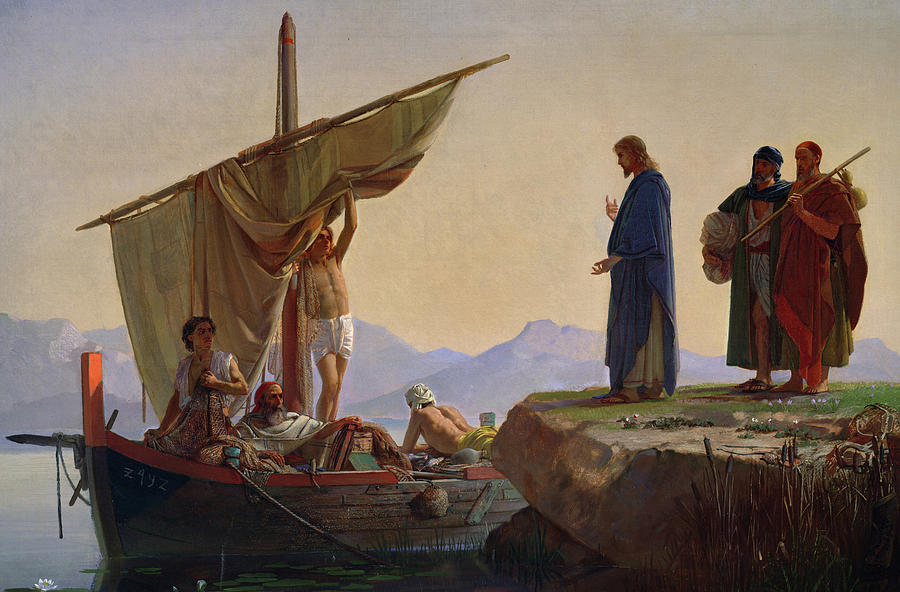
The Mass of this Sunday reflects the call of St. Peter as a fisher of men.

The Introit expresses our confidence in God to overcome enemies that oppose us. The Collect is a prayer that the course of the world may be ordered by the Lord and “joyfully serve Thee to quiet devotion.”

In the Epistle we ask for “deliverance” from corruption into the “liberty” enjoyed by a child of God. The Gradual continues the theme of asking for help from God lest the “Gentiles” ridicule our religion.

The Gospel teaches that Christ is the great Fisher of Men who relies upon the Apostles, priests and Bishops, for success. We are the fish drawn out of the water by the teaching of Christ from the sea of the world. In the Offertory we ask Jesus to “enlighten my eyes” and in the Secret entreat Him to “draw our rebellious wills” to Him. The Communion reflects the sentiment that the Lord is my “firmament...and ...refuge,” while the Postcommunion tells us that the Mass and Holy Sacrament of the Altar will “purify” our hearts and protect us.

3rd July is the Feast of St. Leo II Pp. C., who served the Church between 681-683 and called the Sixth Ecumenical Council which condemned the Monotheists who denied that Christ had a human will. Although not commemorated in the Mass, using the 1960 rubrics, pray to the holy Pope that our Church condemn the heretics of the day.
0 Comments

The third Sunday after Pentecost

25/6/2022

0 Comments

 
Picture
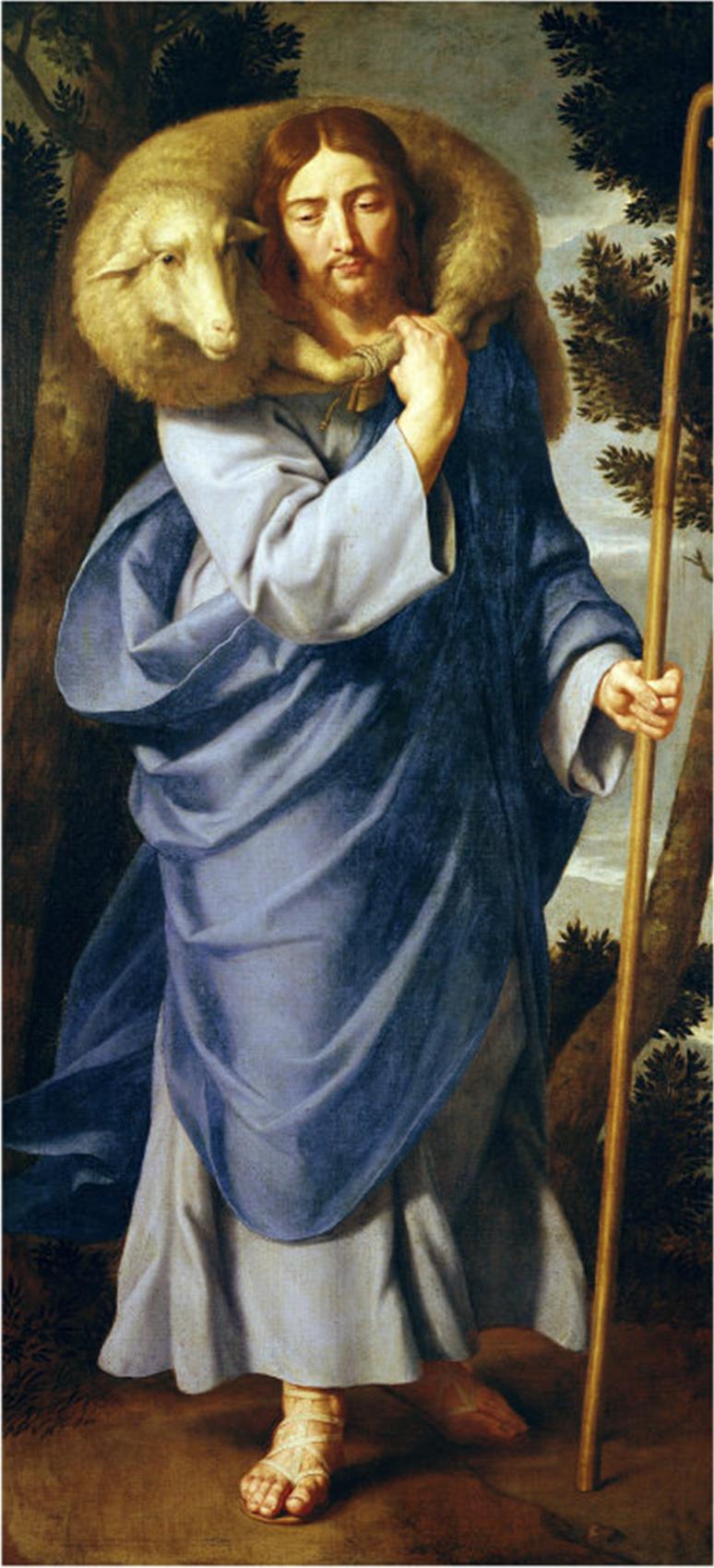
Quis ex vobis homo, qui habet centum oves: et si perdíderit unam ex illis, nonne dimíttit nonagínta novem in desérto, et vadit ad illam, quæ períerat, donec invéniat eam?
The Sacred Heart for the world, the world for the Sacred Heart was the theme of last Friday’s Feast of the Sacred Heart of Jesus.
 
Today, the Mass illustrates the mutual search between His Divine Heart and our heart. The Introit voices the sinner’s sense of being “alone” due to his inner struggles, usually beyond all human aid. The Prayer, a synopsis of Christian life, recognizes the right use of “the good things of this life” and asks God in His Mercy to “guide” us against their abuse. This life, therefore, becomes a warfare against the anti-Christ (Epistle), but “humbled” by afflictions, nevertheless be “strong in faith” since ultimate victory is “in Christ Jesus.”
 
Who of us could ever doubt the Love of the Sacred Heart after reading the Gospel? Who of us would refrain from doing “penance” to make His “find” complete? Who of us on earth would not add to His joy in Heaven (Communion) by leading some soul back to the Sacred Heart?

Prior to 1960 the Feast of the Most Sacred Heart of Jesus was commemorated in the Mass for the edification of those unable to go to Mass on the Feast day. The new rubrics of 1960 provided that the External Solemnity of the Most Sacred Heart may be celebrated today as on the Feast by right.
 
The Act of Reparation to the Most Sacred Heart of Jesus, with tabernacle open, should be made by priest and people at the end of Holy Mass.
 
On Sunday, the feast of SS John and Paul Mm. falls, mentioned in the Canon of the Mass, at whose names the priest makes a slight bow toward the Crucifix, buried on the Coelian Hill in Rome, who fell for the Faith about 400. Pray to the Saints today for strength of the martyrs. Under the new rubrics of the Mass the Saints are not commemorated.
0 Comments

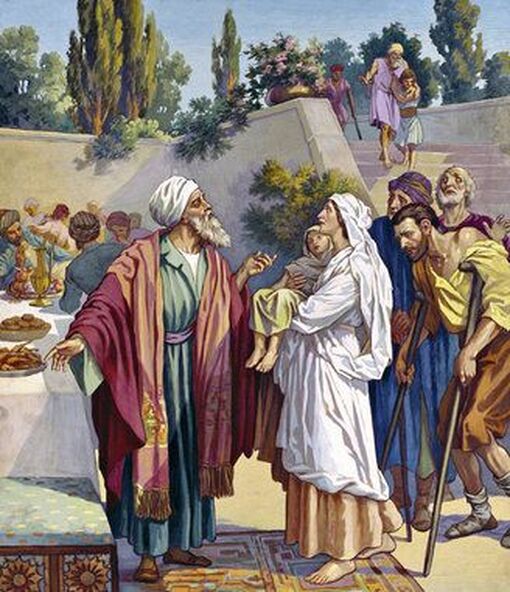
Second Sunday after Pentecost

18/6/2022

0 Comments

 
Picture
Homo quidam fecit cœnam magnam, et vocávit multos
My Flesh is food indeed...He who eats My Flesh...abides in Me and I in him...He who eats this Bread shall live forever” (Gospel)

Jesus offers Himself as a Victim for us on the altar in the Holy Sacrifice of the Mass, the Unbloody Representation of Calvary. Jesus comes to us as Food in His Sacrament of Union when the priest distributes Holy Communion. Jesus stays with us as a Divine Guest in the Tabernacle for Benediction or visits to Him.

The 19th June is the Feast of St. Juliani Falconieri V., Foundress of the Servite Sisters, especially devoted to the Holy Eucharist. On her deathbed in 1341 she was unable to receive the Host, requested It be placed on her heart where by a miracle, It was taken into her body. Although not commemorated in Sunday Masses in the 1962 Missal, we would do well to seek the intercession of St. Juliani Falconieri to improve our own devotion to the Most Holy Sacrament of the Altar.
 
Today is Father’s Day wherein we honour our Fathers who gave us life. Where family life is under constant attack from secular forces, pray to the Holy Family, especially St. Joseph, to turn back the evil which threatens to encompass us.
0 Comments

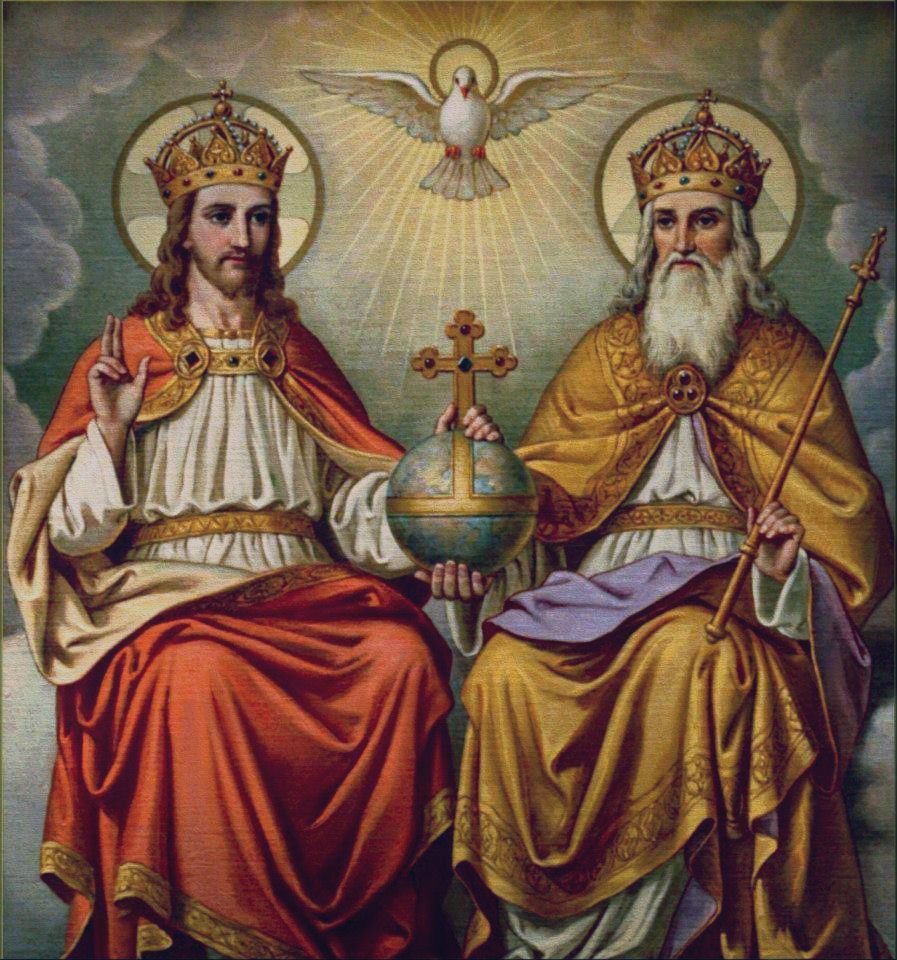
The Feast of the Most Holy Trinity

11/6/2022

0 Comments

 
Picture
The Most Adorable Trinity! "All things" good in nature or grace flow from and re-turn to the Trinity; "from Him," God the Father, our Creator; "by Him," God the Son, our Redeemer; "in Him," God the Holy Spirit, our Sanctifier (Epistle).

At our Baptism the entire Trinity took possession of our entire being (Gospel); hence our lifelong necessity of practical true faith in the presence of the Trinity in our souls, as our defence against "all misfortunes" (Prayer); the necessity of being ever conscious in our prayers that we are the adopted "sons of the Father," "co-heirs with Christ," and "temples of the Holy Ghost"; the necessity of shunning mortal sin, which automatically exiles the Trinity from our souls.

The offering of the Mass to the Trinity (Introit, Offertory) makes the offering of our lives (Secret, Communion) acceptable and pleasing. This offering of the Mass and of ourselves brings Divine help to body and soul (Postcommunion).

On this feast we should renew our Baptismal vows: "I renew my Baptismal vows. I renounce Satan and all his works and all his pomps. I take Jesus Christ for my Model and my Guide, and I promise to be faithful to Him unto the end of my life. (Pater, Ave, Gloria).

Today is
Feast Day of St. John of San Facundo C., a Spaniard, known as a peacemaker even as a child, who gave up all his goods to help the poor, and subsequently became an Augustinian priest, known for his devotion to the Holy Mass and Holy Ghost, passing away in 1479. St John is not commemorated per the rubrics of Rubricarum instructum.
0 Comments

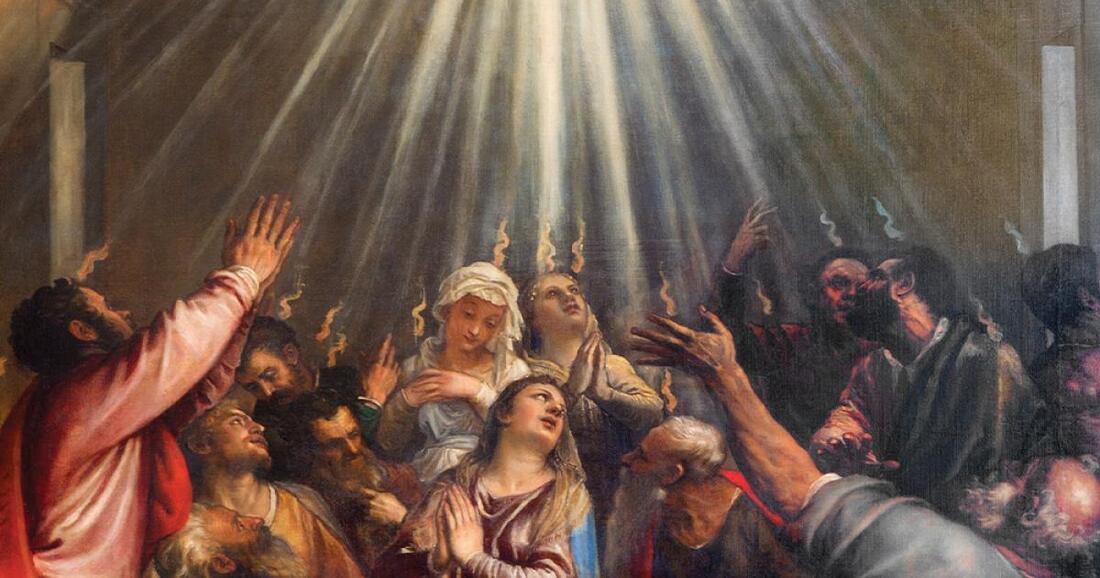
Pentecost

4/6/2022

0 Comments

 
Picture
By the descent of the Holy Ghost, the Christian Church is born today.

As a little group making its first public appearance (Epistle) amongst circumstances more fully described in the Acts of the Apostles, all were preparing “in prayer” with Mary.

Secondly, they were “all of one mind” under the leadership of Peter, thereby indicating the true marks of the Christian Church: Holiness in Jesus through Mary; unity, catholicity, apostolicity through reverence for the Pope, successor of Peter and Vicar of Christ.

The Gospel reveals how “We,” the Trinity, “will come” to the individual soul. The Omnipotence of God the Father is made manifest in our creation. The Wisdom of God the Son is made manifest in our redemption. The Love of God the Spirit is made manifest in our sanctification.

In the Offertory we ask God to confirm this work done in our soul on the day of our Baptism and Confirmation. We pray also to “relish” things of the Spirit (Prayer) and to benefit by His “consolation’ in the struggle of Church and soul against the “spirit” or the “prince of this world.”
0 Comments

Sunday after the Ascension

28/5/2022

0 Comments

 
Picture
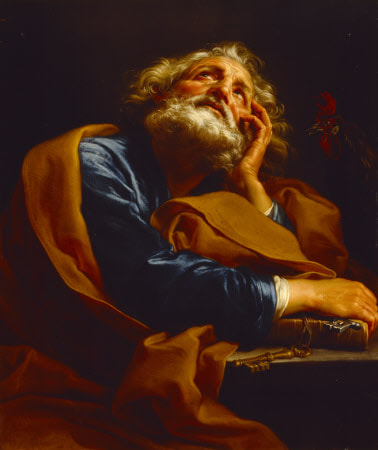
St Peter
1 Petri 4:7-8
Caríssimi: Estóte prudéntes, et vigiláte in oratiónibus. Ante ómnia autem mútuam in vobismetípsis caritátem contínuam habéntes, quia cáritas óperit multitúdinem peccatórum.

1 Peter 4:7-8
My beloved: Be prudent, therefore, and watch in prayers. But before all things have a constant mutual charity among yourselves: for charity covereth a multitude of sins.


On the Sunday after Ascension, St. Peter tells us that we must have “a constant mutual charity” among ourselves, and Jesus tells us in today’s gospel that “the hour cometh, that whosoever killeth you will think that he doth a service to God.” With these two thoughts in our mind let us consider our own lives and attitudes toward one another.

How often there are disagreements among Catholics over sometimes very petty things, and the devils fan these into heated arguments and sometimes into outright hatred for one another? The command of Christ to love one another and even to love our enemies and those who persecute us seems to have fallen upon deaf ears.

Our efforts to “win” or appear “right” in the eyes of men often supersedes the ultimate command to have charity. We forget that the first and greatest commandment is to love God with our entire being and with a love of preference and the second is to love our neighbor as we love ourselves. We forget that charity covers a multitude of sins.

So often we hear of people who refuse to engage in discussions of religion or politics. They consider that they are doing something noble or grand in avoiding an honest look and pursuit of justice and goodness, but they are more often cowards hiding behind a false charity. On the other side of this coin we see people who only want to argue and hound everyone into seeing or believing what they perceive with their own narrow and short sided “insights.”

Virtue is always in the middle (avoiding either extreme). We must be eager to share and enlighten others to the truth. However, it must not be our own “truth” but God’s truth that we elucidate and attempt to inculcate in others. To be certain that we are truly right is a condition that too many often overlook because they are shown a very narrow picture and outside of this they will not look. Their pride is enflamed and off they go attempting to “teach” the world.

Humility dictates that we recognize that in most of these matters we are very limited in our understanding and insights and therefore we must be open to hear other’s opinions. In politics where we are to place our hope and trust in a politician who is more often than not (perhaps always) guided by worldly rather than religious motives, we must be on our guard. In religion we should always look to the authority of the Church: in scripture and tradition, trusting in the legitimate authority that God has entrusted us to.

It is always best to distrust ourselves first rather than to distrust others first. Then with time and objective observation and study, enlightened by the grace of God in all humility and truth we can form correct opinions and charitably accept or reject the opinions of others (always preferring the objective truth).

We find that the saints often held different and even opposing positions on various points but they still became saints because they held onto this principle of Charity. They never compromised on the declared doctrines and moral principles of the Church, but they strove to be open in all charity to those who opposed them (correctly or incorrectly). Many of the saints became martyrs as Our Lord foretold. They went to their deaths not with threats and violence but in all humility and charity; often praying for those who opposed them. They loved even their enemies and those who persecuted them.

Let us imitate them as we are contradicted and accosted by our fellow men. Let us yield whenever it is possible for the sake of peace and concord (never to the point of denial of the faith), but always striving to imitate Jesus who is meek and humble of heart. Let us strive to always have a heart animated with charity and in this we can cover a multitude of sins.

Let us not fear death even from those who think that they are pleasing God by seeking it, but rather let us look forward to being united with Christ in heaven. In this frame of mind our enemies actually become our greatest benefactors. They give us the opportunity to see God, or if they do not take us this far they at least give us the opportunity to practice the virtues that Christ wishes us to apply in our lives. In any event they do us a good turn and therefore have earned our gratitude and love. Thus, we are naturally brought to love them and offer them our forgiveness and pray that God will do likewise: “forgive us our trespasses as we forgive those who trespass against us.”
0 Comments
<<Previous
    Pope Francis
    Picture
    Oremus pro Pontifice nostro Francisco: Dominus conservet eum, et vivificet eum, et beatum faciat eum in terra, et non tradat eum in animam inimicorum eius.


    Picture
    Picture
    Omnipotens sempiterne Deus, qui facis mirabilia magna solus: praetende super famulos tuos, et super congregationes illis commissas, spiritum gratiae salutaris; et, ut in veritate tibi complaceant, perpetuum eis rorem tuae benedictionis infunde.


    Any views expressed neither represent those of the Latin Mass Society or the Diocese of Wrexham.

    Archives

    August 2022
    July 2022
    June 2022
    May 2022
    April 2022
    March 2022
    February 2022
    January 2022
    December 2021
    November 2021
    October 2021
    September 2021
    August 2021
    July 2021
    June 2021
    May 2021
    April 2021
    March 2021
    February 2021
    January 2021
    December 2020
    November 2020
    October 2020
    September 2020
    August 2020
    July 2020
    June 2020
    May 2020
    April 2020
    March 2020
    February 2020
    January 2020
    December 2019
    November 2019
    October 2019
    September 2019
    August 2019
    July 2019
    June 2019
    May 2019
    April 2019
    March 2019
    February 2019
    January 2019
    December 2018
    November 2018
    October 2018
    September 2018
    August 2018
    July 2018
    June 2018
    May 2018
    April 2018
    March 2018
    February 2018
    January 2018
    December 2017
    November 2017
    October 2017
    September 2017
    August 2017
    July 2017
    June 2017
    May 2017
    April 2017
    March 2017
    February 2017
    January 2017
    December 2016
    November 2016
    October 2016
    September 2016
    August 2016
    July 2016
    June 2016
    May 2016
    April 2016
    March 2016
    February 2016
    January 2016
    December 2015
    November 2015
    October 2015
    September 2015
    August 2015
    July 2015
    June 2015
    May 2015
    April 2015
    March 2015
    February 2015
    January 2015
    December 2014
    November 2014
    October 2014
    September 2014
    August 2014
    July 2014
    June 2014
    May 2014
    April 2014
    March 2014
    February 2014
    January 2014
    December 2013
    November 2013
    October 2013

    RSS Feed

Powered by Create your own unique website with customizable templates.